







Toronto

Toronto, Right Now

Canada's financial capital and third-largest tech employer in North America

3rd

Largest tech employer hub in North America

$8.3B

VC invested in Toronto tech 2023 24

240K+

Tech workers in the Greater Toronto Area

Ontario

Bronson.AI Knows Toronto

Ontario is Canada's most populous province and its dominant economic engine, generating roughly 38 percent of national GDP. Toronto is its commercial centre home to the Toronto Stock Exchange, the headquarters of five of Canada's six largest banks, and the Canadian offices of virtually every major global financial and technology firm. The region's AI ecosystem is built on this financial depth combined with the research output of three world-class universities: the University of Toronto, Toronto Metropolitan University, and the University of Waterloo nearby. Taken together, the Greater Toronto Area constitutes the third-largest technology employment cluster in North America.

Ontario's approach to AI has been shaped by the twin forces of financial services regulation and health policy. The province anchors the Vector Institute for Artificial Intelligence, which channels applied research into private sector partnerships across finance, healthcare and advanced manufacturing. The regulatory environment is evolving quickly the Digital and Data Directive sets algorithmic accountability standards for government deployments, while federally, Bill C-27 is working through Parliament with Toronto-based legal and compliance teams watching every clause.

Bronson.AI's practice in Toronto sits at the intersection of financial services data infrastructure and clinical AI governance. The city's organizations are technically sophisticated and regulatory-aware, which means the challenge is rarely about access to tools it is about building data foundations that meet the compliance bar and operational demands of institutions that cannot afford to get it wrong. We work across Bay Street, the MaRS health cluster and the logistics corridor anchored by Toronto Pearson.

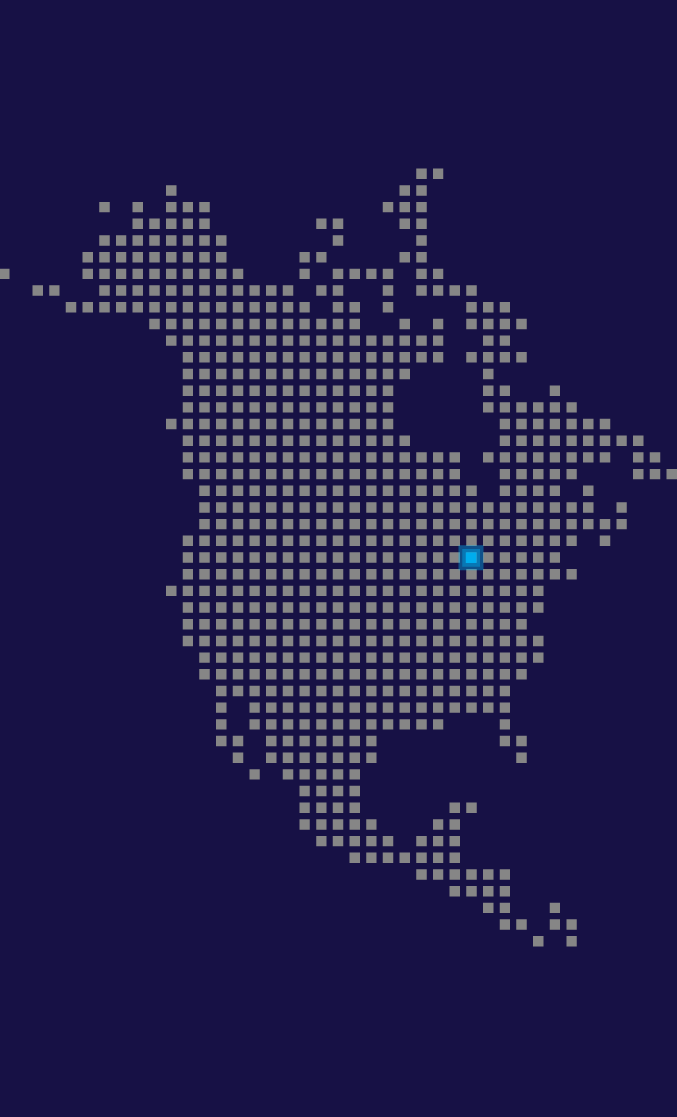
City-Map_Toronto
The Landscape

Industries and the rules they work under

BAY STREET

Finance & FinTech

Canada's five largest banks run internal AI teams focused on fraud detection, credit underwriting and algorithmic compliance. JPMorgan's Toronto office has become a key AI engineering hub for its global operation, and a growing fintech ecosystem is building products that bypass the banks entirely.

MaRS DISTRICT

Health Technology

University Health Network and Sinai Health use AI for diagnostic imaging, patient flow and clinical documentation. Ontario Health's central data platform is enabling province-wide clinical AI trials that leverage the scale of a single-payer system unavailable to American competitors.

CONDO CORRIDOR

Real Estate & PropTech

Platforms use ML models to predict condo valuations, assess rental risk and automate maintenance routing across North America's fastest-growing condo market. The volume and velocity of Toronto's housing transactions make it a natural machine learning environment for real estate AI.

PORT LANDS

Logistics & Supply Chain

Distribution centres in the 905 belt deploy AI for demand forecasting, warehouse automation and cross-border customs screening. Toronto Pearson is Canada's largest air cargo gateway, processing freight volumes that make AI-driven throughput optimization economically essential.

Use Cases

FINANCE

Fraud detection at Canada's Big Five banks

Bay Street's largest institutions use real-time ML models to flag anomalous transactions, generate compliance documentation and assist wealth management advisors. Bronson.AI builds the end-to-end data pipelines that make these systems run reliably inside institutions where a compliance failure costs more than the AI budget for a decade.

HEALTH TECH

Clinical AI at Ontario's academic hospitals

University Health Network uses ambient AI to draft visit summaries and run diagnostic imaging assist tools across its flagship hospitals. Bronson.AI helps healthcare organizations structure the data infrastructure and governance frameworks needed to deploy clinical AI safely at a scale the province's single-payer system makes possible.

PROPTECH

Predictive valuations in the condo market

Toronto's real estate platforms use AI to predict price movements, flag rental risk and automate maintenance dispatch across a market where the volume and velocity of transactions makes manual analysis inadequate. Bronson.AI applies the same predictive modelling across real estate and logistics operations for clients who need to act on market signals faster than the cycle allows.

Your team is unique. Our experience is broad.

From one industry to the next, we’ve helped organizations like yours communicate with clarity and confidence.

"Toronto builds world-class AI research. The next decade is about making it work in the buildings where the decisions actually happen."

Toronto is the fourth-largest city in North America and Canada's undisputed financial capital, home to the Toronto Stock Exchange and the headquarters of five of the country's six largest banks.

Its technology sector now ranks third in North America for tech employment, behind only New York and San Francisco a position built over two decades of deliberate investment in talent, research infrastructure and the immigration pathways that keep both arriving. The city adds tens of thousands of technology workers annually, drawn by a labour market depth that few North American cities outside the coasts can match.

The Vector Institute for Artificial Intelligence, anchored in the MaRS Discovery District, connects University of Toronto and TMU researchers with private sector partners across finance, health and manufacturing. The challenge Toronto faces is not research quality it produces world-class AI publications at a rate that puts it in the global top five by output but the gap between that research and deployed systems that serve the public as effectively as they serve shareholders. That translation problem is where the city's most interesting consulting work currently sits, and where Bronson.AI's practice in Toronto is concentrated.

Ontario's regulatory landscape is forming in real time. The province's Digital and Data Directive establishes algorithmic impact requirements for government AI, setting a standard that private sector organizations increasingly reference when designing their own governance frameworks. Federally, the Artificial Intelligence and Data Act is working through Parliament, and Toronto-based legal, compliance and technology teams are watching both regulatory tracks closely because the rules written here will shape what can be deployed across Canada and at what pace, and Toronto will be the first market to feel that effect.

The financial sector's AI adoption is further along than the health sector's, and for structural reasons. Banks operate on data that is already digital, transactional and labelled. Hospitals operate on data that is fragmented across systems, often paper-based in legacy workflows, and subject to privacy frameworks that restrict the data sharing that machine learning requires. Both sectors have invested heavily in AI capability, and both face the same fundamental bottleneck: the quality of the data infrastructure underneath the models determines whether the models work in production or only in demonstrations.

Toronto's logistics and supply chain corridor anchored by Pearson airport, the 400-series highways and the Lake Ontario port is the city's most underappreciated AI deployment environment. The scale of goods movement through this infrastructure creates demand forecasting, customs screening and warehouse optimization problems that are genuinely machine-learning-native. The organizations solving them are not generating press releases, but the systems they are building are as consequential as anything in the financial district.

See Results

4x ROI

payback with AI is guaranteed

90 DAYS

to a funded, board-ready AI roadmap

18 MONTHS

from pilots to
AI-centric enterprise

Do you have a data or AI problem?

Bronson.AI works with organizations across Toronto and Ontario on data and AI problems that are operational, not theoretical. The kind that slow down mortgage approvals, create clinical blind spots, and cost money every quarter while leadership debates what AI strategy to pursue. Toronto's organizations are sophisticated enough to know what they want and experienced enough to know that most AI projects fail not because of the model but because of the data infrastructure underneath it.

Bay Street's AI demand is concentrated in credit risk, compliance automation and fraud detection. The health sector's demand is concentrated in clinical decision support, patient flow and documentation automation. The logistics corridor's demand is concentrated in demand forecasting and customs screening. Across all three, the pattern is the same: organizations have invested in platforms but not in the data engineering that makes those platforms produce reliable results. Bronson.AI starts with the data.

Our AI advisory practice in Toronto maps what data exists, what decisions it needs to support, and what infrastructure would need to change to make those decisions reliable at the compliance standard the regulatory environment requires. For some clients that means rebuilding a data warehouse that has been patched for a decade. For others it means standing up a model governance framework that lets the risk team say yes to AI initiatives instead of defaulting to no. For others it means training the team that will own the system after we leave.

Toronto is not waiting for AI to mature. The organizations that will lead their sectors in 2030 are making infrastructure decisions in 2026. If you have a data or AI problem in Toronto in financial services, healthcare, logistics or any other sector Bronson.AI knows this market and knows how to move in it.


AI, Actually: Straight answers from our experts

Hear directly from our leadership team as they break down the critical challenges, strategy, and future of enterprise AI adoption.