





Ottawa

Ottawa, Right Now

The national capital where AI policy and AI deployment are the same conversation

125K

Federal public servants in the National Capital Region

2019

Year Canada's Directive on Automated Decision-Making was issued

$2.4B

Federal Pan-Canadian AI Strategy investment total

Ontario

Bronson.AI Knows Ottawa

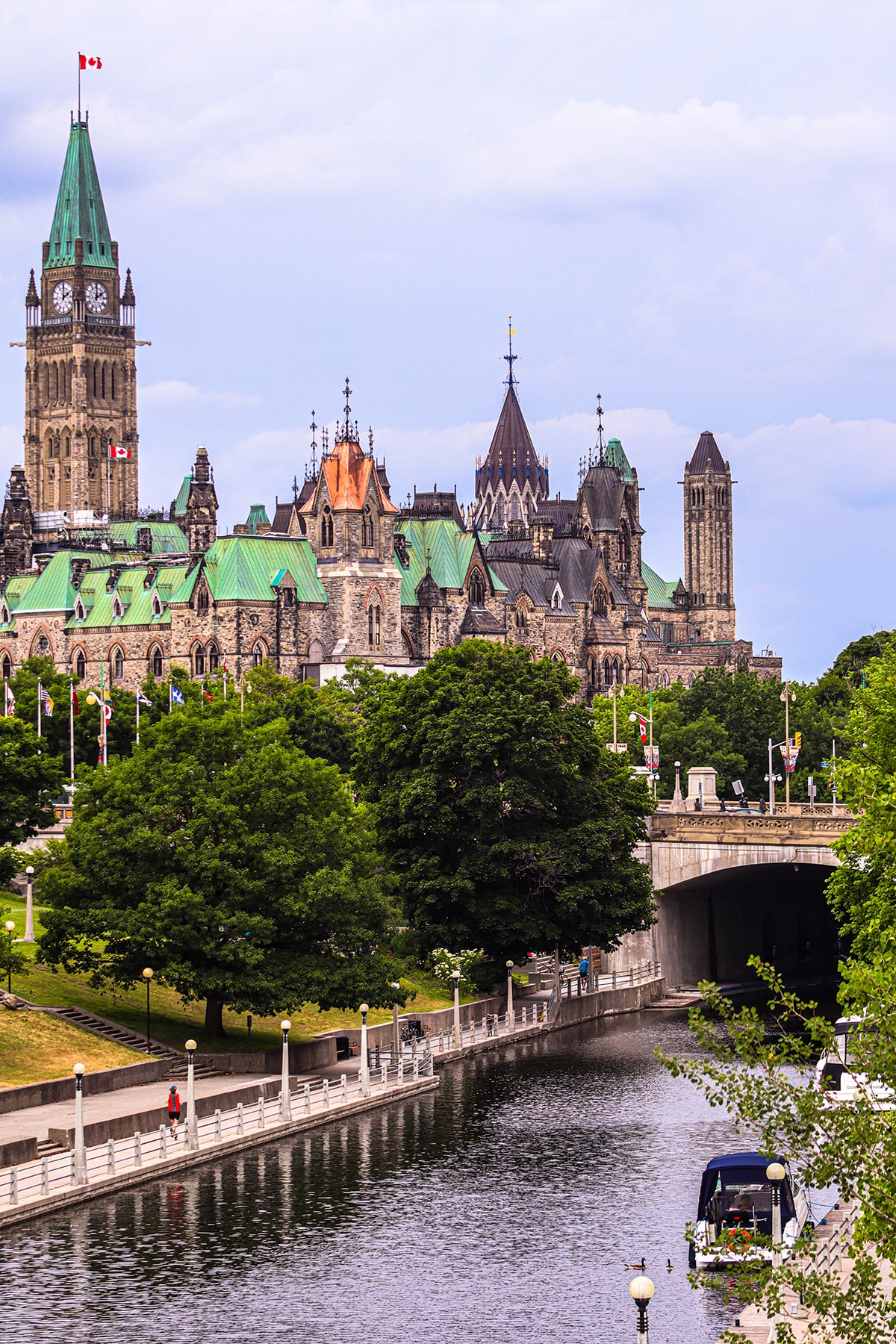
Ottawa is Canada's capital and its fourth-largest city, defined by two industries that rarely make technology headlines: federal government and telecommunications. The federal public service employs roughly 125,000 people in the region, making it the dominant economic force and the most consequential AI deployer in the country by virtue of the scale and sensitivity of the systems it runs. When the Treasury Board Secretariat develops a directive on automated decision-making, it is responding to operational challenges encountered a few blocks away on Parliament Hill not to theoretical futures.

The result is a city where AI governance is not an abstract policy question but a practical operational problem that real people in real ministries solve every day. Ottawa is unusual in that the people writing the rules and the people deploying the systems are often in adjacent buildings. CRA uses ML to flag tax fraud. ESDC processes employment insurance claims with AI assistance. CBSA applies risk assessment models to travellers and cargo. Each deployment is watched by civil liberties advocates, audited by Parliament and reviewed by a public that is increasingly aware of what automated decision-making means for how government treats its citizens.

Bronson.AI's practice in Ottawa is built around that dual reality. We understand the Directive on Automated Decision-Making, the Treasury Board's algorithmic impact assessment framework, and the operational constraints that public sector AI deployments face including the accountability standards that make government AI harder to deploy than corporate AI and the transparency requirements that make it more valuable when done well. We also work with Kanata North's cybersecurity cluster, where some of the most technically sophisticated AI in the country runs invisibly behind security clearances.

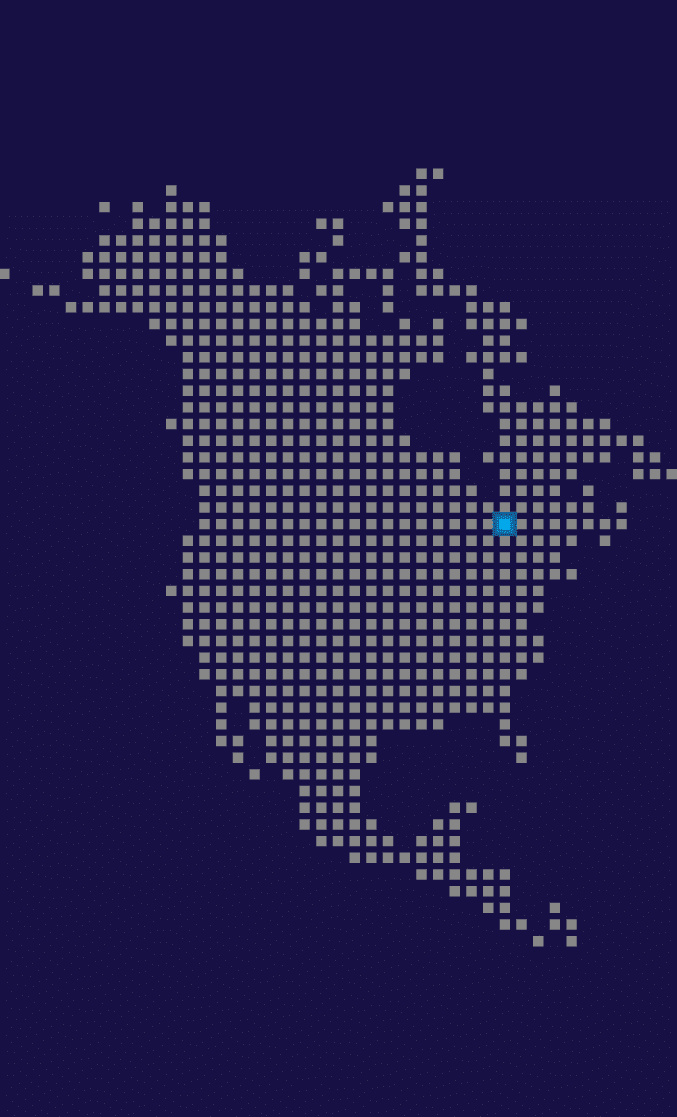
City-Map_Ottawa
The Landscape

Industries and the rules they work under

PARLIAMENT HILL

Federal Government Services

CRA uses ML to flag tax fraud. ESDC processes EI claims with AI assist. CBSA applies risk assessment models to travellers and cargo. IRCC has explored AI processing for visa applications each deployment closely watched by civil liberties advocates and subject to the Directive on Automated Decision-Making.

KANATA NORTH

Cybersecurity & Defence Tech

Canada's tech park clusters CSE, NSA contractor equivalents and security-cleared firms running AI for network defence, threat intelligence and signals monitoring. Largely invisible, technically sophisticated and nationally significant the most advanced AI work in Ottawa happens where few outside the sector can see it.

BELLS CORNERS

Telecommunications

Bell, Ericsson and Ciena run Ottawa AI teams focused on network optimization, predictive maintenance and security monitoring for the country's most critical telecom infrastructure. Ottawa's role as the nation's communications hub makes network AI deployments here consequential far beyond the city limits.

CIVIC HOSPITAL ZONE

Health Research

Ottawa Hospital Research Institute and the Bruyère Research Institute run clinical AI programs in oncology, chronic disease and remote care. Provincial health data integration is accelerating AI trial capacity, and the bilingual nature of Ottawa's patient population creates research datasets with unique linguistic and demographic properties.

Use Cases

GOVERNMENT SERVICES

Automated decision support in federal agencies

CRA, CBSA and ESDC use AI to assist processing at scale detecting fraud, prioritizing cases and translating services. Bronson.AI helps government organizations build the data governance and audit infrastructure these systems require, including the algorithmic impact assessment frameworks that the Directive mandates and that accountability demands.

CYBERSECURITY

Threat detection for national critical infrastructure

Ottawa security firms use AI for anomaly detection, threat hunting and incident response across government and telecom networks. Bronson.AI applies advanced analytics for clients in regulated and security-sensitive environments, building systems that meet the evidence standards of public accountability and the performance requirements of real-time threat response.

TELECOM

Network optimization for national carrier operations

Bell and Ericsson deploy AI to optimize traffic routing and predict equipment failure across Canada's backbone networks from their Ottawa operations. Bronson.AI builds predictive maintenance and operations analytics solutions for infrastructure-heavy industries where unplanned downtime is measured in social and economic disruption rather than lost revenue alone.

Your team is unique. Our experience is broad.

From one industry to the next, we’ve helped organizations like yours communicate with clarity and confidence.

"Ottawa is the city where AI policy and AI deployment happen in the same building. That proximity changes what both look like."

Ottawa is Canada's capital and its fourth-largest city, defined by two industries that rarely make technology headlines: federal government and telecommunications.

The federal public service employs roughly 125,000 people in the region, making it the dominant economic force and the most consequential AI deployer in the country by virtue of the scale and sensitivity of the systems it runs. When the Treasury Board Secretariat develops a directive on automated decision-making, it is responding in large part to questions being asked a few blocks away on Parliament Hill.

The result is a city where AI governance is not an abstract policy question but a practical operational problem that real people in real ministries solve every day. Ottawa is unusual in that the people writing the rules and the people deploying the systems are often in adjacent buildings. That proximity is both an advantage rapid feedback between deployment reality and policy and a constraint, as public accountability creates a risk tolerance that differs fundamentally from the private sector.

Ottawa's cybersecurity cluster, concentrated in Kanata North and the security-cleared firms surrounding CSE and Department of National Defence, represents some of the most technically sophisticated AI work in the country largely invisible to the public but genuinely world-class in its domain. That combination of visible public sector AI governance and invisible defence AI capability gives Ottawa a dual identity in the national AI landscape that few other cities share.

The telecommunications sector adds a third dimension. Bell, Ericsson and Ciena maintain significant Ottawa operations not because the city is a consumer market but because it is the backbone of national communications infrastructure. The AI systems optimizing network traffic, predicting equipment failures and monitoring for security anomalies across Canada's telecom infrastructure are largely designed and operated from buildings in Kanata and Bells Corners, by teams whose work is consequential in every province.

Ottawa's health research institutions the Ottawa Hospital Research Institute, the Bruyère Research Institute and the clinical programs at uOttawa are smaller than Toronto's or Montreal's but benefit from proximity to federal health policy and funding. The Ottawa Hospital has been among the earlier adopters of clinical AI in Ontario, with pilots in diagnostic imaging and patient flow management that have the benefit of both institutional support and the policy attention that comes from being a short walk from Health Canada.

See Results

4x ROI

payback with AI is guaranteed

90 DAYS

to a funded, board-ready AI roadmap

18 MONTHS

from pilots to
AI-centric enterprise

Do you have a data or AI problem?

Bronson.AI works with organizations across Ottawa and the National Capital Region on data and AI problems that require regulatory awareness as well as technical depth. Government AI deployments in Canada are governed by frameworks the Directive on Automated Decision-Making, algorithmic impact assessments, Treasury Board data standards that most AI vendors treat as compliance overhead. We treat them as design requirements.

Our AI advisory practice in Ottawa understands the operational reality of public sector AI. Ministries cannot iterate the way startups do. Audit requirements constrain architecture choices. Bilingual performance requirements affect model selection. Privacy obligations shape what data can be used and how. Bronson.AI's government practice is built around those constraints rather than in spite of them because the constraints are what make the deployments legitimate.

For the private sector organizations in Ottawa's cybersecurity and telecom clusters, we bring the same analytical rigour in an environment where the stakes are national rather than commercial. Network AI, threat detection systems and critical infrastructure optimization require data pipelines that are reliable, auditable and performant under conditions that most commercial AI environments never face. We build for those conditions.

Ottawa is where Canada's AI policy is written and where some of its most consequential AI is deployed. If you are working in that environment in government, in defence, in telecom or in the research institutions that bridge all three Bronson.AI understands the terrain.


AI, Actually: Straight answers from our experts

Hear directly from our leadership team as they break down the critical challenges, strategy, and future of enterprise AI adoption.