Pennsylvania
Pennsylvania, Right Now

CMU's robotics legacy, Pittsburgh's health AI cluster, and Philadelphia's pharma corridor
#1
US university for computer science: Carnegie Mellon
$10B+
UPMC annual revenue, one of the largest health AI investors
Top 3
US states for pharmaceutical manufacturing employment
United States
Bronson.AI Knows Pennsylvania
Pennsylvania's AI landscape is a tale of two cities with fundamentally different AI identities. Pittsburgh, anchored by Carnegie Mellon, is defined by robotics, autonomous systems and health AI: a cluster built on world-class computer science research and the UPMC health system's unusual willingness to deploy AI in clinical settings and publish the results. Philadelphia, anchored by Penn and a dense concentration of pharmaceutical companies, is defined by drug discovery AI and clinical research, with Jefferson Health and Penn Medicine among the country's most active clinical AI programs. CMU's role in the Pittsburgh ecosystem is difficult to overstate. The school has produced foundational research in robotics, natural language processing and machine learning for decades, and its alumni network runs AI programs at nearly every major technology company. The proximity of that research talent to UPMC's clinical operations creates a research-to-deployment pipeline that is unusually short and has generated clinical AI evidence that the broader field relies on. Bronson.AI's practice in Pennsylvania spans robotics and autonomous systems data governance, clinical AI for UPMC's 40-hospital network, pharmaceutical AI in Montgomery County and the manufacturing analytics that Pittsburgh's industrial base and the Lehigh Valley's manufacturers require. The state's academic depth and its willingness to deploy create an AI market that is both technically demanding and practically mature.


The Landscape
Industries and the rules they work under

PITTSBURGH OAKLAND
Robotics & Autonomous Systems
Carnegie Mellon's School of Computer Science is one of the world's top AI research institutions. Aurora, Argo AI alumni and dozens of robotics spinouts give Pittsburgh a depth in autonomous systems that no non-California city can match, with applications spanning delivery robotics, autonomous trucking and industrial inspection.

PHILADELPHIA BIOTECH CORRIDOR
Pharmaceutical & Biomedical
GSK, Merck, AstraZeneca and J&J have significant Pennsylvania operations deploying AI in drug discovery, clinical trials and regulatory affairs. Penn Medicine and Jefferson Health are aggressive clinical AI adopters, creating a pharmaceutical-to-clinical research pipeline that spans the state from Philadelphia to Pittsburgh.
UPMC NETWORK
Healthcare & Clinical AI
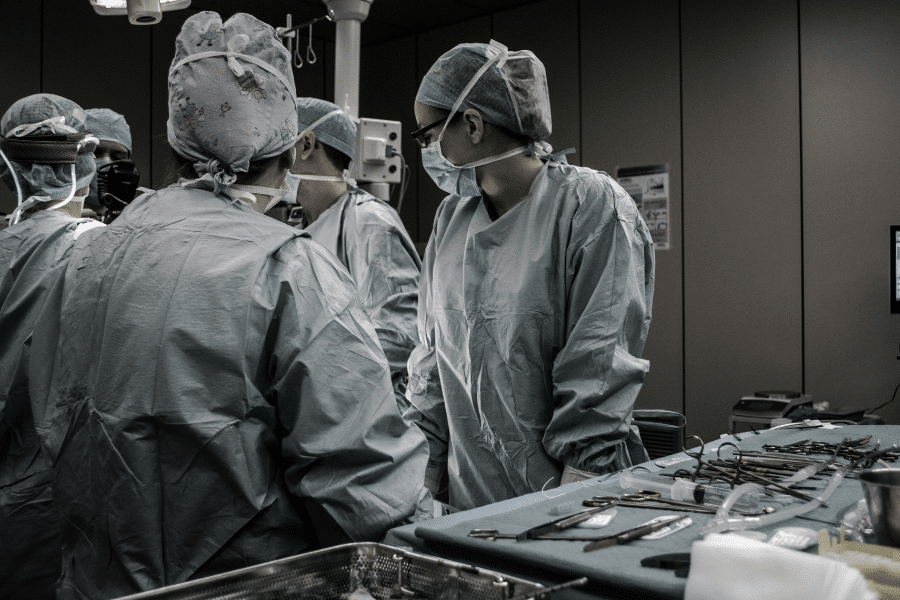
UPMC has been one of the most aggressive health systems in the country on AI adoption: radiology, pathology, patient deterioration prediction and supply chain management. Its Pittsburgh base and CMU proximity creates a unique research-to-deployment pipeline that has generated clinical AI evidence the broader field relies on.

LEHIGH VALLEY INDUSTRIAL
Manufacturing & Energy
Pennsylvania's manufacturing corridor, from Pittsburgh steel to Lehigh Valley industrial, uses AI for quality control and production optimization. Natural gas production in the Marcellus Shale deploys AI for well management and pipeline monitoring, adding an energy sector dimension to Pennsylvania's already diverse industrial AI market.
Use Cases
ROBOTICS
Autonomous vehicle and delivery robot systems from CMU spinouts
Pittsburgh robotics companies develop autonomous systems for logistics, last-mile delivery and industrial inspection from a research base that is second only to California in depth and breadth. Bronson.AI helps technology and logistics companies build data infrastructure for autonomous operations and sensor analytics, including the edge case logging that safety validation requires.
HEALTH AI
Patient deterioration prediction across UPMC's 40-hospital network
UPMC deploys AI to identify patients at risk of deterioration before crisis occurs, with evidence from large-scale clinical deployments that has shaped how other health systems approach early warning systems. Bronson.AI helps large health systems build the data governance and model deployment infrastructure for clinical AI at network scale.
PHARMA
AI drug discovery pipelines at Philadelphia's pharmaceutical cluster
GSK and Merck use AI to accelerate compound screening and clinical trial design across research programs that span from initial target identification to late-stage clinical validation. Bronson.AI helps life sciences organizations structure compliant data infrastructure for AI-assisted research and regulatory workflows.
Your team is unique. Our experience is broad.
From one industry to the next, we’ve helped organizations like yours communicate with clarity and confidence.


"Pittsburgh taught the world how to build robots. Now it is teaching hospitals how to deploy AI. Both lessons are harder than they look."
Pennsylvania's AI landscape is a tale of two cities with fundamentally different AI identities.
Pittsburgh, anchored by Carnegie Mellon, is defined by robotics, autonomous systems and health AI: a cluster built on world-class computer science research and the UPMC health system's unusual willingness to deploy AI in clinical settings and publish the results. Philadelphia, anchored by Penn and a dense concentration of pharmaceutical companies, is defined by drug discovery AI and clinical research.CMU's role in the Pittsburgh ecosystem is difficult to overstate. The school has produced foundational research in robotics, natural language processing and machine learning for decades, and its alumni network runs AI programs at nearly every major technology company. The proximity of that research talent to UPMC's clinical operations, forty-five minutes on the freeway, has created a research-to-deployment pipeline that is unusually short and has generated clinical AI evidence that the broader field relies on. Pennsylvania's challenge is creating state-level governance that makes sense for CMU's robotics spinouts, UPMC's clinical deployments, the pharmaceutical operations in Montgomery County, and the manufacturers in Pittsburgh and the Lehigh Valley simultaneously. Those are very different AI use cases with very different risk profiles and very different regulatory contexts. UPMC's willingness to publish clinical AI results, including results where AI tools underperformed expectations, is unusual and valuable. Most health system AI deployments stay internal, making it impossible for the broader clinical community to learn from both successes and failures. UPMC's publication track record has given it an outsized influence on how clinical AI is evaluated and deployed nationally, and that influence is disproportionate to the institution's size relative to, say, Kaiser or HCA. Philadelphia's pharmaceutical corridor runs from Merck's campus in West Point to GSK's facilities in King of Prussia to the dense concentration of biotech companies that have grown up around Penn's research programs. The AI tools being deployed in this corridor, for compound screening, clinical trial design and regulatory document automation, are among the most commercially consequential in drug development, and the speed with which they are translating into approved drugs will be one of the clearest measures of AI's real-world impact in the 2020s.
See Results
4x ROI
payback with AI is guaranteed
90 DAYS
to a funded, board-ready AI roadmap
18 MONTHS
from pilots to
AI-centric enterprise

Get started today!
Do you have a data or AI problem?
Bronson.AI works with organizations across Pennsylvania on robotics and autonomous systems data governance, clinical AI for UPMC's network, pharmaceutical AI in the Philadelphia corridor and manufacturing analytics for the state's industrial base. The state's academic depth and operational seriousness create an AI market that is both technically demanding and practically grounded. For robotics and autonomous systems clients in Pittsburgh, we build the data governance and scenario logging infrastructure that AV and robotic deployment safety requires. The gap between a system that works in CMU's lab and one that works reliably in a real logistics environment is almost entirely a data engineering and governance problem. For healthcare clients at UPMC and across Pennsylvania's hospital network, we build the clinical AI infrastructure that UPMC's publication standard demands: not just technically capable but evidence-validated and monitored for ongoing performance across the full diversity of the patient population. Pennsylvania is producing AI that matters in robotics, clinical medicine and drug development simultaneously. If you are part of that work, Bronson.AI has the cross-domain expertise to help.
AI, Actually: Straight answers from our experts
Hear directly from our leadership team as they break down the critical challenges, strategy, and future of enterprise AI adoption.