C-Suite | Human Resources
CHRO – Chief Human Resources Officer
"When the board asks me about pay equity or how resilient our workforce really is, I do not have a defensible answer."
Quick Facts
Role
C-Suite | Human Resources
Level
C-Suite
Dept
Human Resources
Industry
HR
Env
Cloud / Hybrid HRIS
Tools
Workday, Excel, Power BI
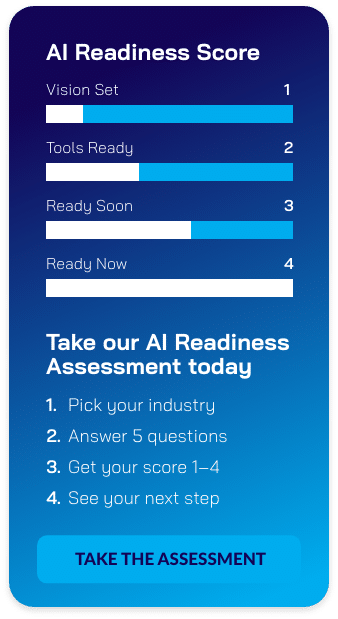
Sound familiar?
Workforce decisions worth millions rest on headcount and labour-cost data that HR, Finance, and the business never agree on
No forward view of succession depth or flight risk until a critical role becomes vacant and the gap is already a crisis
The board asks about talent concentration, pay equity, and workforce resilience and there is no analytical answer to give
AI tools are spreading across HR in hiring, performance, and engagement with no governance or central oversight, leaving unmeasured bias and compliance exposure
Strategic workforce planning still runs on last quarter's numbers and gut feel rather than forward-looking supply, demand, and skills data
Organisational design, leadership capability, and workforce investment decisions are made without evidence of how they will affect growth, productivity, or execution of the business strategy
You are not alone
0.87
of HR leaders forecast greater AI adoption within HR processes in 2026, up from 83% in 2025 (SHRM, 2026 State of AI in HR).
18%
of HR leaders say their organisation consistently uses data analytics to drive better people decisions (Korn Ferry, 2025).
42%
of HR leaders are prioritising AI investment for HR, yet only 5% of HR teams feel fully prepared to implement it (Korn Ferry, 2025).
93%
of people-analytics leaders say their systems help make talent decisions that improve business outcomes, versus only 13% of laggards (HR.com, State of People Analytics 2025-26).
Join those who are leveraging data to move from financial stewardship to strategic business leadership.
How is AI raising the stakes

The gap between AI-mature HR functions and those still working from fragmented spreadsheets and disconnected systems is widening at pace.
Organisations that have unified their workforce data are running predictive attrition models, identifying flight risk months in advance, and making workforce planning decisions with the same analytical rigour as Finance. Those that have not are still manually reconciling headcount reports and presenting last quarter's numbers as current insight. The difference in strategic influence is stark and growing.
The governance risks are escalating faster than most CHROs anticipated.
AI tools are already embedded in hiring, performance management, and engagement monitoring across most large organisations - often deployed by individual teams without oversight. Without a data governance framework that covers how workforce data is collected, used, and audited, the CHRO is exposed to algorithmic bias claims, privacy regulation breaches, and employee trust failures that are increasingly difficult to recover from. The window to build those foundations proactively is narrowing.
The CHRO's mandate has shifted irreversibly.
AI is no longer a future consideration - it is actively reshaping how boards evaluate HR leadership, how competitors attract and retain talent, and how workforce decisions get made. CHROs who cannot present data-backed workforce strategies are losing credibility in the boardroom, and those without AI governance frameworks already in place are accumulating risk that is becoming harder to contain.
C-Suite | Human Resources
How Bronson can help
Data Strategy and Governance
Bronson.AI builds the data architecture, ownership model, and governance framework that connects operational data into a single, governed layer, so that decisions are made from one version of the truth rather than competing reports.
- Data standards framework covering metric definitions, KPI structures, and cross-functional data taxonomy.
- Data ownership and stewardship model assigning accountability for each data domain.
- AI governance policy ensuring automated decisions are auditable, explainable, and compliant.
AI Readiness and Data Management Assessment
Bronson.AI assesses the data foundation and process maturity that determines whether AI investments will deliver. Before committing to AI tools, the function needs an honest picture of where the data actually stands, and a prioritised roadmap for closing the gaps.
- Data maturity assessment evaluating completeness, consistency, quality, and governance readiness across relevant systems.
- AI use case prioritisation identifying which applications the current data foundation can support now versus after remediation.
- Prioritised roadmap sequencing the data and process work that AI adoption requires.
Modern Data Analytics
Bronson.AI builds the analytics infrastructure that gives real-time visibility into performance, connected across every relevant system. We move the function from lagging indicator reporting to forward-looking insight that enables proactive decisions at scale.
- Unified data layer integrating source systems into a single analytics environment.
- Leading indicator frameworks that surface risk and opportunity before they become problems.
- ROI measurement connecting improvement initiatives to business outcomes in real time.
Unlock your potential
Unlock the Power of Data in Human Resources
Data is the backbone of strategic HR leadership. For the CHRO, harnessing the power of accurate, integrated, and forward-looking workforce data enables decisions that are not only operationally sound but aligned with where the business needs to go. When the right data foundation is in place, the CHRO moves from reporting on the workforce to actively shaping it.
Overcome Data Challenges Effortlessly
One of the primary challenges facing CHROs today is the absence of a single, reliable source of workforce truth. Fragmented systems, inconsistent data, and the pressure to adopt AI without the governance structures to support it make it difficult to lead with confidence.
The Promise of Data, Analytics, and AI Advancements
Imagine a world where every HR system feeds into one unified workforce view, where AI investments are measured with the same rigour as any other business decision, and where workforce planning is powered by predictive models rather than assumptions. This is not just a vision but the very real value proposition that our Data, Analytics, and AI Consulting and Solutions offer.
Realize the Value of Advanced Data Solutions
Our services are designed to guide CHROs through:
- Unified Workforce Data: Creating a single source of truth that connects HR, Finance, and operational data to support confident executive decision-making.
- Strategic ROI Frameworks: Building the measurement infrastructure needed to demonstrate the business impact of HR programs and technology investments.
- AI Governance and Readiness: Establishing the data foundations and oversight structures needed to adopt AI responsibly and at scale.
See Results
4x ROI
payback with AI is guaranteed
90 DAYS
to a funded, board-ready AI roadmap
18 MONTHS
from pilots to
AI-centric enterprise
Get started today!
Frequently asked questions
Get the foundation right before anything else, because secure, well governed data management is what makes every downstream decision trustworthy. That starts with a single source of truth for the data that matters most, typically headcount, which is the spine everything else hangs from. Define it precisely before integrating anything: who counts as an employee, how contractors are treated, when a leaver drops out of the count, which system is authoritative when two disagree. Most cross-system discrepancies are definitional rather than technical, and no amount of integration fixes a number that two teams calculate differently.
With definitions agreed, the connecting layer brings the systems together, recruiting, payroll, performance, learning, and engagement, into one governed environment where data flows in on a schedule and maps to common standards. This is where the genuine effort sits: aligning fields, resolving identity when the same person is represented differently in three systems, and establishing ownership so someone is accountable for the accuracy of each domain. Governance is what stops the integrated layer degrading back into inconsistency six months later.
The pay-off is that workforce questions become answerable without a manual pull. You can see headcount, turnover, and cost by business unit, role family, or geography in real time, and connect people data to business outcomes with enough confidence to take it to the board. That credibility is the real prize: HR forecasts that carry the same weight as Finance's, because they rest on the same standard of discipline. Start narrow, pick the highest-value question you cannot currently answer reliably, build the foundation to answer it well, and expand from there.
Begin with what lies beneath the ambition rather than the ambition itself, because the readiness of the foundation determines whether anything built on top of it can stand. A readiness assessment looks at four things: completeness, whether the data you would feed a model actually exists and is populated; consistency, whether it means the same thing across systems and time; quality, whether it is accurate enough to trust; and governance, whether you have the ownership, consent, and controls to use it responsibly, which in HR carries real legal weight.
The output is a clear picture of which AI use cases your data can support today and which require remediation first. That distinction is valuable because it stops you investing in a sophisticated tool that your data cannot feed, and it sequences the work: fix the highest-impact data gaps, then deploy the AI that now has something reliable to learn from.
This matters more in HR than almost anywhere else. AI tools used in hiring, promotion, and performance carry legal, reputational, and operational risk if they operate on flawed or biased data, and the governance framework that surrounds them is not optional. Knowing where you stand before you build is what separates HR functions that deploy AI responsibly from those that create exposure they only recognise after the fact. The assessment is inexpensive relative to the cost of an AI initiative that fails quietly, and it gives you a roadmap rather than a leap of faith.
Turn raw people data into the actionable insight that drives genuinely informed decisions, because that translation is what earns HR a seat in the strategic conversation. Pick one or two outcomes the board already prioritises, then identify the workforce drivers behind them: which roles are revenue-critical, where attrition in those roles costs most, how engagement in specific teams tracks against customer or operational performance. The analysis connects a people metric to a business metric and quantifies the relationship, so the conversation shifts from "engagement is down" to "engagement decline in these revenue-critical teams is associated with this much performance risk."
This requires people data and business data to live in the same analytical environment, which is the practical barrier most HR functions hit. Engagement sits in one tool, performance in another, and commercial outcomes in systems HR cannot easily reach. Building the connection, even for a single outcome, is what makes the insight possible, and it is worth doing narrowly and well rather than broadly and superficially.
The result is HR analysis that speaks the language the board responds to. Instead of reporting workforce activity, you are demonstrating workforce impact, and you can model the consequences of decisions before they are made: what a restructuring does to capability, what a retention investment returns, what a skills gap costs if left unaddressed. That is the difference between HR data that informs people decisions and people data that informs business strategy, and it is the level at which the function becomes genuinely strategic rather than administrative.
Approach it as a sequenced transition rather than a single switchover, because a phased move to modern, connected infrastructure is what delivers the flexibility and growth headroom you are actually after while keeping the lights on. The first step is understanding what you have: which systems hold which data, what depends on what, where the integration points and manual bridges sit. This mapping almost always reveals more complexity than expected, and it is what prevents a migration from breaking processes nobody realised were connected.
The migration itself typically moves to a modern, often cloud-based platform that is built to integrate, replacing the brittle point-to-point connections and manual exports that characterise legacy estates. Sequencing matters: move the foundational data and systems first, validate that they work and connect correctly, then migrate the dependent systems in an order that minimises operational risk. Each phase is tested against real data before the old system is retired, so you are never relying on an unproven migration for live HR operations.
The pay-off is infrastructure that scales as the organisation grows, performs without the workarounds that slow legacy systems, and connects, so the data fragmentation that made reporting painful is resolved at the architectural level rather than patched over. The cost and timeline are real, but the comparison is not modernisation versus the status quo, it is modernisation versus the compounding cost of maintaining systems that get more brittle, more expensive, and more limiting every year. A clear migration plan, sequenced to protect operations, is what turns that from a daunting prospect into a manageable programme.