
C-Suite | Finance
CFO – Chief Financial Officer
"I have more data than ever, and less confidence in any of it. Every system tells a different story."
Quick Facts
Role
C-Suite | Finance
Level
C-Suite
Dept
Finance
Industry
Finance
Env
Cloud / Hybrid ERP
Tools
ERP, Excel, Power BI
Sound familiar?
Financial data spans multiple ERPs, entities, and legacy systems, and manual reconciliation continues to extend each close
FP&A still builds board packs by pulling data manually from multiple systems into Excel and the process is slow and error-prone
Scenario modelling for capital decisions cannot be produced fast enough to be useful in board conversations
Forecast accuracy is undermined by data quality issues that are known but have never been resolved at source
AI investment across finance is being requested without a clear assessment of data readiness, control requirements, or measurable value
Profitability by customer, product, and channel cannot be trusted because revenue, cost-to-serve, and allocation data are defined inconsistently
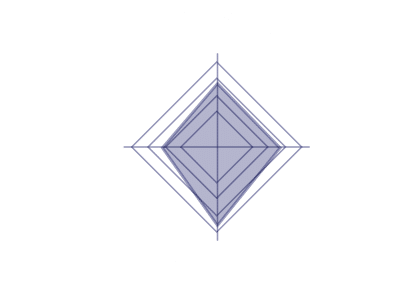
How AI-ready is your organization?
Complete the 10-minute assessment.
Pinpoint operational gaps, benchmark your maturity across key pillars, and chart a clear path to scalable AI success.
Pillars of Success
You are not alone
49%
of middle-market finance functions feel blocked by poor data quality from making critical financial decisions (Cherry Bekaert, 2025).
72%
of finance leaders now use AI tools, up from 34% the prior year (Protiviti, Global Finance Trends Survey).
50%
of finance functions cite digital transformation of finance as their top priority for 2026, the most common response (Deloitte, Q4 2025 CFO Signals).
87%
of finance functions say AI will be extremely or very important to their operations in 2026 (Deloitte, Q4 2025 CFO Signals).
Join those who are leveraging data to move from financial stewardship to strategic business leadership.

How is AI raising the stakes

The pressure to demonstrate ROI on technology investments has intensified alongside AI adoption.
Fifty percent of CFOs now cite digital transformation of finance as their top priority, yet nearly half report that poor data quality is actively preventing them from making critical financial decisions. Strategic forecasting suffers the same constraint. When the underlying data is incomplete or inconsistent, scenario modelling and forward-looking analysis are built on foundations that cannot be trusted.
Governing AI adoption is an emerging challenge that lands squarely on the CFO's desk.
Finance teams are deploying AI tools for reconciliation, forecasting, and reporting without the risk frameworks or data governance structures to support them responsibly. The CFO is now expected to govern innovation as much as fund it, and doing that requires a data foundation that most organisations are still building.
AI has fundamentally changed what is expected of the CFO.
Where the role was once defined by financial stewardship and reporting accuracy, the C-suite now expects the CFO to be a strategic architect - using data to model scenarios, anticipate risk, and guide business decisions in real time. The problem is that most finance functions are still working from fragmented data spread across systems that were never designed to work together. Building a coherent financial picture for the board remains a manual and error-prone exercise rather than a reliable capability.
C-Suite | Finance
How Bronson can help

Data Strategy and Governance
Bronson.AI builds the data architecture, ownership model, and governance framework that connects operational data into a single, governed layer, so that decisions are made from one version of the truth rather than competing reports.
- Data standards framework covering metric definitions, KPI structures, and cross-functional data taxonomy.
- Data ownership and stewardship model assigning accountability for each data domain.
- AI governance policy ensuring automated decisions are auditable, explainable, and compliant.

Modern Data Analytics
Bronson.AI builds the analytics infrastructure that gives real-time visibility into performance, connected across every relevant system. We move the function from lagging indicator reporting to forward-looking insight that enables proactive decisions at scale.
- Unified data layer integrating source systems into a single analytics environment.
- Leading indicator frameworks that surface risk and opportunity before they become problems.
- ROI measurement connecting improvement initiatives to business outcomes in real time.

AI Readiness and Data Management Assessment
Bronson.AI assesses the data foundation and process maturity that determines whether AI investments will deliver. Before committing to AI tools, the function needs an honest picture of where the data actually stands, and a prioritised roadmap for closing the gaps.
- Data maturity assessment evaluating completeness, consistency, quality, and governance readiness across relevant systems.
- AI use case prioritisation identifying which applications the current data foundation can support now versus after remediation.
- Prioritised roadmap sequencing the data and process work that AI adoption requires.
Unlock your potential
Unlock the Power of Data in Finance
Data is the backbone of strategic financial leadership. For the CFO, harnessing the power of accurate, integrated, and forward-looking financial data enables decisions that are not only operationally sound but aligned with where the business needs to go. When the right data foundation is in place, the CFO moves from reporting on performance to actively shaping it.
Overcome Data Challenges Effortlessly
One of the primary challenges facing CFOs today is the absence of a single, reliable source of financial and operational truth. Fragmented systems, poor data quality, and the pressure to govern AI adoption without the frameworks to do it responsibly make it difficult to lead with confidence. Strategic forecasting, technology investment decisions, and board-level reporting all suffer when the data underneath them cannot be trusted.
The Promise of Data, Analytics, and AI Advancements
Imagine a world where every financial system feeds into one unified data layer, where forecasting is powered by real-time scenario modelling rather than static annual cycles, and where AI investments are measured with the same rigour as any other capital allocation. This is not just a vision but the very real value proposition that our Data, Analytics, and AI Consulting and Solutions offer.
Realize the Value of Advanced Data Solutions
Our services are designed to guide CFOs through:
- Unified Financial Data: Creating a single source of truth that connects finance, operations, and business data to support confident executive decision-making.
- Strategic Forecasting Frameworks: Building the modelling and scenario planning infrastructure needed to move from historical reporting to forward-looking financial insight.
- AI Governance and Readiness: Establishing the data foundations and risk frameworks needed to adopt AI in finance responsibly and at scale.
See Results
4x ROI
payback with AI is guaranteed
90 DAYS
to a funded, board-ready AI roadmap
18 MONTHS
from pilots to
AI-centric enterprise
Get started today!
Frequently asked questions
Start with secure, well governed data management, because informed decisions depend entirely on financial data you can trust, and trust is impossible when the same figure differs across three systems. The work begins with definitions: a common chart of accounts, consistent entity and cost-centre structures, and agreed rules for how data maps from each source into the group view. Most consolidation pain is definitional rather than technical, and aligning the structures is what makes the mechanics of consolidation straightforward afterwards.
With the structures aligned, the connecting layer brings the entities together into one governed environment where data flows in on a schedule and reconciles automatically against the agreed rules. This is where the genuine effort sits: resolving the inconsistencies between entities, establishing ownership so someone is accountable for each entity's data quality, and building the controls that keep the consolidated view reliable as the business changes. Governance is what stops the foundation degrading back into the manual reconciliation you started with.
The payoff is a close that takes days instead of weeks and a group view you can actually rely on for decisions. When financial data is governed and connected, consolidation stops being a quarterly ordeal and becomes a process that largely runs itself, freeing the team for analysis rather than assembly. More importantly, the numbers carry credibility, with the board, with auditors, and with the markets if you are raising capital, because they rest on a foundation of disciplined data management rather than heroic manual effort. Start with the entities and definitions that cause the most pain, get those right, and extend from there.
Treat it as a sequenced transition to seamless, modern infrastructure, because that phased approach is what delivers the performance and flexibility you want while keeping the finance function running throughout. The first step is mapping what you have: which systems hold which data, what depends on what, where the manual bridges and workarounds sit. In finance this mapping almost always surfaces more interdependency than expected, and it is what prevents a migration from breaking a reconciliation or a reporting process nobody realised was connected.
The migration itself moves to a modern, typically cloud-based platform built to integrate and scale, replacing the brittle connections and manual exports that characterise legacy finance estates. Sequencing is critical: move foundational data and core ledgers first, validate them thoroughly against real figures, then migrate dependent systems and reporting in an order that protects the close and the controls. Each phase is reconciled against the old system before the old system is retired, so you are never running live finance on an unproven migration.
The payoff is infrastructure that scales as the business grows, performs without the overnight batch waits and workarounds that slow legacy systems, and integrates, so the data fragmentation that made consolidation painful is resolved architecturally. The cost and timeline are real, but the honest comparison is not migration versus a stable status quo; it is migration versus the compounding cost of maintaining systems that get slower, more brittle, and more limiting every year, and that increasingly cannot support the analytics and AI the function will need. A clear, sequenced migration plan is what turns a daunting replacement into a controlled programme.
Build the capability to turn financial data into forward-looking insight, because moving from reporting what happened to modelling what could happen is what lets you answer the board in the room rather than the following month. A proper scenario capability rests on a connected data foundation feeding a model where the drivers are explicit, so you can flex revenue growth, cost assumptions, headcount, or capital plans and see the full effect on the P&L, cash, and balance sheet immediately, including the second-order consequences a simple spreadsheet misses.
The reason most finance functions cannot do this quickly is that their models are static artefacts rebuilt for each request, wired to data that has to be manually refreshed. A driver-based model connected to governed data is different in kind: the structure persists, the data updates, and scenarios become a matter of changing inputs rather than rebuilding from scratch. That shift is what collapses the timeline from weeks to hours.
The payoff is a finance function that can support strategic decisions at the pace decisions are actually made. Boards increasingly expect to explore options interactively rather than receive a single pre-baked plan, and the function that can model the consequences of each option on demand becomes a genuine partner in the decision rather than a producer of after-the-fact analysis. Building the connected data foundation and the driver-based model is the investment that makes that responsiveness possible, and it pays back every time a fast, credible answer changes a decision for the better.
Start with what lies beneath the ambition, because the readiness of the foundation determines whether anything built on it can be trusted. A readiness assessment examines completeness, whether the data an AI tool would need actually exists and is populated; consistency, whether it means the same thing across entities and periods; quality, whether it is accurate enough to rely on; and governance, whether you have the controls, lineage, and auditability that finance specifically requires. The output is a clear picture of which AI use cases your data can support now and which need remediation first.
That distinction is what makes the assessment valuable. It stops you investing in a sophisticated forecasting or automation tool that your data cannot reliably feed, and it sequences the work sensibly: fix the highest-impact data gaps, then deploy the AI that now has something dependable to operate on. Without it, you are guessing, and finance AI that fails does so expensively and sometimes visibly.
The auditability dimension matters more in finance than almost anywhere. An AI tool influencing financial decisions has to produce results you can explain and defend to auditors and the board, which depends on the data feeding it being governed and traceable. Knowing where you stand before you build is what separates finance functions that adopt AI with confidence from those that create exposure they only discover when something goes wrong. The assessment costs little relative to a failed AI programme, and it replaces a leap of faith with a clear-eyed roadmap.