
Director | Construction Technology & Data
Director of Construction Data & Technology
"Our digital tools only work if site teams use them, and often enough they do not."
Quick Facts
Role
Director | Construction Technology & Data
Level
Director
Dept
Construction Technology & Data
Industry
Construction
Env
Cloud data platform + CDE
Tools
Autodesk Construction Cloud, Snowflake, Power BI
Sound familiar?
Poor quality and inconsistent standards across project, BIM, schedule, and cost data undermine analytics and block scalable AI
Site teams do not consistently capture data in digital tools, leaving project leaders with an incomplete and delayed operational picture
The business lacks enough people who combine construction knowledge, data engineering, analytics, and AI deployment skills
Digital twin ambition is not matched by the data foundation, integration architecture, or deployment plan needed to realise it
Project data are spread across too many tools without common standards, ownership, or an integration layer
Technology vendors and pilots are selected locally without common success measures, creating duplicated tools and little evidence of enterprise value
How AI-ready is your organization?
Complete the 10-minute assessment.
Pinpoint operational gaps, benchmark your maturity across key pillars, and chart a clear path to scalable AI success.
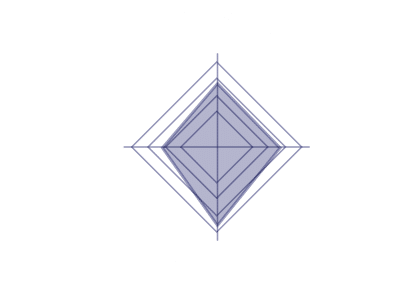
Pillars of Success
You are not alone
$9.9B
construction design software market value in 2024, projected to reach $15.4B by 2030 at a 7.7% CAGR (ResearchAndMarkets).
66.53%
of the BIM market is cloud-based, reflecting the shift to real-time data sharing (Polaris Market Research, 2024).
90%
performance improvement on large datasets reported in modern BIM platform navigation (ProtoTech Solutions, 2025).
6.2
of 16 technologies adopted by the average construction business, up 20% year over year (Deloitte, State of Digital Adoption 2025).
Join those who are leveraging data to move from financial stewardship to strategic business leadership.

How is AI raising the stakes

The AI ambition in construction is real and growing, but the data readiness gap is large.
Contractors are deploying BIM, digital twins, IoT sensors, and AI planning tools against a project data environment that was not designed to support them. Pilots succeed in controlled conditions and fail to scale because the data quality and integration that the controlled environment quietly provided does not exist across the operation. The technology directors who address this gap systematically are building foundations that AI can actually run on; those who keep deploying AI tools without fixing the data are accumulating sophisticated technology running on unreliable data.
The skills gap is becoming the binding constraint on digital transformation in construction.
The combination of construction domain knowledge, data engineering, BIM expertise, and AI capability that a genuinely capable construction technology function requires is scarce and expensive to hire. Organisations that have found ways to access this combination - through targeted hiring, capability building, and experienced external support - are making progress. Those waiting for the market to deliver ready-made talent are waiting a long time.
Construction technology directors are managing a digital estate that has grown faster than the data discipline to govern it.
Multiple BIM authoring tools, several project management platforms, site capture apps, cost systems, and document management environments each holding their own data, with no integration layer and no consistent standards. The result is an expensive technology portfolio that produces fragmented, inconsistent data - and a business that cannot build the analytics and AI capabilities it is asking for on top of it.
Director | Construction Technology & Data
How Bronson can help

Cloud and Application Migration
Bronson.AI helps modernise the underlying technology infrastructure, migrating legacy systems to cloud platforms that integrate cleanly, scale with the organisation, and support the analytics and AI capabilities the function requires.
- Cloud migration strategy assessing current systems and sequencing the transition to minimise operational disruption.
- Application rationalisation identifying which systems can be consolidated onto modern platforms.
- Data migration and validation programme ensuring historical data is preserved and accessible in the new environment.

Generative AI and LLMs
Bronson.AI implements generative AI and large language model solutions that accelerate operational workflows, from drafting and summarisation to intelligent search and recommendation, grounded in the organisation's own governed data.
- Generative AI use case design identifying where LLM capability delivers genuine productivity and quality gains.
- Retrieval-augmented generation connecting LLM outputs to internal knowledge bases and governed data sources.
- Output governance framework ensuring AI-generated content is accurate, auditable, and aligned with organisational standards.

Fractional Data and AI Services
For functions that need specialist data and AI capability without the timeline and cost of permanent recruitment, Bronson.AI provides experienced fractional professionals who integrate directly with the internal team, accelerating delivery while building internal capability in parallel.
- Fractional data engineers who build and maintain the data pipelines and integration infrastructure the function depends on.
- Machine learning and AI specialists who design, validate, and deploy analytical models to production standard.
- Analytics translators who bridge the gap between technical outputs and the business decisions they are designed to inform.
Unlock your potential
Unlock the Power of Data in Construction Technology
Construction technology only delivers value when the data flowing through it is reliable. The most sophisticated digital twin renders the inaccurate project data underneath it in three dimensions; the most advanced AI planning tool optimises against the incomplete schedule data it is given. Technology capability is a multiplier on data quality - which means poor data quality is not a separate problem from the technology investment, it is the thing that determines whether that investment pays off.
Overcome Data Challenges Effortlessly
Building the data foundation - consistent standards, integration that works, quality that is maintained rather than tolerated - is the highest-leverage investment a construction technology director can make. It makes every analytical capability more reliable, every digital tool more useful, and every AI deployment more likely to reach production rather than stall in a pilot.
The Promise of Data, Analytics, and AI Advancements
Bronson.AI provides both the technical capability and the construction domain knowledge that building this foundation requires - data governance, integration architecture, BIM analytics, and AI capability that the market has not yet made easy to hire. The result is a construction technology function with a data environment that its ambitions can actually run on, rather than technology deployed against data that undermines it.
Realize the Value of Advanced Data Solutions
Our services are designed to guide Directors of Construction Data and Technology through:
- Modern Data Platform: Cloud migration that replaces brittle point-to-point integration between construction systems.
- Generative AI Applications: LLM tools grounded in governed project data that put insight in front of site and delivery teams.
- Embedded Delivery Capacity: Fractional data and AI expertise combined with construction domain knowledge.
See Results
4x ROI
payback with AI is guaranteed
90 DAYS
to a funded, board-ready AI roadmap
18 MONTHS
from pilots to
AI-centric enterprise
Get started today!
Frequently asked questions
Establish secure, well governed data management across the systems, because every analytical output and decision inherits the quality of the data beneath it, and governed, reliable data across project, BIM, and cost systems is what makes the outputs trustworthy rather than undermined. The work is establishing the governance and quality management the data requires, the standards, the ownership, the quality controls, across the project, BIM, and cost systems, so the data the organisation works from is reliable and the decisions built on it can be trusted.
The reason data quality is foundational is that everything the construction organisation does with its data, the analytics, the forecasting, the BIM, the cost management, inherits the quality of the underlying data, so poor quality across the core systems undermines all of it, producing unreliable outputs that people learn to distrust. Fixing the data quality is not a side project to the analytics and technology; it is the precondition for them being worth anything.
The payoff is reliable data across the systems, which makes everything built on it trustworthy. When the project, BIM, and cost data is governed and reliable, the analytics, forecasting, and decisions built on it can be trusted, the organisation works from data it believes rather than data it questions, and the technology investments deliver value rather than being undermined by the poor data underneath. Establishing genuine governance and quality management across the systems is what turns construction data from poor-quality foundations that undermine everything built on them into reliable foundations that the analytics, technology, and decisions can depend on, which is the precondition for the data-driven construction the organisation is trying to achieve, and it is usually what most needs fixing before the technology and analytics investments can deliver the value they promise.
Streamline and automate the capture so it works for the site teams, because adoption depends on the capture being easy and useful rather than a burden, and automating or streamlining it is what makes site teams actually use the tools rather than work around them. The work is understanding why site teams are not capturing data, usually because it is cumbersome or feels like overhead, and addressing that by streamlining the capture, automating what can be automated, and making the tools work in the site context, so capturing data is easy and worthwhile rather than a burden the teams avoid.
The reason mandating capture does not work is that site teams under pressure will work around tools that are cumbersome or that feel like pure overhead, so adoption cannot be forced, it has to be earned by making the capture easy and showing the teams it is worthwhile. Streamlining and automating the capture addresses the actual reason for poor adoption, which is that the capture is too burdensome relative to its apparent value to the people doing it.
The payoff is site teams actually capturing the data, which gives the organisation the site data its analytics and management depend on. When the capture is streamlined and works for the site teams, they use the tools, the organisation gets complete and current site data rather than gaps and workarounds, and the analytics and management that depend on site data have something reliable to work with. Improving the capture by making it work for the teams rather than mandating it is what turns site data capture from something teams avoid into something they do, which is what gives the organisation the site data it needs, because data capture that depends on cumbersome tools and mandates fails, while capture that is genuinely easy and worthwhile succeeds, and the difference is in addressing why the teams were not capturing it rather than just insisting that they should.
Approach it as a scalable deployment built on a sound foundation, because a digital twin that works across projects depends on the connected, reliable data that feeds it and the architecture to deploy it at scale, and that foundation has to come before or with the technology rather than being assumed. The work is establishing the data foundation the digital twin requires, connected, reliable project and BIM data, and architecting the deployment so it can scale across projects, rather than deploying the twin technology onto data that cannot properly feed it.
The reason the foundation matters is that a digital twin is only as good as the data flowing into it, and a twin deployed onto fragmented or poor-quality data is a sophisticated visualisation of unreliable information, which does not deliver the value the twin promises. The data foundation, connected and reliable, is the precondition for a digital twin that actually reflects reality and supports decisions, and deploying across projects requires that foundation to exist consistently rather than just in one project.
The payoff is a digital twin that genuinely reflects the projects and supports decisions, deployed at scale rather than as a one-off that does not extend. When the digital twin is built on a sound data foundation and architected to scale, it reflects the projects reliably, supports the decisions it is meant to inform, and extends across projects rather than working in one and failing to scale. The foundation also ensures the twin stays reliable as projects and data change. Approaching the digital twin deployment as a properly architected effort built on a sound data foundation is what turns it from a technology deployed onto inadequate data, which disappoints, into a capability that genuinely reflects the projects and supports decisions across the portfolio, which is what realises the value a digital twin promises but cannot deliver when it is deployed onto data that cannot properly feed it.
Draw on the analytics, engineering, and AI support of a full data capability without building it all internally, because that on-demand access is what lets you apply data and AI now, scaled to need, rather than waiting through a slow and competitive hiring process. This gives you the capability the work requires when you need it, without carrying permanent cost through periods of lower demand, and can provide construction-aware data and AI skill that is hard to hire directly.
The advantage beyond capacity is experience, because a capability that has done construction data and AI work elsewhere brings knowledge of the domain's challenges, the fragmented project data, the BIM complexity, the site capture problems, that an organisation building capability from scratch tends to learn slowly. That experience accelerates the work and avoids the pitfalls that consume time for those meeting them for the first time.
The consideration that should shape the arrangement is capability transfer, because the best support builds your organisation's capability over time, developing the skills that let you do more internally and depend on outside help less. That way you apply data and AI now while growing the internal capability that reduces the dependency. The decision is rarely a pure build-versus-buy in the abstract; it is how to apply data and AI to construction now, given competitive hiring and the scarcity of construction-aware data skills, while building internal capability over time, and on-demand access to an experienced capability is usually the most pragmatic answer to a skills gap that direct hiring struggles to fill quickly, while building toward the internal capability that reduces the dependency over time.