
C-Suite | Audit
Chief Audit Executive
"I have to soften or rework findings because I cannot fully stand behind the data underneath them."
Quick Facts
Role
C-Suite | Audit
Level
C-Suite
Dept
Audit
Industry
Audit
Env
Hybrid GRC
Tools
AuditBoard, Excel, Power BI
Sound familiar?
The volume of risk across the organisation has grown beyond what the audit team can cover with existing methods and capacity
Poor source-system data quality forces audit to qualify or rework findings before they can be presented confidently to the board
AI tools are being adopted across the business faster than audit can assess whether they are safe and well-governed
Audit works on a periodic cycle while risks, controls, and business processes change continuously between reviews
The strategic value audit delivers is real but the board does not yet see it clearly in the evidence presented to them
Critical third parties and outsourced processes create risk faster than audit can obtain consistent data on their controls and performance
How AI-ready is your organization?
Complete the 10-minute assessment.
Pinpoint operational gaps, benchmark your maturity across key pillars, and chart a clear path to scalable AI success.
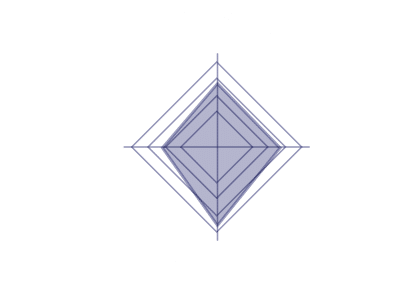
Pillars of Success
You are not alone
25%
of internal auditors are actively using AI or automation tools as 2025 closes, with about 50% piloting (AuditBoard, 2026 Focus on the Future).
80%
projected internal-audit AI adoption in 2026, doubling from 39% currently using plus 41% planning to adopt (Wolters Kluwer, 2025).
40%
rise in generative AI use in audit activities over the past year, from 15% to 40% (IIA, Pulse of Internal Audit).
78%
of internal audit teams use data analytics in some or all of their audits (2024 study, via ACCA).
Join those who are leveraging data to move from financial stewardship to strategic business leadership.

How is AI raising the stakes

The risk of being caught behind is not hypothetical.
The EU AI Act and equivalent legislation in multiple jurisdictions are creating mandatory audit and governance obligations for AI systems used in employment, credit, and other high-risk domains. Organisations that are deploying AI tools without audit oversight are accumulating governance deficits that the CAE will eventually be asked to remediate - often after a failure has already occurred. CAEs who have not yet built the capability to audit AI systems are not just behind on technology; they are behind on their core mandate.
The board relationship is also under pressure.
Boards are increasingly asking internal audit to provide assurance on topics - AI governance, cybersecurity, ESG data integrity - that require data and analytical capability that traditional audit methodologies do not provide. CAEs who cannot credibly address these emerging risk areas are finding their strategic relevance questioned at precisely the moment when the function's potential value is highest. The window to build this capability proactively is narrowing.
The internal audit profession is at an existential inflection point.
Gartner's 2026 survey found that over 70% of Chief Audit Executives cite AI adoption as a top priority - yet only 25% of internal audit functions are actively using AI in their work. That gap is not a technology problem. It is a data readiness problem. CAEs who have not built the data infrastructure to support continuous monitoring, automated risk scoring, and AI-assisted audit planning are watching their audit coverage shrink relative to the organisation's risk exposure every year that headcount stays flat and the risk landscape grows.
C-Suite | Audit
How Bronson can help

Data Strategy and Governance
Bronson.AI builds the data architecture, ownership model, and governance framework that connects operational data into a single, governed layer, so that decisions are made from one version of the truth rather than competing reports.
- Data standards framework covering metric definitions, KPI structures, and cross-functional data taxonomy.
- Data ownership and stewardship model assigning accountability for each data domain.
- AI governance policy ensuring automated decisions are auditable, explainable, and compliant.

Modern Data Analytics
Bronson.AI builds the analytics infrastructure that gives real-time visibility into performance, connected across every relevant system. We move the function from lagging indicator reporting to forward-looking insight that enables proactive decisions at scale.
- Unified data layer integrating source systems into a single analytics environment.
- Leading indicator frameworks that surface risk and opportunity before they become problems.
- ROI measurement connecting improvement initiatives to business outcomes in real time.

AI Readiness and Data Management Assessment
Bronson.AI assesses the data foundation and process maturity that determines whether AI investments will deliver. Before committing to AI tools, the function needs an honest picture of where the data actually stands, and a prioritised roadmap for closing the gaps.
- Data maturity assessment evaluating completeness, consistency, quality, and governance readiness across relevant systems.
- AI use case prioritisation identifying which applications the current data foundation can support now versus after remediation.
- Prioritised roadmap sequencing the data and process work that AI adoption requires.
Unlock your potential
Unlock the Power of Data in Audit
Data is the backbone of a modern, high-impact internal audit function. For the CAE, harnessing integrated, real-time, and reliable data across financial, operational, and technology systems is what enables the function to provide assurance at the scale and depth the organisation's risk environment requires.
Overcome Data Challenges Effortlessly
One of the primary challenges facing Chief Audit Executives is audit coverage that cannot keep pace with organisational complexity and the expanding risk landscape. Data quality issues, limited analytical capability, and the inability to move beyond periodic sampling to continuous monitoring are the barriers that prevent the function from delivering the strategic assurance value the board increasingly expects.
The Promise of Data, Analytics, and AI Advancements
Imagine an audit function that monitors the full population of transactions rather than a sample, where anomalies surface automatically rather than being discovered during fieldwork, and where AI governance assurance is a credible core capability rather than an emerging aspiration. This is not just a vision but the very real value proposition that our Data, Analytics, and AI Consulting and Solutions offer.
Realize the Value of Advanced Data Solutions
Our services are designed to guide Chief Audit Executives through:
- Continuous Monitoring: Automated anomaly detection and control monitoring across the full population of financial and operational transactions.
- Risk-Based Audit Planning: Data-driven prioritisation that focuses audit effort on the highest-risk areas in real time.
- AI Governance Assurance: The framework and capability to provide credible board-level assurance on AI risk across the enterprise.
See Results
4x ROI
payback with AI is guaranteed
90 DAYS
to a funded, board-ready AI roadmap
18 MONTHS
from pilots to
AI-centric enterprise
Get started today!
Frequently asked questions
Turn your organisation's data into actionable insight that extends audit's reach far beyond what manual auditing covers, because analytics can test entire populations continuously where auditors can only sample periodically, and that is what lets coverage scale with risk rather than fall behind it. The approach applies analytics to the data across the organisation to monitor for the patterns, anomalies, and control failures that signal risk, flagging what needs human attention rather than requiring auditors to look everywhere themselves. Auditors then focus their limited capacity on investigating what the analytics surface, which is a far more productive use of skilled time than manual sampling.
The shift this represents is from auditing a sample after the fact to monitoring the population continuously, which fundamentally changes what coverage means. Instead of examining a small slice of activity periodically and hoping it is representative, analytics watch the whole, so the question moves from whether your sample happened to catch a problem to whether your monitoring flagged it, which it can do across far more ground.
The payoff is audit coverage that keeps pace with a growing and changing risk landscape, which manual auditing simply cannot. The team's capacity goes further because it is directed by analytics at where the risk actually is, rather than spread thin trying to cover everything by hand. Coverage gaps close, emerging risks are caught earlier, and the function provides assurance over far more of the organisation than its headcount would otherwise allow. Building the analytics capability that extends audit's reach is what lets internal audit remain credible as the business outgrows the team's ability to cover it manually, which is the position most audit functions are heading toward.
Establish secure, well governed data management as the foundation for your findings, because audit findings are only as credible as the data behind them, and governed, reliable data is what makes findings defensible rather than disputable. The work is understanding where the data quality problems originate, whether in the source systems, the extraction, or the inconsistency between sources, and addressing them so the data audit relies on is accurate, complete, and consistent. This may mean working with the business to fix data at source, or building validated extraction and reconciliation so audit knows its data is sound before it builds findings on it.
The reason data quality is existential for audit specifically is that audit's entire value rests on the reliability of its conclusions. When a finding can be dismissed because the underlying data was flawed, it is not just that finding that suffers; the credibility of the whole function takes the hit, and management learns to challenge the data rather than address the issue. Defensible data is the precondition for findings that drive action rather than debate.
The payoff is findings that hold up, which is what audit exists to produce. When the data is governed and reliable, findings are based on evidence the business cannot credibly dispute, so the conversation moves from arguing about the data to addressing the issue, which is where it should be. Reliable data also makes audit analytics trustworthy, opening the door to the continuous monitoring and full-population testing that depend on data quality. Fixing the data foundation is not a technical side issue; it is what determines whether audit findings carry weight, and getting it right is what lets the function do its job of providing assurance the organisation can rely on.
Automate the monitoring so it runs continuously and streamlines what periodic auditing cannot do, because constant automated testing of controls and transactions is what turns audit from a periodic snapshot into ongoing assurance, and that requires the testing to run by itself rather than depend on an auditor performing it. The approach codifies the controls and tests audit cares about and runs them automatically against live data on an ongoing basis, flagging exceptions as they arise rather than discovering them in the next scheduled audit, so issues surface in near real time rather than months after they occur.
The reason periodic auditing leaves gaps is structural: it examines a point in time, so anything that happens between audits goes unmonitored until the next one, and a control that fails the day after an audit may not be caught until the following cycle. Continuous monitoring closes that gap by testing all the time, which means failures are caught when they happen rather than whenever the next audit happens to look.
The payoff is assurance that is continuous rather than periodic, catching issues in near real time and dramatically reducing the window in which a problem can persist undetected. The audit function shifts from providing a periodic verdict to providing ongoing assurance, which is both more valuable and more aligned with how risk actually arises, continuously rather than on an audit schedule. Continuous monitoring also makes better use of audit capacity, directing auditors to investigate what the monitoring flags rather than performing routine testing manually. Building the automated monitoring that runs continuously is what turns audit from a series of periodic examinations into an ongoing assurance capability, which is increasingly what boards and regulators expect of a modern audit function.
Start by examining what lies beneath the AI deployments rather than chasing each one, because understanding whether the data and governance underneath the organisation's AI are sound is what lets audit assess AI risk systematically rather than tool by tool as fast as it can. The approach builds an inventory of where AI is being used, assesses each use for risk based on what it does and what it could affect, and examines whether the data feeding it and the governance around it are adequate, because AI built on poor data or deployed without governance is where the real risk sits regardless of how sophisticated the tool is.
The reason this is the right starting point is that auditing AI tool by tool, as deployments multiply, is a losing race, and it misses the systemic issue, which is usually not any individual tool but the absence of governance and data discipline across the organisation's AI use. An organisation deploying AI faster than audit can assess it almost certainly has a governance gap, and identifying that gap is more valuable than auditing individual tools, because the gap is the root risk.
The payoff is audit assurance over the organisation's AI that is systematic rather than perpetually behind, focused on the governance and data foundations that determine whether AI use is sound rather than chasing each deployment individually. Audit can advise on the governance framework the organisation needs, prioritise its attention on the highest-risk uses, and provide the board the assurance it increasingly demands about AI oversight. Approaching AI assurance through the readiness and governance underneath, rather than tool by tool, is what lets audit address AI risk at the pace the organisation is actually adopting it, which tool-by-tool auditing never can.