
Entry Level | Audit
Internal Auditor
"Every audit begins by waiting for IT to hand me the data."
Quick Facts
Role
Entry Level | Audit
Level
Entry Level
Dept
Audit
Industry
Audit
Env
Hybrid GRC
Tools
TeamMate, Excel, ACL
Sound familiar?
Testing still relies on manual sampling even where full-population data exists, so exceptions and emerging patterns can remain undetected
Getting data out of financial systems requires raising an IT request every time and the process is slow enough to delay audits
Workpaper documentation is time-consuming and inconsistent across the team, creating avoidable quality, review, and knowledge-transfer problems
Audit coverage is narrower than it should be because the team lacks the analytics tools to test areas manual methods cannot reach
Continuous auditing is expected but the data feeds and monitoring rules needed to support it have not been built
AI tools could automate testing and workpaper documentation but there is no guidance on where they can be used safely
How AI-ready is your organization?
Complete the 10-minute assessment.
Pinpoint operational gaps, benchmark your maturity across key pillars, and chart a clear path to scalable AI success.
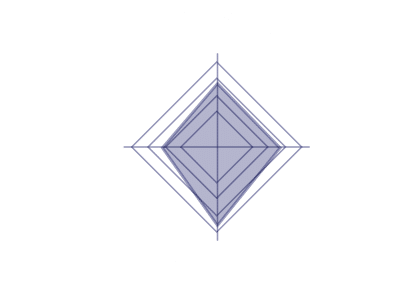
Pillars of Success
You are not alone
40%
reduction in control-testing time that AI can deliver, freeing auditors for strategic work (Deloitte).
84%
of internal auditors would consider AI skills as important when recruiting for their function (Wolters Kluwer, 2025).
54%
of internal auditors expect AI to drive efficiency and productivity gains within 12 months (Wolters Kluwer, 2025).
46%
of auditors say AI adoption in their function is lower than in other areas of the same business (Wolters Kluwer, 2025).
Join those who are leveraging data to move from financial stewardship to strategic business leadership.

How is AI raising the stakes

The AI adoption gap is creating a career development divide.
Internal auditors at organisations with advanced analytics functions are gaining exposure to machine learning-assisted risk assessment, continuous monitoring, and AI governance audit work in their first three to five years. Those at organisations still running manual, sample-based audit programmes are gaining deep knowledge of traditional audit methodology but limited exposure to the analytical skills that are increasingly required for career progression into senior audit, risk, or analytics roles. This early-career experience gap compounds over time.
The tooling problem is also immediate and practical.
Most audit teams still rely on Excel as their primary analysis tool, supplemented by audit management software that is primarily a documentation platform rather than an analytical one. Auditors who want to develop beyond Excel-based analysis - to learn SQL for data extraction, Python for automation, or specialist audit analytics tools - often have to do so outside of work rather than through their audit role. The gap between the analytical capability that career progression requires and the analytical work the role currently provides is widening.
The entry-level internal audit role is changing faster than most training programmes have adapted to reflect.
Audit functions that are investing in data analytics tools are expecting new auditors to contribute to analytical testing from their first year - identifying anomalies, running population analyses, and interpreting model outputs rather than executing manual sample tests. New auditors who arrive without foundational data analytics skills are contributing at a lower level than their peers at more analytically mature organisations, and they are developing skills more slowly because the work they are given does not require or develop analytical capability.
Entry Level | Audit
How Bronson can help
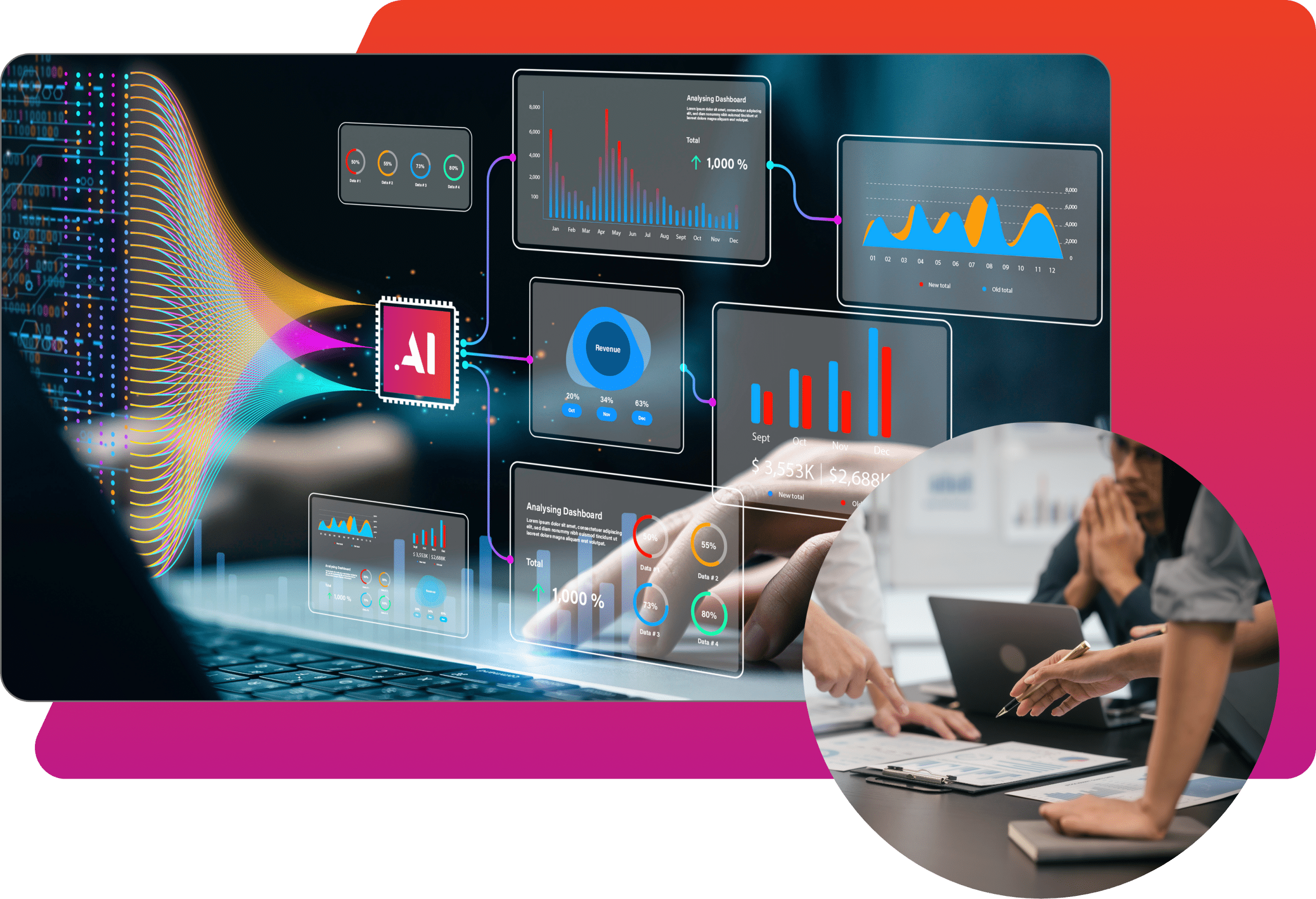
Fractional Data and AI Services
For functions that need specialist data and AI capability without the timeline and cost of permanent recruitment, Bronson.AI provides experienced fractional professionals who integrate directly with the internal team, accelerating delivery while building internal capability in parallel.
- Fractional data engineers who build and maintain the data pipelines and integration infrastructure the function depends on.
- Machine learning and AI specialists who design, validate, and deploy analytical models to production standard.
- Analytics translators who bridge the gap between technical outputs and the business decisions they are designed to inform.

Dashboards and Data Visualisation
Bronson.AI designs and builds dashboards that give real-time visibility into the metrics that matter, in a format that supports decisions rather than just reporting activity. We replace manual compilation with a live, governed view.
- Executive dashboard covering key performance indicators in real time with drill-down capability.
- Self-serve reporting views that allow non-specialist stakeholders to access current data without relying on analysts.
- Trend and exception analytics that surface what needs attention rather than displaying everything equally.

Cloud and Application Migration
Bronson.AI helps modernise the underlying technology infrastructure, migrating legacy systems to cloud platforms that integrate cleanly, scale with the organisation, and support the analytics and AI capabilities the function requires.
- Cloud migration strategy assessing current systems and sequencing the transition to minimise operational disruption.
- Application rationalisation identifying which systems can be consolidated onto modern platforms.
- Data migration and validation programme ensuring historical data is preserved and accessible in the new environment.
Unlock your potential
Unlock the Power of Data in Audit
Data is the backbone of effective modern auditing. For the Internal Auditor, building analytical skills alongside traditional audit methodology is what determines the depth and quality of audit evidence that can be obtained - and the career options that become available as those skills develop.
Overcome Data Challenges Effortlessly
One of the primary challenges facing entry-level internal auditors is the gap between the analytical work that modern audit functions require and the data access, tools, and training that most audit roles currently provide. Building the analytical infrastructure and skills that bridge this gap is both a personal development investment and an organisational capability investment.
The Promise of Data, Analytics, and AI Advancements
Imagine an audit function where data extraction is self-serve rather than requiring IT involvement, where testing covers the full population rather than a sample, and where finding documentation is generated from analytical outputs rather than manually written. This is not just a vision but the very real value proposition that our Data, Analytics, and AI Consulting and Solutions offer.
Realize the Value of Advanced Data Solutions
Our services are designed to guide Internal Auditors through:
- Analytical Testing Skills: Tools and techniques for full-population audit analysis that replace sample-based testing with comprehensive data review.
- Data Access and Extraction: Self-serve capability for accessing and extracting audit-relevant data from financial and operational systems.
- Career Development: Analytical skills developed through real audit work that build the capabilities required for progression into senior audit and analytics roles.
See Results
4x ROI
payback with AI is guaranteed
90 DAYS
to a funded, board-ready AI roadmap
18 MONTHS
from pilots to
AI-centric enterprise
Get started today!
Frequently asked questions
Turn the full data population into actionable insight, because analytics applied to the whole population is what lets you test everything rather than hoping a sample is representative, and that completeness is the central advantage of analytics-based testing over manual sampling. The approach extracts the full population of transactions and applies analytical tests for the conditions you are auditing, exceptions, anomalies, control failures, across every record rather than a sample, so nothing escapes testing simply because it was not in the sample.
The reason this matters is that sampling carries an inherent limitation: it tests a small subset and infers conclusions about the whole, which works for some purposes but misses anything not captured in the sample, including the targeted, infrequent issues that fraud and significant control failures often represent. A scheme designed to stay below sampling thresholds, or an error that affects only specific transactions, can pass undetected through sample testing while full-population analysis catches it because it tests everything.
The payoff is testing that is both more thorough and often more efficient than manual sampling, because once the analytics are built, testing the full population can be faster than manually working through even a sample. You gain the assurance that comes from testing everything rather than inferring from a subset, you catch the targeted and infrequent issues that sampling misses, and you can repeat the testing easily as new data arrives. Moving from manual sampling to full-population analytics is one of the most significant upgrades available to internal audit, because it addresses the fundamental limitation of sampling, that it only tests what it happens to select, and replaces it with the completeness of testing the whole, which is what full assurance actually requires.
Establish secure, well governed data access as part of the foundation, because reliable, governed access to the data audit needs is what removes the dependence on ad hoc IT extractions, and that access has to be built deliberately rather than negotiated afresh each time. The work is setting up governed, repeatable access to the relevant source data, so audit can extract what it needs through an established mechanism rather than a one-off request to IT, while maintaining the security and controls that data access requires.
The reason the IT-dependency is so costly is that it inserts a wait and a hand-off into every single audit that needs data, which is most of them. The auditor identifies the data they need, requests it from IT, waits, often clarifies because the first extraction was not quite right, waits again, and only then begins the actual audit work. That cycle repeats for every audit, consuming time and creating friction, and it discourages the data-driven auditing that audit is trying to move toward because the data is too much trouble to get.
The payoff is audit that can access the data it needs when it needs it, which removes a pervasive bottleneck and enables the analytics-based auditing that constant IT dependency discourages. Established, governed access means auditors get data through a reliable mechanism rather than a negotiation, the wait and the hand-off disappear, and data-driven auditing becomes practical because the data is readily available rather than a hurdle to clear. Building reliable, governed data access is what frees audit from the IT-extraction bottleneck and makes the data the function depends on a readily available resource rather than something to be requested and waited for every time.
Ground your findings in reliable, governed data, because a finding built on data the business cannot credibly dispute moves the conversation from arguing about the evidence to addressing the issue, and that defensibility is what turns findings into action rather than debate. The work is ensuring the data behind each finding is accurate and reliable, so the finding rests on evidence rather than assertion, and then writing the finding to make the condition, its cause, its consequence, and the required action clear and specific rather than general.
The reason findings get debated is usually one of two things: either the data can be challenged, so the business disputes the evidence rather than addressing the issue, or the recommendation is too vague to action, so it generates discussion about what should actually be done rather than doing it. Solid data removes the first, and specific, actionable recommendations remove the second, which between them is most of what turns a finding from a debate into a fix.
The payoff is findings that lead to genuine remediation, which is the entire purpose of raising them. A finding that the business cannot dispute and that specifies clearly what must be done gets actioned, because there is nothing to argue about and no ambiguity about the required response. That makes audit effective rather than merely observant, demonstrating value through the issues it gets fixed rather than the issues it identifies. Writing findings grounded in reliable data with clear, specific recommendations is what closes the gap between identifying a problem and getting it resolved, which is where audit's value is ultimately realised or lost, and the data foundation is what makes the finding defensible enough to survive the encounter with a business that would often rather debate than remediate.
Draw on experienced analytics capability to learn by doing, because access to data and analytics support is what lets you build practical skills on real audit work without first becoming a data scientist, and capability grows through applying accessible techniques to genuine audit questions rather than through theoretical training. The starting point is the analytics that deliver audit value without advanced skills, testing for duplicates, gaps, anomalies, and exceptions across full populations, which are conceptually straightforward and immediately useful, and building from there as confidence grows.
The reason this is achievable without a data science background is that much of the highest-value audit analytics is not technically sophisticated. Testing a full population for duplicate payments, missing sequences, or values outside expected ranges is analytically simple but far more powerful than manual sampling, and it requires understanding the audit question and the data rather than advanced statistics or machine learning. The data science comes later, if at all; the practical value starts with accessible techniques an auditor can learn to apply.
The payoff is an auditor who uses analytics to do better, more thorough audits, starting with achievable techniques and building genuine capability over time, rather than one who believes analytics requires skills they do not have and therefore never starts. Beginning with accessible analytics on real audits, supported where helpful by experienced capability, delivers immediate audit value while building the foundation for more advanced work. Starting with what is achievable rather than waiting until you have a data science background is what gets internal auditors actually using analytics, which improves the audits now and builds the capability that the profession increasingly requires.