
Director | Utilities
Head of Grid & Energy Analytics
"Operations and planning work from different data environments, and bridging them never quite gets done."
Quick Facts
Role
Director | Utilities
Level
Director
Dept
Utilities
Industry
Utilities
Env
Cloud data platform
Tools
Snowflake, Python, Power BI
Sound familiar?
Grid analytics can be technically sophisticated yet remain unused because outputs are not embedded in operating procedures, tools, and decision rights
Real-time operational data and planning-horizon data exist in separate environments and connecting them is a persistent gap
Demand for analytics use cases exceeds team capacity, creating prioritisation pressure and increasing the risk of inconsistent delivery quality
Regulatory reporting and evidence requirements are expanding faster than the data lineage, controls, and automation needed to support them
The value of grid analytics is difficult to demonstrate because avoided outages, deferred investment, and operational benefits are not measured consistently
Executive appetite for AI is high, but integrated, quality-assured data and clear operating controls are not yet in place
How AI-ready is your organization?
Complete the 10-minute assessment.
Pinpoint operational gaps, benchmark your maturity across key pillars, and chart a clear path to scalable AI success.
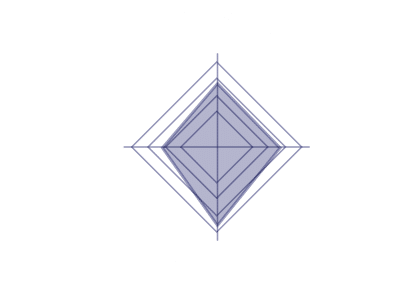
Pillars of Success
You are not alone
22.0%
fastest-growing CAGR in the AI in Energy market, in services such as integration and analytics (Grand View Research).
40%
of new fleet and field platforms now integrate AI-driven analytics for forecasting and optimisation (LoginextSolutions, 2026).
20%
reduction in operating costs achievable through AI-based predictive maintenance on grid infrastructure (Schneider Electric, 2025).
25%
projected growth in energy demand by 2050, making demand and grid-load forecasting essential for utilities (Capacity, 2025).
Join those who are leveraging data to move from financial stewardship to strategic business leadership.

How is AI raising the stakes

The real-time versus planning data integration problem is becoming more consequential as AI tools require both historical pattern data and real-time operational state data to produce reliable outputs.
Load forecasting models that do not incorporate current network state perform less well than those that do. Outage prediction models that cannot access real-time sensor data lose their predictive advantage over simpler statistical approaches. Building the architecture that connects the real-time operational data layer to the historical analytics environment - without compromising the security of safety-critical OT systems - is the technical challenge that determines whether advanced AI analytics in utilities reaches its potential or remains constrained to historical pattern analysis.
The regulatory data challenge is intensifying.
Smart meter data privacy and security requirements, NERC CIP standards for operational data, increasing environmental and ESG reporting requirements, and the data governance expectations of energy market regulators are all creating data management obligations that sit squarely in the analytics function's domain. Analytics leaders who are not ahead of the regulatory data curve are managing a growing compliance risk alongside the operational analytics mandate.
The Head of Grid and Energy Analytics is managing a function whose potential impact is widely recognised but whose realised value is often significantly below that ceiling.
The gap between what grid analytics could deliver - predictive outage prevention, AI-optimised network operation, real-time DER management intelligence - and what it actually delivers in most utilities organisations is almost always a data infrastructure and adoption problem rather than an analytical capability problem. Analytics teams that have invested in the model sophistication but not in the data governance, the OT/IT integration, or the operational change management that makes sophisticated models actionable are producing impressive technical outputs that are not changing operational decisions.
Director | Utilities
How Bronson can help

Generative AI and LLMs
Bronson.AI implements generative AI and large language model solutions that accelerate operational workflows, from drafting and summarisation to intelligent search and recommendation, grounded in the organisation's own governed data.
- Generative AI use case design identifying where LLM capability delivers genuine productivity and quality gains.
- Retrieval-augmented generation connecting LLM outputs to internal knowledge bases and governed data sources.
- Output governance framework ensuring AI-generated content is accurate, auditable, and aligned with organisational standards.
Fractional Data and AI Services
For functions that need specialist data and AI capability without the timeline and cost of permanent recruitment, Bronson.AI provides experienced fractional professionals who integrate directly with the internal team, accelerating delivery while building internal capability in parallel.
- Fractional data engineers who build and maintain the data pipelines and integration infrastructure the function depends on.
- Machine learning and AI specialists who design, validate, and deploy analytical models to production standard.
- Analytics translators who bridge the gap between technical outputs and the business decisions they are designed to inform.

Cloud and Application Migration
Bronson.AI helps modernise the underlying technology infrastructure, migrating legacy systems to cloud platforms that integrate cleanly, scale with the organisation, and support the analytics and AI capabilities the function requires.
- Cloud migration strategy assessing current systems and sequencing the transition to minimise operational disruption.
- Application rationalisation identifying which systems can be consolidated onto modern platforms.
- Data migration and validation programme ensuring historical data is preserved and accessible in the new environment.
Unlock your potential
Unlock the Power of Data in Grid Analytics
Data is the backbone of a high-impact grid analytics function. For the Head of Grid and Energy Analytics, building the unified, governed data infrastructure that connects operational and planning data, satisfies regulatory requirements, and supports reliable AI model deployment is what allows the function's technical sophistication to translate into the operational impact the utility needs.
Overcome Data Challenges Effortlessly
One of the primary challenges facing grid analytics leaders is analytics capability that exceeds the data infrastructure it depends on - technically sophisticated models operating on fragmented, inconsistent, or inadequately governed data that limits their reliability in operational deployment. Building the data foundation that matches the analytics ambition is the investment that closes the gap between potential and actual impact.
The Promise of Data, Analytics, and AI Advancements
Imagine a grid analytics function with a unified data architecture connecting real-time and planning data, production-grade AI deployment infrastructure, and regulatory data governance that satisfies compliance requirements without bespoke effort for every reporting cycle. This is not just a vision but the very real value proposition that our Data, Analytics, and AI Consulting and Solutions offer.
Realize the Value of Advanced Data Solutions
Our services are designed to guide Heads of Grid and Energy Analytics through:
- Unified Grid Data Architecture: Real-time operational and planning data connected in a governed analytics layer.
- Production AI Deployment: Infrastructure and change management that makes AI analytics operationally embedded.
- Regulatory Data Governance: Compliance-ready data management that satisfies evolving reporting requirements.
See Results
4x ROI
payback with AI is guaranteed
90 DAYS
to a funded, board-ready AI roadmap
18 MONTHS
from pilots to
AI-centric enterprise
Get started today!
Frequently asked questions
Turn the analytics into clear, comprehensible insight delivered where operational decisions happen, because analytics that inform operations have to reach operational decision-makers in their context and at the point of decision, not be produced in the analytics team's terms and left to be found. The work is understanding the operational decisions the analytics should inform, then delivering the insight accordingly, in the operational workflow, in a form operators immediately grasp, at the moment the decision is made, rather than as standalone analytical outputs disconnected from operations.
The reason grid analytics often fail to reach operations is a gap between the analytics function and the operational reality, where the analytics team produces technically sophisticated work measured by its analytical quality, while operations needs something it can act on within its workflow and timeframe, and those are different things. Analytics that are technically excellent but arrive disconnected from operational decisions, in a form operators cannot readily use, do not get acted on regardless of their quality.
The payoff is analytics that actually inform operational decisions, which is the only reason the analytics function exists in an operational context. When analytics are delivered into the operational workflow, at the right moment, in a form operators can act on, they influence the operational decisions they were built to inform, and the function shifts from producing analytics to improving operations. That also transforms how the function is valued, because demonstrable operational impact is a far stronger position than a record of sophisticated analytics that operations does not use. Closing the gap between analytics and operational decisions, by embedding insight in the operational workflow rather than producing it separately, is what turns grid analytics from technically excellent work that sits unused into a genuine influence on how the grid is operated, which is where the value of grid analytics is actually realised.
Establish secure, well governed data management that connects the real-time and planning environments, because analytics that span operational and planning horizons depend on the two data environments being connected, and the separation is exactly what prevents that. The work is building the foundation that bridges the real-time operational data and the historical planning data, connecting them in a way that respects their different characteristics, the velocity and security requirements of real-time data, the depth of historical planning data, so analysis can draw on both.
The reason the separation is limiting is that the two environments developed for different purposes, real-time for operations, historical for planning, and they typically live in separate systems with different architectures, but the analytics that deliver the most value increasingly need both, combining real-time grid state with historical patterns to inform decisions that span operational and planning horizons. The separation means analysis is confined to one environment or the other, missing the value that combining them would unlock.
The payoff is analytics that span operational and planning horizons, which unlocks value that neither environment alone provides. When real-time and planning data are connected, analysis can combine current grid state with historical patterns, informing decisions that need both, and the analytics function can support the full range of grid decisions rather than being confined to either operations or planning. The connection has to be architected carefully, respecting the security and performance requirements of the real-time environment, which is part of doing it properly. Connecting the real-time and planning data environments is what turns grid analytics from work confined to one horizon or the other into analysis that spans both, which is increasingly where the most valuable grid analytics lies, combining the immediacy of operational data with the depth of planning data to inform decisions that need the full picture.
Turn an assessment of the use cases into a clear basis for prioritisation, because directing limited analytics capacity well depends on evaluating use cases against their value and feasibility rather than pursuing whichever is loudest or most recent. The work is assessing each potential use case against the factors that matter, the value it would deliver, the feasibility given data and capability, the readiness of the data foundation it needs, and the strategic importance, then prioritising on that basis so capacity goes to the use cases with the best combination of value and deliverability.
The reason structured prioritisation matters is that without it, analytics capacity goes to whatever is most requested, most recent, or most championed, rather than to what delivers the most value, and the function ends up busy but not impactful, spread across use cases chosen by influence rather than merit. A clear prioritisation framework grounds the choices in value and feasibility, which directs the limited capacity to where it will matter most and provides a defensible basis for the inevitable decisions to defer some use cases.
The payoff is analytics capacity directed to the use cases that deliver the most value, which maximises the function's impact given its constraints. When use cases are prioritised against a clear framework, the function works on what matters most rather than what is most pushed, delivers more value from its limited capacity, and can defend its choices and its deferrals on a rational basis. The prioritisation also reveals where data foundation work is the real constraint, which use cases are blocked not by capacity but by data readiness, which usefully sequences the foundational work too. Prioritising analytics use cases against value and feasibility is what turns a function overwhelmed by more demand than it can meet into one that deliberately directs its capacity to the highest-value work, which is what lets a grid analytics function maximise its impact rather than dissipating its limited capacity across use cases chosen by influence rather than value.
Turn the analytics' actual contributions into a clear, comprehensible case, because making the investment case for distributed benefits depends on assembling the specific operational improvements and risks avoided into a coherent picture, rather than asserting general value that diffuse benefits make easy to discount. The work is documenting the specific contributions, the outages avoided, the investments better targeted, the operational efficiencies gained, the regulatory obligations met, and assembling them into a case that shows the cumulative value, grounded in concrete instances rather than abstract claims.
The reason distributed benefits are hard to argue is that no single benefit is large enough to justify the investment on its own, and the value lies in the accumulation of many improvements across operations, which is easy to dismiss when stated generally but persuasive when shown as a collection of specific, evidenced contributions. The case has to be built from the concrete instances, because that is what makes the distributed value tangible rather than hand-waving.
The payoff is a defensible investment case that secures the funding grid analytics needs despite its benefits being distributed rather than concentrated. When the case is built from specific, evidenced contributions assembled into a cumulative picture, the executive audience can see the real value rather than discounting a general claim, and the investment is justified on demonstrated impact rather than on assertion. Building the case this way also creates the measurement discipline that demonstrates ongoing value, which protects the investment over time. Making the business case for grid analytics by assembling the distributed benefits into a concrete, evidenced picture is what turns an investment whose value is real but diffuse into one whose return is demonstrable, which is what secures funding for analytics whose benefits, while substantial in aggregate, are spread across many operational improvements rather than concentrated in one easily-argued number.