
Entry Level | Utilities
Smart Grid Data Scientist
"I often have no way to prove a model is right, because nobody ever labelled what actually happened."
Quick Facts
Role
Entry Level | Utilities
Level
Entry Level
Dept
Utilities
Industry
Utilities
Env
Cloud + AMI edge
Tools
Python, Databricks, GIS
Sound familiar?
AMI and SCADA data require extensive validation and cleaning before analysis, consuming time needed for modelling and operational interpretation
Limited access to power-systems expertise makes it harder to distinguish statistically interesting patterns from operationally meaningful events
Model validation is difficult because clear ground truth for grid event classification often does not exist
Probabilistic outputs reflect grid uncertainty, but operational users need clearer confidence, thresholds, and actions before they will rely on them
Models stall at pilot stage because production data pipelines, monitoring, validation, and integration with grid applications are incomplete
Leadership expectations for AI assume a data readiness that AMI and SCADA sources do not yet provide
How AI-ready is your organization?
Complete the 10-minute assessment.
Pinpoint operational gaps, benchmark your maturity across key pillars, and chart a clear path to scalable AI success.
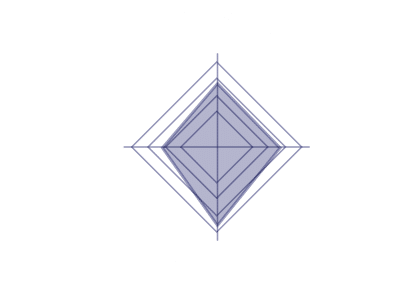
Pillars of Success
You are not alone
33.0%
share held by renewable energy management, the largest application in the AI in Energy market in 2025 (Grand View Research).
22.0%
fastest-growing CAGR in the AI in Energy market, in services such as integration and analytics (Grand View Research).
40%
of new fleet and field platforms now integrate AI-driven analytics for forecasting and optimisation (LoginextSolutions, 2026).
20%
reduction in operating costs achievable through AI-based predictive maintenance on grid infrastructure (Schneider Electric, 2025).
Join those who are leveraging data to move from financial stewardship to strategic business leadership.

How is AI raising the stakes

AI and machine learning in the utility sector are moving from research to production deployment at a pace that is creating demand for data scientists who understand the operational context of their models.
Load forecasting models need to be reliable enough for grid operators to make real-time dispatch decisions from. Outage prediction models need to meet the accuracy and false alarm rate standards that operations teams will actually act on rather than dismiss as noise. AMI anomaly detection models need to produce alert volumes that the revenue protection team can investigate rather than a flood of alerts that overwhelms their capacity. These operational requirements are not features of the models themselves - they are requirements on the entire system of model, data pipeline, output communication, and operational integration.
The power systems data environment is genuinely different from standard tabular data science environments, and the techniques that work well in consumer or financial data contexts require significant adaptation for grid data.
Time series with gaps and sensor failures, data collected at different temporal resolutions that need to be aligned, physical constraints that valid predictions must respect, highly correlated features that reflect the physical structure of the network - these are characteristics of grid data that experienced practitioners develop intuition for and that new data scientists can mishandle in ways that produce models with poor production performance.
The Smart Grid Data Scientist role is at the intersection of two disciplines - data science and power systems engineering - and the path to maximum impact requires genuine competence in both rather than deep expertise in one with token familiarity with the other.
Data science approaches applied to grid data without power systems context produce technically sound models that generate non-physical outputs, miss the domain-specific validation checks that experienced engineers apply automatically, and create outputs that the operations team cannot trust because the model's behaviour on edge cases is physically implausible. Building domain knowledge is as important a career development priority as building modelling skills.
Entry Level | Utilities
How Bronson can help

Modern Data Analytics
Bronson.AI builds the analytics infrastructure that gives real-time visibility into operational performance, connected across every relevant system. We move the function from lagging indicator reporting to forward-looking insight that enables proactive decisions at scale.
- Unified data layer integrating source systems into a single analytics environment.
- Leading indicator frameworks that surface risk and opportunity before they become problems.
- ROI measurement connecting improvement initiatives to business outcomes in real time.
Fractional Data and AI Services
For functions that need specialist data and AI capability without the timeline and cost of permanent recruitment, Bronson.AI provides experienced fractional professionals who integrate directly with the internal team, accelerating delivery while building internal capability in parallel.
- Fractional data engineers who build and maintain the data pipelines and integration infrastructure the function depends on.
- Machine learning and AI specialists who design, validate, and deploy analytical models to production standard.
- Analytics translators who bridge the gap between technical outputs and the business decisions they are designed to inform.

AI Readiness and Data Management Assessment
Bronson.AI assesses the data foundation and process maturity that determines whether AI investments will deliver. Before committing to AI tools, the function needs an honest picture of where the data actually stands, and a prioritised roadmap for closing the gaps.
- Data maturity assessment evaluating completeness, consistency, quality, and governance readiness across relevant systems.
- AI use case prioritisation identifying which applications the current data foundation can support now versus after remediation.
- Prioritised roadmap sequencing the data and process work that AI adoption requires.
Unlock your potential
Unlock the Power of Data in Smart Grid Analytics
Data is the backbone of effective smart grid analytics. For the Smart Grid Data Scientist, having access to clean, integrated, domain-contextualised grid data - and the production ML infrastructure to deploy models reliably - is what enables the transition from technically impressive prototypes to operational models that the business can depend on.
Overcome Data Challenges Effortlessly
One of the primary challenges facing Smart Grid Data Scientists is grid data that requires extensive cleaning, lacks the domain context to interpret correctly, and exists in an environment without the production ML infrastructure needed for reliable deployment. Addressing these data and infrastructure gaps is what allows analytical skill to translate into operational value.
The Promise of Data, Analytics, and AI Advancements
Imagine a smart grid analytics environment with clean, integrated data pipelines, production ML infrastructure that supports reliable model deployment, and the power systems domain knowledge to design models that produce physically valid outputs the operations team can trust. This is not just a vision but the very real value proposition that our Data, Analytics, and AI Consulting and Solutions offer.
Realize the Value of Advanced Data Solutions
Our services are designed to guide Smart Grid Data Scientists through:
- Grid Data Quality: Clean, integrated AMI, SCADA, and network data that enables reliable model development.
- Production ML Deployment: Infrastructure and operational integration that moves models from pilot to reliable production.
- Domain Development: Power systems knowledge that improves model design, validation, and operational interpretation.
See Results
4x ROI
payback with AI is guaranteed
90 DAYS
to a funded, board-ready AI roadmap
18 MONTHS
from pilots to
AI-centric enterprise
Get started today!
Frequently asked questions
Establish secure, well governed data management that handles the cleaning systematically, because reliable analysis depends on clean data, and building the cleaning into the foundation is what stops it consuming the time that should go into analysis. The work is establishing a data pipeline that handles the cleaning, the gap-filling, anomaly detection, and quality management, systematically and automatically, so the data arrives analysis-ready rather than requiring manual cleaning each time, with governance that maintains the quality.
The reason manual cleaning is such a drain is that AMI and SCADA data inherently arrives with quality issues, missing reads, anomalous values, inconsistencies, and when the cleaning is done manually for each analysis, it consumes the majority of the data scientist's time, leaving little for the actual analysis and modelling that is the point of the role. Building the cleaning into an automated pipeline does once, systematically, what would otherwise be redone manually every time.
The payoff is data that arrives analysis-ready, freeing the data scientist for the modelling and analysis that the role is actually for. When the cleaning is built into the foundation, the data scientist works from clean, reliable data rather than spending most of their time preparing it, which both increases how much analysis gets done and improves it because the time goes into the modelling rather than the cleaning. The systematic cleaning also produces more consistent results than manual cleaning, which varies each time. Establishing the data foundation that handles cleaning systematically is what turns AMI and SCADA data from raw material that consumes the data scientist's time in manual preparation into analysis-ready data that lets them focus on the modelling and insight that is the actual value of the role, rather than perpetually cleaning data before they can begin.
Build the infrastructure that streamlines models into production, because deploying models beyond pilots depends on a production environment that runs them reliably, and the absence of that environment is exactly what keeps models stuck at the pilot stage. The work is establishing the production infrastructure, the environment to deploy models, the pipelines to feed them live data, the monitoring to track their performance, and the processes to maintain them, so a model that works in development can be moved into reliable operational use rather than remaining a pilot.
The reason models get stuck as pilots is that building a model and operating a model are different things, and many organisations can build models but lack the production infrastructure to run them reliably, monitor their performance, and maintain them, so the model that worked in the pilot has nowhere to go. The gap is not the model but the operational environment, which is what production deployment actually requires and what pilots do not need.
The payoff is models that move into reliable operational use and deliver ongoing value, rather than pilots that prove a concept and then stall. With a production environment, models can be deployed to run continuously on live data, their performance monitored and maintained, and their value realised operationally rather than just demonstrated in a pilot. The infrastructure also makes deploying subsequent models far easier, because the environment exists rather than being improvised each time. Building the production environment is what turns models from pilots that work once into operational capabilities that deliver continuously, which is the difference between a data science function that produces impressive demonstrations and one that delivers models actually running in the grid operation, and it is the infrastructure gap that most often keeps smart grid models stuck short of production.
Establish the data foundation and validation approach that work without clean ground truth, because validating models in domains where outcomes are uncertain depends on combining the available signals with physics-based and operational checks, and building that approach on a sound data foundation is what makes validation possible despite the ground-truth problem. The work is using the validation methods suited to uncertain ground truth, checking model outputs against physical expectations, validating operationally by tracking how predictions relate to subsequent events, and incorporating expert assessment, all grounded in the best data foundation available.
The reason ground truth is a problem in grid contexts is that the events models predict are often not cleanly labelled, you may not have a definitive record of exactly when and why something occurred, so the clean labelled outcomes that supervised validation relies on do not exist. This does not make the models unvalidatable, but it means validation cannot rest on comparing predictions to clean outcomes alone, and must instead combine multiple imperfect signals into a credible assessment.
The payoff is models you can validate well enough to trust and deploy, despite the absence of clean ground truth, which is the normal situation in grid analytics. Using validation approaches suited to uncertain ground truth, physics-based checks, operational validation, expert assessment, lets you build justified confidence in models even where clean labels do not exist, which is what allows them to be deployed responsibly rather than either trusted blindly or never deployed for lack of perfect validation. Establishing the validation approach that works without clean ground truth is what lets a smart grid data scientist validate and deploy models in the realistic conditions of grid data, where ground truth is usually uncertain, rather than being stuck unable to validate because the clean outcomes that textbook validation assumes simply do not exist in the domain.
Draw on the analytics, engineering, and data science support of a full data capability without building it all internally, because that on-demand access is what lets you add capacity now, scaled to actual need, rather than waiting through a long and competitive hiring process. This gives you the data science capability the work requires when you need it, without carrying permanent cost through the periods when demand is lower, which suits the often-variable nature of analytics demand.
The advantage beyond raw capacity is experience, because a capability that has done smart grid data science elsewhere brings knowledge of the domain's particular challenges, the data quality issues, the validation problems, the production deployment gaps, that a function building capacity from scratch tends to learn slowly. That experience accelerates the work and avoids the pitfalls that consume time for those encountering them for the first time.
The consideration that should shape the arrangement is capability transfer, because the best support builds your team's capability over time, developing the skills that let you do more internally and depend on outside help less. That way you add capacity now while growing the internal capability that reduces the dependency. The decision is rarely a pure build-versus-buy in the abstract; it is how to add data science capacity now, given competitive hiring and variable demand, while building internal capability over time, and on-demand access to an experienced capability is usually the most pragmatic answer, particularly given how hard power-systems-literate data scientists are to hire.