
Manager | Manufacturing
Supply Chain Manager
"Forecast error leaves me short on the materials I need and overstocked on the ones I do not."
Quick Facts
Role
Manager | Manufacturing
Level
Manager
Dept
Manufacturing
Industry
Manufacturing
Env
Cloud SCM + on-prem ERP
Tools
SAP, Kinaxis, Excel
Sound familiar?
Supplier performance data is gathered manually rather than monitored continuously and problems surface too late to prevent impact
Demand forecast errors are creating stockouts for some materials and excess inventory for others, tying up cash while service suffers
Supply disruptions appear as surprises because supplier, logistics, geopolitical, and inventory signals are not monitored together
Lead time variability from key suppliers is not tracked systematically and the planning models do not account for it
Procurement decisions focus on price because quality, delivery reliability, resilience, and risk are not incorporated into total-cost analysis
AI-based demand forecasting cannot outperform the current process while supplier and lead time data remains untracked
How AI-ready is your organization?
Complete the 10-minute assessment.
Pinpoint operational gaps, benchmark your maturity across key pillars, and chart a clear path to scalable AI success.
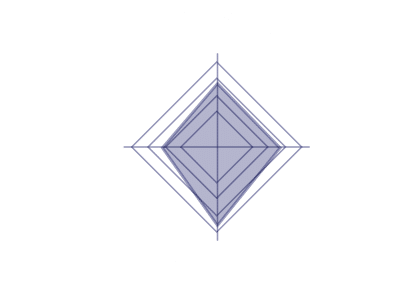
Pillars of Success
You are not alone
40%
reduction in onsite maintenance interventions, with operating costs down 20%, from AI-based predictive analytics (Schneider Electric & Compass Datacenters, 2025).
87%
of contractors believe AI will meaningfully transform their business (United-BIM, 2026).
94.8%
precision achieved by automated compressor monitoring analysing vibration signatures across frequency bands (IJCATR, 2024).
80.1%
of the predictive maintenance market is solution-based, reflecting heavy investment in analytics platforms (Grand View Research, 2025).
Join those who are leveraging data to move from financial stewardship to strategic business leadership.

How is AI raising the stakes

AI demand forecasting is producing material improvements over statistical and judgement-based approaches at organisations that have implemented it well.
The key differentiator is not the sophistication of the AI model but the quality and breadth of the data it is trained on. AI forecasting models that incorporate external signals - weather patterns affecting demand, economic indicators, competitor pricing changes, social media sentiment - alongside internal historical demand data consistently outperform models that use internal data alone. Supply Chain Managers who have not built the data pipeline to feed these external signals into their forecasting models are using AI tools at a fraction of their potential accuracy.
The total cost of supply thinking shift is happening at analytically mature supply chain functions and has not yet reached those operating from traditional procurement metrics.
Purchase price variance - the standard procurement KPI - measures only one dimension of supplier performance and actively incentivises decisions that minimise unit cost while ignoring the total cost impact of quality failures, late deliveries, and supply disruptions. Supply Chain Managers who can quantify the full cost of supplier performance - including quality costs, expediting, production disruption, and customer service impacts - are making fundamentally different sourcing decisions than those who are managing to purchase price alone.
Supply chain volatility has become the defining operational challenge for manufacturing organisations, and the Supply Chain Managers who are managing this volatility without real-time data infrastructure are consistently behind the disruption curve.
Geopolitical instability, climate-related logistics disruption, and component shortages are creating supply risks that materialise faster than monthly supplier review cycles can surface them. The organisations with continuous supplier performance monitoring, predictive demand modelling, and multi-tier supply chain visibility are identifying disruption risk in time to act. Those without this infrastructure are discovering supply failures at the point of production impact.
Manager | Manufacturing
How Bronson can help

Cloud and Application Migration
Bronson.AI helps modernise the underlying technology infrastructure, migrating legacy systems to cloud platforms that integrate cleanly, scale with the organisation, and support the analytics and AI capabilities the function requires.
- Cloud migration strategy assessing current systems and sequencing the transition to minimise operational disruption.
- Application rationalisation identifying which systems can be consolidated onto modern platforms.
- Data migration and validation programme ensuring historical data is preserved and accessible in the new environment.

Data Strategy and Governance
Bronson.AI builds the data architecture, ownership model, and governance framework that connects operational data into a single, governed layer, so that decisions are made from one version of the truth rather than competing reports.
- Data standards framework covering metric definitions, KPI structures, and cross-functional data taxonomy.
- Data ownership and stewardship model assigning accountability for each data domain.
- AI governance policy ensuring automated decisions are auditable, explainable, and compliant.

AI and Agentic Automation
Bronson.AI implements the AI and automation capability that turns data into action, identifying inefficiencies, flagging anomalies, and triggering workflow responses without manual intervention. We help the function move from monitoring to orchestrating.
- Process automation across high-volume, rule-based workflows to reduce manual effort and error rates.
- Predictive anomaly detection that flags deviations before they escalate into failures or cost overruns.
- AI-powered forecasting and prioritisation that connects data signals to operational resource allocation.
Unlock your potential
Unlock the Power of Data in Supply Chain
Data is the backbone of a resilient, efficient supply chain function. For the Supply Chain Manager, harnessing accurate, real-time supply chain data enables the transition from reactive disruption management to proactive risk mitigation - surfacing supply threats before they impact production, improving forecast accuracy, and making sourcing decisions from total cost evidence.
Overcome Data Challenges Effortlessly
One of the primary challenges facing Supply Chain Managers is supply chain data that is fragmented across ERP, supplier portals, and logistics systems - making integrated analysis time-consuming and leaving risk signals undetected until they materialise as production disruptions. Building the integrated supply chain analytics layer that makes proactive risk management possible is the investment that transforms supply chain performance.
The Promise of Data, Analytics, and AI Advancements
Imagine a supply chain function with continuous supplier performance monitoring, AI-powered demand forecasting that reduces stockouts and excess simultaneously, and early warning analytics that surfaces disruption risk weeks before it hits production. This is not just a vision but the very real value proposition that our Data, Analytics, and AI Consulting and Solutions offer.
Realize the Value of Advanced Data Solutions
Our services are designed to guide Supply Chain Managers through:
- Continuous Supplier Monitoring: Real-time performance analytics replacing periodic review cycles.
- AI Demand Forecasting: Machine learning models incorporating external signals for materially improved forecast accuracy.
- Supply Risk Intelligence: Predictive analytics identifying disruption risk in time to act rather than react.
See Results
4x ROI
payback with AI is guaranteed
90 DAYS
to a funded, board-ready AI roadmap
18 MONTHS
from pilots to
AI-centric enterprise
Get started today!
Frequently asked questions
Automate the monitoring to streamline the work and make supplier performance continuously visible, because manually gathering supplier performance data is mechanical and intermittent while continuous automated monitoring gives you an always-current picture, and that shift from periodic manual review to continuous visibility is what lets you catch supplier problems as they develop. The work is automating the capture of supplier performance data, delivery, quality, responsiveness, and analysing it continuously so supplier performance is monitored ongoing rather than reviewed occasionally when someone finds the time.
The reason manual monitoring is so limiting is that it is both labour-intensive and intermittent, so supplier performance is assessed periodically at best, and a supplier whose performance is deteriorating may not be noticed until the next manual review, by which point the deterioration may have already caused a problem. Continuous monitoring catches the deterioration as it happens, which is what allows action before it disrupts production rather than after.
The payoff is continuous visibility into supplier performance and the early warning that comes with it, replacing the periodic, labour-intensive manual review. When supplier performance is monitored continuously, deteriorating suppliers are flagged as they decline rather than discovered when they fail, which allows you to act, raise the issue, qualify alternatives, adjust orders, before the problem hits production. The continuous monitoring also frees the time that manual review consumed and provides the data foundation for the supplier risk management and decisions that depend on current performance information. Automating supplier monitoring is what turns supplier management from periodic manual reviews that catch problems late into continuous visibility that catches them early, which is the difference between managing suppliers reactively and managing supply risk proactively.
Turn the demand data into more accurate forward-looking insight, because improving forecasts rests on analysing the right demand signals with sound methods, and that is an analytical capability built on quality data rather than a matter of trying harder with the same approach. The work is improving the demand signals the forecast uses, ensuring the historical and current demand data is clean and complete, and applying analytical methods suited to your demand patterns, which together lift accuracy beyond what simple extrapolation of past sales achieves.
The reason forecasts are often inaccurate is a combination of poor input data and methods too simple for the demand patterns, so the forecast misses the signals that would improve it, seasonality, trends, the leading indicators of demand changes, because the data does not capture them well or the method does not use them. Better analytics on better data picks up these signals, which is what closes the gap between a forecast that is essentially a guess based on last year and one that genuinely anticipates demand.
The payoff is forecast accuracy good enough to reduce both stockouts and excess inventory, which is the dual cost of poor forecasting. When forecasts are more accurate, you carry less safety stock against uncertainty while suffering fewer stockouts, because the forecast you are planning against is closer to reality, which improves both service and working capital at once. Better forecasting also improves everything downstream that depends on it, production planning, procurement, capacity. Improving demand forecasts through better analytics on better data is what turns forecasting from a source of constant error that drives both excess and shortage into a genuine planning capability, and it is achievable for most supply chain functions without a dedicated data science team, provided the demand data is improved and sound analytical methods are applied to it.
Turn your supply chain data into forward-looking insight, because the shift from reacting to disruptions after they hit to anticipating them before they do is what early warning provides, and that depends on monitoring the leading indicators rather than waiting for the stockout or line stoppage. The signals that precede disruption include deteriorating supplier delivery or quality, lead times that are creeping up, over-reliance on single sources, and external risk indicators, and bringing these together and monitoring them continuously is what surfaces emerging disruption while there is still time to respond.
The reason most supply chain functions are caught out is that they monitor outcomes rather than precursors, seeing the disruption once it has happened rather than the signs that preceded it, which leaves them in permanent reactive mode, responding to disruptions at premium cost because they had no warning. An early-warning capability watches the leading signals and flags risk before it materialises, which is the difference between pre-positioning against a likely disruption and scrambling after an actual one.
The payoff is the ability to act before disruption hits production: to qualify alternative suppliers before a deteriorating one fails, to adjust inventory ahead of a likely shortage, to address a concentration risk before it bites. Early action is far cheaper and more effective than emergency response, where you pay premium prices and accept disruption because you have no time to do otherwise. Building the analytics that turn supply chain data into early warning is what moves supply risk management from reacting to disruptions to anticipating and preventing them, which over time is the difference between a supply chain that absorbs shocks because it saw them coming and one that is repeatedly caught out because it only ever looked at what had already happened.
Turn the connected supply data into a clear, comprehensible view of total cost, because good procurement decisions depend on seeing the whole cost of a supplier rather than just its price, and that requires the cost, quality, delivery, and risk data connected and presented together rather than scattered. The work is bringing together the data that makes up the true cost of supply, the price, plus the cost of quality problems, late deliveries, and the risk a supplier carries, and presenting it so the total cost of each supplier is visible, not just the headline price.
The reason price-focused procurement is so costly is that the cheapest supplier on price is often not the cheapest in total once quality problems, delivery failures, and risk are accounted for, and decisions made on price alone repeatedly choose suppliers that cost more in the end through the problems they cause. The total cost is real but invisible when only price is in view, which is how procurement optimises for a number that does not reflect the actual cost of the supply.
The payoff is procurement decisions based on what suppliers actually cost rather than just what they charge, which leads to genuinely better sourcing. When total cost is visible, you can see that a higher-priced supplier with excellent quality and reliable delivery may cost less overall than a cheaper one whose problems cause expensive disruption, and you can make sourcing decisions accordingly. The total-cost view also strengthens negotiations and supplier management, because it grounds them in the full picture rather than just price. Connecting the data into a total-cost view is what turns procurement from price-focused decisions that often cost more in the end into total-cost decisions that genuinely minimise the cost of supply, which is what good procurement is supposed to achieve but cannot when only price is visible.