
Manager | Marketing
Brand Manager
"I believe brand drives pricing power and loyalty, and I cannot put a number in front of anyone to prove it."
Quick Facts
Role
Manager | Marketing
Level
Manager
Dept
Marketing
Industry
Marketing
Env
Cloud martech stack
Tools
Brandwatch, GA4, Excel
Sound familiar?
Brand performance data is scattered across agencies, research providers, and platforms with no consolidated view
The cumulative commercial effect of brand investment is difficult to connect to pricing power, preference, retention, and future demand
AI-generated content is increasing volume while making brand distinctiveness, factual accuracy, and voice consistency harder to protect
Consumer sentiment data arrives on a cycle that is too slow to inform the fast campaign decisions the team needs to make
Long-term brand equity is measured less quickly than performance marketing, so it loses budget debates despite its cumulative commercial effect
Competitor positioning and share-of-voice changes are detected through periodic research, leaving the team slow to respond to emerging category narratives
How AI-ready is your organization?
Complete the 10-minute assessment.
Pinpoint operational gaps, benchmark your maturity across key pillars, and chart a clear path to scalable AI success.
Pillars of Success
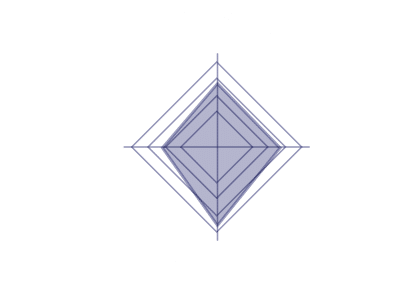
You are not alone
41%
enterprise adoption of multi-touch attribution, yet only 18% of those implementations are rated highly accurate (Gartner / Forrester, 2026).
30-40%
of previously trackable conversions have been eliminated by privacy regulation and tracking restrictions (Digital Applied, 2026).
17-20
platforms run by the average enterprise marketing team, none of which natively reconcile (CaliberMind, 2025 State of Marketing Attribution).
56%
AI adoption rate in marketing analytics, marking a tipping point in 2026 (Improvado, 2026).
Join those who are leveraging data to move from financial stewardship to strategic business leadership.

How is AI raising the stakes

AI content proliferation is the emerging brand management crisis that most frameworks have not yet caught up with.
When AI tools allow anyone in the marketing function to generate on-brand content at scale - and when those tools are operating from brand guidelines that are interpreted rather than enforced - brand distinctiveness erodes faster than the traditional review and approval process can prevent. The Brand Manager who is still managing brand consistency through manual review of individual pieces of content is overwhelmed by volume before the governance problem is even addressed. Building AI-native brand governance - guardrails embedded in the tools rather than applied after the fact - is the structural solution, but few organisations have implemented it.
Consumer sentiment is moving faster than research cycles.
Brand tracking studies that run quarterly or even monthly are producing insights that are significantly stale by the time they reach the Brand Manager's desk - particularly in categories where consumer attitudes are shifting in response to news events, competitor moves, or social media conversations that happen in days rather than weeks. Brand Managers who are making strategic positioning decisions from research that is three months old are working with a fundamentally inadequate view of the current brand landscape.
Brand Managers are caught between two competing pressures that are pulling the marketing mix in opposite directions.
Performance marketing - trackable, attributable, immediately accountable - continues to attract disproportionate budget allocation because its ROI is easier to demonstrate to Finance. Brand building - less directly attributable but more durable in its commercial impact - struggles for budget parity because its measurement frameworks are either too slow, too qualitative, or too easily dismissed as proxy metrics. Brand Managers who have not built the quantitative brand measurement infrastructure to make the business case for brand investment in financial terms are losing the budget allocation argument to performance channels by default.
Manager | Marketing
How Bronson can help

Generative AI and LLMs
Bronson.AI implements generative AI and large language model solutions that accelerate workflows, from drafting and summarisation to intelligent search and recommendation, grounded in the organisation's own governed data.
- Generative AI use case design identifying where LLM capability delivers genuine productivity and quality gains.
- Retrieval-augmented generation connecting LLM outputs to internal knowledge bases and governed data sources.
- Output governance framework ensuring AI-generated content is accurate, auditable, and aligned with organisational standards.

Cloud and Application Migration
Bronson.AI helps modernise the underlying technology infrastructure, migrating legacy systems to cloud platforms that integrate cleanly, scale with the organisation, and support the analytics and AI capabilities the function requires.
- Cloud migration strategy assessing current systems and sequencing the transition to minimise operational disruption.
- Application rationalisation identifying which systems can be consolidated onto modern platforms.
- Data migration and validation programme ensuring historical data is preserved and accessible in the new environment.

Dashboards and Data Visualisation
Bronson.AI designs and builds dashboards that give real-time visibility into the metrics that matter, in a format that supports decisions rather than just reporting activity. We replace manual compilation with a live, governed view.
- Executive dashboard covering key performance indicators in real time with drill-down capability.
- Self-serve reporting views that allow non-specialist stakeholders to access current data without relying on analysts.
- Trend and exception analytics that surface what needs attention rather than displaying everything equally.
Unlock your potential
Unlock the Power of Data in Brand Management
Data is the backbone of effective brand management. For the Brand Manager, harnessing real-time brand performance data, quantitative ROI measurement, and AI-native brand governance is what enables the function to defend brand investment budgets with evidence, manage brand consistency at scale, and keep brand positioning grounded in current consumer insight rather than outdated research.
Overcome Data Challenges Effortlessly
One of the primary challenges facing Brand Managers is brand performance data that is fragmented across research providers, agency reports, and platform analytics - arriving too slowly and in too many formats to produce the real-time brand intelligence that modern brand management requires. Building the integrated brand analytics layer that makes current performance visible and CFO-credible ROI measurement possible is the foundational investment the function needs.
The Promise of Data, Analytics, and AI Advancements
Imagine a brand management function with real-time visibility into consumer sentiment and brand health, a quantitative ROI model that makes the case for brand investment in financial terms that Finance accepts, and AI brand governance that maintains voice consistency at the scale content production now requires. This is not just a vision but the very real value proposition that our Data, Analytics, and AI Consulting and Solutions offer.
Realize the Value of Advanced Data Solutions
Our services are designed to guide Brand Managers through:
- Real-Time Brand Intelligence: Live brand health, sentiment, and competitive positioning analytics replacing slow research cycles.
- Brand ROI Measurement: Quantitative modelling connecting brand investment to commercial outcomes Finance can validate.
- AI Brand Governance: Brand voice guardrails embedded in AI tools maintaining consistency at content production scale.
See Results
4x ROI
payback with AI is guaranteed
90 DAYS
to a funded, board-ready AI roadmap
18 MONTHS
from pilots to
AI-centric enterprise
Get started today!
Frequently asked questions
Establish secure, well governed data management for the brand data, because seeing brand performance as a whole and measuring its impact depends on the data being connected and consistent, and the fragmentation across agencies and platforms is precisely what prevents that. The work is connecting the sources that hold brand data, agency reporting, platform metrics, research provider outputs, into a consolidated, governed foundation, aligning them so they can be seen together, so brand performance is visible as a coherent whole rather than as disconnected fragments held by different providers.
The reason scattered brand data is so limiting is that the questions that matter most, how the brand is performing overall, what cumulative impact brand investment is having, how perception is shifting, span all the sources, and no single agency or platform view answers them. The brand manager ends up with a pile of provider reports that each show a slice, no way to see the whole, and no basis for measuring the cumulative effect of brand work, which is exactly what they most need to demonstrate.
The payoff is the ability to see and manage brand performance as a whole, and to measure the cumulative impact that scattered data hides. With the brand data connected and governed, you can see overall performance rather than provider-by-provider slices, measure the combined effect of brand investment, and base brand decisions on a coherent picture rather than on whichever provider report is in front of you. The connected foundation also reduces dependence on individual agencies for the view of performance, which is healthier for the brand manager's control of their own data. Fixing the fragmentation through a governed foundation is what turns brand data from a scattered collection of provider reports into a coherent picture of brand performance, which is what lets the brand manager actually manage the brand rather than assemble fragments of how it is doing.
Turn the connected brand and commercial data into actionable insight, because demonstrating that brand investment drives commercial outcomes rests on analysing the genuine relationship between them, not on the brand metrics alone that say nothing about commercial value. The work is connecting brand measures, awareness, consideration, perception, to commercial outcomes, pricing power, acquisition efficiency, customer value, retention, and analysing how brand strength relates to commercial performance, so the value of brand investment is demonstrated through its commercial effects rather than asserted through brand metrics that finance does not credit.
The reason this is the central challenge for a brand manager is that brand investment is long-term and indirect in its commercial effect, which makes it perpetually vulnerable to a CFO who can see the cost but not the return and therefore cuts it in favour of short-term performance marketing whose effect is immediate and visible. Connecting brand to commercial outcomes, even with the inherent difficulty of attributing long-term indirect effects, is what lets the brand manager show that brand investment pays commercially, which is the argument that protects it.
The payoff is the ability to defend brand investment in commercial terms, which is what keeps it funded against the constant pull toward short-term performance spend. When you can show that brand strength supports pricing power, reduces acquisition cost, or increases customer value, brand investment becomes a commercial decision with evidence rather than an act of faith competing against measurable performance marketing. Measuring brand's commercial impact by connecting brand and commercial data is what turns the brand budget conversation from defending an unmeasured cost into demonstrating a commercial return, which is the difference between brand investment that survives budget scrutiny and brand investment that loses to whatever can show an immediate number.
Turn the available real-time signals into a clear, comprehensible current view, because acting on brand and sentiment while it matters depends on having a current picture, and that comes from continuously available signals presented clearly rather than from the slow tracking studies alone. The work is identifying the faster signals of brand and sentiment, social response, search behaviour, digital engagement, that are available continuously, connecting them into a current view, and using them to complement the deeper but slower tracking, so you have an ongoing read on brand health rather than only a quarterly snapshot.
The reason slow data is so limiting is that brand decisions and campaign responses often need to be made quickly, and quarterly tracking that arrives months after the period it measures cannot inform them, leaving the brand manager either waiting for data that comes too late or deciding without it. The slow tracking remains valuable for its depth and rigour, but it needs complementing with faster signals that, while shallower, are current enough to inform timely decisions.
The payoff is the ability to read brand health and sentiment currently and act on it while it matters, rather than waiting for tracking that arrives too late to be actionable. With a real-time view from faster signals, you can spot a shift in sentiment as it develops, respond to how a campaign is landing while it is running, and make brand decisions informed by current data rather than by a months-old snapshot. The faster signals complement rather than replace the deeper tracking, giving both the depth of periodic research and the currency of continuous signals. Building the real-time view from faster signals, layered onto the slower tracking, is what turns brand measurement from a periodic backward look into a current read that can actually inform the fast decisions brand management often requires.
Govern the AI content to protect the brand while still capturing the efficiency, because generative AI can produce content at scale but on-brand consistency comes from governing its use, defining the voice clearly, briefing the AI well, and reviewing its output, rather than letting it generate unsupervised. The work is establishing what the brand voice is in terms precise enough to brief AI against, building the guidance and controls that keep AI-generated content within those standards, and putting review in place so off-brand output is caught before it goes out, which together let the team use AI for content without the brand drifting.
The reason AI dilutes brand voice without governance is that AI generates plausible, generic content by default, and at the scale AI enables, a stream of slightly-off-brand content quickly erodes the distinctiveness that the brand depends on. Each piece may be individually acceptable while the cumulative effect is a brand voice that has blurred into the generic, which is exactly the dilution that worries a brand manager. Governance, clear standards, good briefing, review, is what keeps the AI output aligned and the voice intact.
The payoff is the ability to use AI for content at scale while keeping the brand voice consistent and distinctive, which is the balance between the efficiency AI offers and the brand integrity it threatens. With proper governance, the team captures the productivity of AI content while the brand voice stays consistent, because the standards, briefing, and review keep the output aligned rather than letting it drift toward the generic. Governing AI content rather than either banning it or letting it run unsupervised is what lets a brand manager embrace AI's efficiency without sacrificing the distinctive voice that is the brand's asset, which is the outcome that both unchecked AI use and outright avoidance fail to achieve.