
Director | Marketing
Director of Corporate Communications
"Something false can be halfway around the internet before anyone on my team has even seen it."
Quick Facts
Role
Director | Marketing
Level
Director
Dept
Marketing
Industry
Marketing
Env
Cloud SaaS stack
Tools
Cision, Sprinklr, Excel
Sound familiar?
Messages are distributed across channels, but there is no timely, integrated view of how audiences, media, and stakeholders are responding
Synthetic media, misinformation, and unauthorised AI-generated content can spread before the team has detected or assessed the reputational risk
Media coverage data is fragmented across providers and manually compiled rather than live and ready to act on
The commercial and risk-reduction value of communications investment is difficult to demonstrate without an agreed measurement framework
Crisis preparedness is based on past experience rather than on data-driven early warning of emerging risk
Internal and external communications data are separated, making it difficult to detect when employee sentiment and public narrative are diverging
How AI-ready is your organization?
Complete the 10-minute assessment.
Pinpoint operational gaps, benchmark your maturity across key pillars, and chart a clear path to scalable AI success.
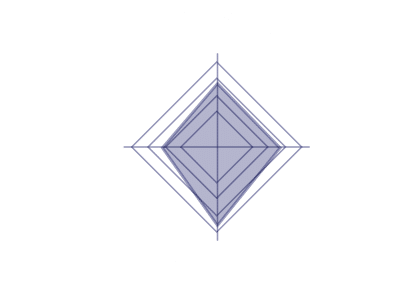
Pillars of Success
You are not alone
65.7%
of marketers cite data integration as their top measurement challenge (MarTech, 2025 State of Your Stack Survey).
41%
enterprise adoption of multi-touch attribution, yet only 18% of those implementations are rated highly accurate (Gartner / Forrester, 2026).
30-40%
of previously trackable conversions have been eliminated by privacy regulation and tracking restrictions (Digital Applied, 2026).
17-20
platforms run by the average enterprise marketing team, none of which natively reconcile (CaliberMind, 2025 State of Marketing Attribution).
Join those who are leveraging data to move from financial stewardship to strategic business leadership.

How is AI raising the stakes

Reputation risk analytics is the capability gap that is becoming most consequential.
Communications leaders who have built early warning systems - sentiment monitoring across social, media, and industry forums; stakeholder relationship health metrics; competitor communications intelligence - are identifying reputational risk while it is still containable and addressable. Those without this infrastructure are discovering reputation issues at the point of crisis rather than the point of early signal, when the options for response are significantly more limited and the cost of recovery significantly higher.
The measurement credibility problem is intensifying at the same time.
Communications budgets are under the same CFO scrutiny as every other marketing function, and the media impressions and PR value metrics that traditionally justified communications investment are increasingly questioned by Finance leaders who want to see the connection between communications activity and business outcomes. Directors of Communications who cannot quantify the contribution of their function to brand equity, reputation resilience, and ultimately commercial performance are vulnerable to budget cuts that undermine the organisation's ability to manage narrative and protect brand value.
The communications function is operating in a media environment that has fundamentally changed.
AI-generated content - about the organisation, its products, and its leadership - is being created and distributed at a scale and speed that manual media monitoring cannot track. Directors of Corporate Communications who are still relying on traditional clipping services and end-of-day media summaries are operating with a visibility lag that leaves them consistently behind the narrative curve. By the time a story is in the monitoring report, it has already been shared, responded to, and in some cases amplified by AI tools that pick up and redistribute content across platforms without editorial intervention.
Director | Marketing
How Bronson can help

Generative AI and LLMs
Bronson.AI implements generative AI and large language model solutions that accelerate workflows, from drafting and summarisation to intelligent search and recommendation, grounded in the organisation's own governed data.
- Generative AI use case design identifying where LLM capability delivers genuine productivity and quality gains.
- Retrieval-augmented generation connecting LLM outputs to internal knowledge bases and governed data sources.
- Output governance framework ensuring AI-generated content is accurate, auditable, and aligned with organisational standards.

Modern Data Analytics
Bronson.AI builds the analytics infrastructure that gives real-time visibility into performance, connected across every relevant system. We move the function from lagging indicator reporting to forward-looking insight that enables proactive decisions at scale.
- Unified data layer integrating source systems into a single analytics environment.
- Leading indicator frameworks that surface risk and opportunity before they become problems.
- ROI measurement connecting improvement initiatives to business outcomes in real time.

Dashboards and Data Visualisation
Bronson.AI designs and builds dashboards that give real-time visibility into the metrics that matter, in a format that supports decisions rather than just reporting activity. We replace manual compilation with a live, governed view.
- Executive dashboard covering key performance indicators in real time with drill-down capability.
- Self-serve reporting views that allow non-specialist stakeholders to access current data without relying on analysts.
- Trend and exception analytics that surface what needs attention rather than displaying everything equally.
Unlock your potential
Unlock the Power of Data in Communications
Data is the backbone of a modern, proactive communications function. For the Director of Corporate Communications, harnessing real-time media intelligence, brand sentiment data, and reputational risk signals enables the function to manage narrative proactively, protect reputation before incidents escalate, and demonstrate its contribution to business outcomes in terms the C-suite values.
Overcome Data Challenges Effortlessly
One of the primary challenges facing communications leaders is operating in a real-time media environment with monitoring infrastructure that produces insights hours or days after the coverage has already spread. Building the real-time intelligence layer that closes this lag - and the measurement framework that connects communications activity to business outcomes - is the foundation of a modern, data-driven communications function.
The Promise of Data, Analytics, and AI Advancements
Imagine a communications function with live visibility into how brand messages are landing, early warning signals for reputational risk that surfaces before a crisis develops, and a measurement framework that demonstrates communications' contribution to brand equity and commercial outcomes in terms Finance and the board accept. This is not just a vision but the very real value proposition that our Data, Analytics, and AI Consulting and Solutions offer.
Realize the Value of Advanced Data Solutions
Our services are designed to guide Directors of Corporate Communications through:
- Real-Time Media Intelligence: Live coverage, sentiment, and narrative analytics replacing manually compiled monitoring reports.
- Reputation Risk Analytics: Early warning systems that surface reputational risk before it becomes a crisis.
- Communications ROI Measurement: Business impact frameworks connecting communications activity to brand equity and commercial outcomes.
See Results
4x ROI
payback with AI is guaranteed
90 DAYS
to a funded, board-ready AI roadmap
18 MONTHS
from pilots to
AI-centric enterprise
Get started today!
Frequently asked questions
Turn the scattered reception data into one clear, comprehensible view, because a real-time picture of how messages are landing across every channel is what lets you respond while it matters rather than discovering the reception after it has played out, and that requires the channel data connected and current. The work is connecting the sources that reflect how messages are received, media coverage, social response, sentiment, into a consolidated view that updates continuously, so you see the reception across channels as it develops rather than assembling it manually after the fact.
The reason real-time visibility matters in communications is that reception evolves quickly and the window to respond is short. A message landing badly, a narrative gaining unwanted traction, a story spreading, these develop in hours, and a communications function that only sees the reception through periodic manual monitoring is always responding late, after the situation has moved. Real-time visibility is what lets communications respond while response is still useful rather than after the moment has passed.
The payoff is the ability to respond to how messages are landing while it still matters, which is the difference between active communications management and after-the-fact observation. With a current cross-channel view, you can see a message landing badly and adjust, catch an unwanted narrative early and counter it, and respond to developing situations while there is time to shape them. The connected view also supports better measurement and the early-warning capability that crisis management depends on. Building the real-time cross-channel view, replacing periodic manual monitoring, is what turns communications from a function that learns how its messages landed after the fact into one that sees the reception as it develops and can actually respond to it, which is what effective communications management requires.
Automate the coverage compilation to streamline the work and keep it current, because the manual gathering of media coverage from across sources is exactly the kind of repetitive task that should run automatically, and automated monitoring produces a live, current picture rather than a periodically compiled snapshot. Setting up the coverage data to be gathered and consolidated automatically means it is available continuously and current, rather than assembled by hand on a schedule that leaves it always somewhat out of date.
The reason manual compilation is so limiting is that it is both labour-intensive and inevitably lagging, consuming communications time to produce a picture that is already behind by the time it is assembled. In a fast-moving media environment, coverage compiled manually on a periodic basis means the function is always working from a stale picture, missing the chance to respond to coverage while it is current. Automation removes both the labour and the lag.
The payoff is current media intelligence produced without the manual effort, freeing communications time for response and strategy rather than compilation. When coverage monitoring is automated, the function has a live picture of its media presence, can respond to coverage while it is current rather than after the fact, and is freed from the compilation work that consumed time better spent on actually managing communications. Automated monitoring also provides the foundation for the real-time reception view and the crisis early-warning capability that both depend on current coverage data. Automating the media coverage compilation is what turns it from a labour-intensive, perpetually lagging manual exercise into a current, continuous intelligence feed that supports timely communications, which is what the function needs to operate effectively in a media environment that moves far faster than manual monitoring can keep up with.
Turn communications and outcome data into actionable insight, because showing business value rests on analysing the genuine relationship between communications activity and the outcomes it affects, not on the activity metrics, coverage volume, impressions, that communications produces in abundance but that say nothing about value. The work is connecting communications activity to the outcomes it plausibly influences, reputation measures, stakeholder behaviour, the costs avoided through effective issue management, and analysing the contribution in a way that a CFO can follow, so communications value is demonstrated through outcomes rather than asserted through activity.
The reason this is hard and important is that communications is rich in activity metrics and poor in outcome metrics, so it can show it was busy but struggles to show it was valuable, which is exactly what a finance-minded executive wants to know before funding it. The impact mechanism of communications, building reputation, managing issues, influencing stakeholders, is real but indirect, which makes it harder to measure than direct-response marketing but no less important to evidence. Connecting activity to outcomes, even imperfectly, is what lets communications speak in terms of value rather than volume.
The payoff is the ability to defend and justify communications investment in terms a CFO accepts, which is increasingly necessary as communications budgets face the same scrutiny as everything else. When communications can show its connection to outcomes the business values, it becomes an investment with a return rather than a cost with activity, which is a far stronger position when budgets are decided. Measuring communications value by connecting activity to outcomes, rather than reporting activity alone, is what lets the function demonstrate its worth to the executives who fund it, which is what protects and grows its budget in an environment where unmeasured value is vulnerable to cuts.
Approach it by first turning monitoring data into insight about what AI is saying and why, because understanding the inaccurate AI-generated content and the sources feeding it is what lets you address it systematically rather than reacting to individual instances. The work is monitoring what AI systems and AI-powered search are saying about your company, understanding which sources and signals they are drawing on, and then working to correct those sources, improving the accurate information available about you, addressing the inaccurate sources where possible, and strengthening the authoritative signals AI systems rely on.
The reason this is a new and pressing challenge is that AI-generated content about organisations is now produced and distributed at a scale and speed that traditional communications monitoring was never designed for, and inaccurate AI output can shape perceptions widely before anyone in communications even knows it exists. The information appears in AI search results and AI-generated summaries that increasing numbers of people rely on, so inaccuracy there matters as much as inaccuracy in traditional media, and it requires a deliberate approach rather than ad hoc reaction.
The payoff is a communications function that actively manages its organisation's presence in AI-generated content rather than being blindsided by it, which is increasingly essential as AI search grows. By monitoring what AI says, understanding the sources, and working to correct them, communications can address inaccuracy systematically and improve the accuracy of how the organisation is represented in the AI-mediated information environment that more and more people use. Approaching AI-generated misinformation through monitoring and source correction, grounded in understanding what AI is drawing on, is what lets communications manage the organisation's reputation in AI search as deliberately as it manages it in traditional media, which is becoming a core part of the function rather than a fringe concern.