
Entry Level | Marketing
Marketing Coordinator
"I can tell you what we did and not whether any of it worked."
Quick Facts
Role
Entry Level | Marketing
Level
Entry Level
Dept
Marketing
Industry
Marketing
Env
Cloud martech stack
Tools
HubSpot, Canva, Excel
Sound familiar?
Campaign data from multiple platforms must be exported, cleaned, and combined manually for each report
Which marketing activities are actually producing results is unclear because activity data and outcome data are not connected
Too many tools are in use that do not share data and every cross-channel question requires manual assembly to answer
AI tools are being adopted faster than guidance and training, creating inconsistent outputs, duplicated work, and brand or privacy risk
Channel metrics tell conflicting stories because definitions and attribution windows differ, leaving no trusted basis for prioritisation
Content, consent, and approval records are scattered across tools, creating uncertainty over which assets can be reused, adapted, or generated with AI
How AI-ready is your organization?
Complete the 10-minute assessment.
Pinpoint operational gaps, benchmark your maturity across key pillars, and chart a clear path to scalable AI success.
Pillars of Success
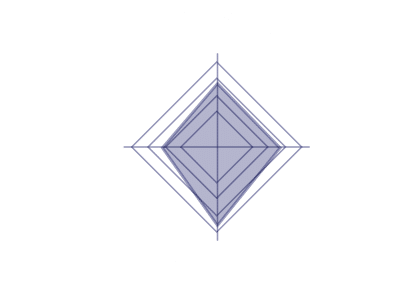
You are not alone
17-20
platforms run by the average enterprise marketing team, none of which natively reconcile (CaliberMind, 2025 State of Marketing Attribution).
56%
AI adoption rate in marketing analytics, marking a tipping point in 2026 (Improvado, 2026).
44%
of marketing functions have formalised analytics frameworks despite 73% increasing budgets (Improvado, 2026).
39%
of marketing functions are planning labour reductions amid structural budget pressure (Gartner, 2025 CMO Spend Survey).
Join those who are leveraging data to move from financial stewardship to strategic business leadership.

How is AI raising the stakes

The data literacy gap is becoming a career-defining constraint.
Marketing Coordinators who can extract data, identify meaningful patterns, and build reports that tell a coherent story about campaign performance are contributing significantly more to the marketing function than those who can only describe what the dashboards show without interpreting what they mean. The analytical skills that were previously confined to specialist roles - basic attribution analysis, performance trend identification, A/B test interpretation - are now baseline expectations in marketing execution roles at well-run organisations.
The tool fragmentation problem is acute at the coordinator level.
Managing campaign data across Google Ads, Meta, LinkedIn, email platforms, the website CMS, and the CRM - each producing its own metrics, each with its own interface and terminology, none communicating with the others without manual export - consumes a disproportionate share of a marketing coordinator's productive time. The organisations that have invested in connected marketing infrastructure have coordinators who spend their time on campaign execution and performance analysis. Those that have not have coordinators who spend significant portions of their week on manual data compilation that produces insights that are already out of date.
Marketing Coordinators are on the front line of a skills transition that most organisations have not yet designed training for.
AI tools are reshaping every aspect of the marketing execution role - content creation, campaign setup, performance reporting, audience research - and the Coordinator who has not yet built proficiency with these tools is being asked to work alongside colleagues who have, in an environment where the productivity gap between AI-enabled and non-AI-enabled execution is becoming visible in output quality and speed. The expectation is rising faster than the support for meeting it.
Entry Level | Marketing
How Bronson can help

AI and Agentic Automation
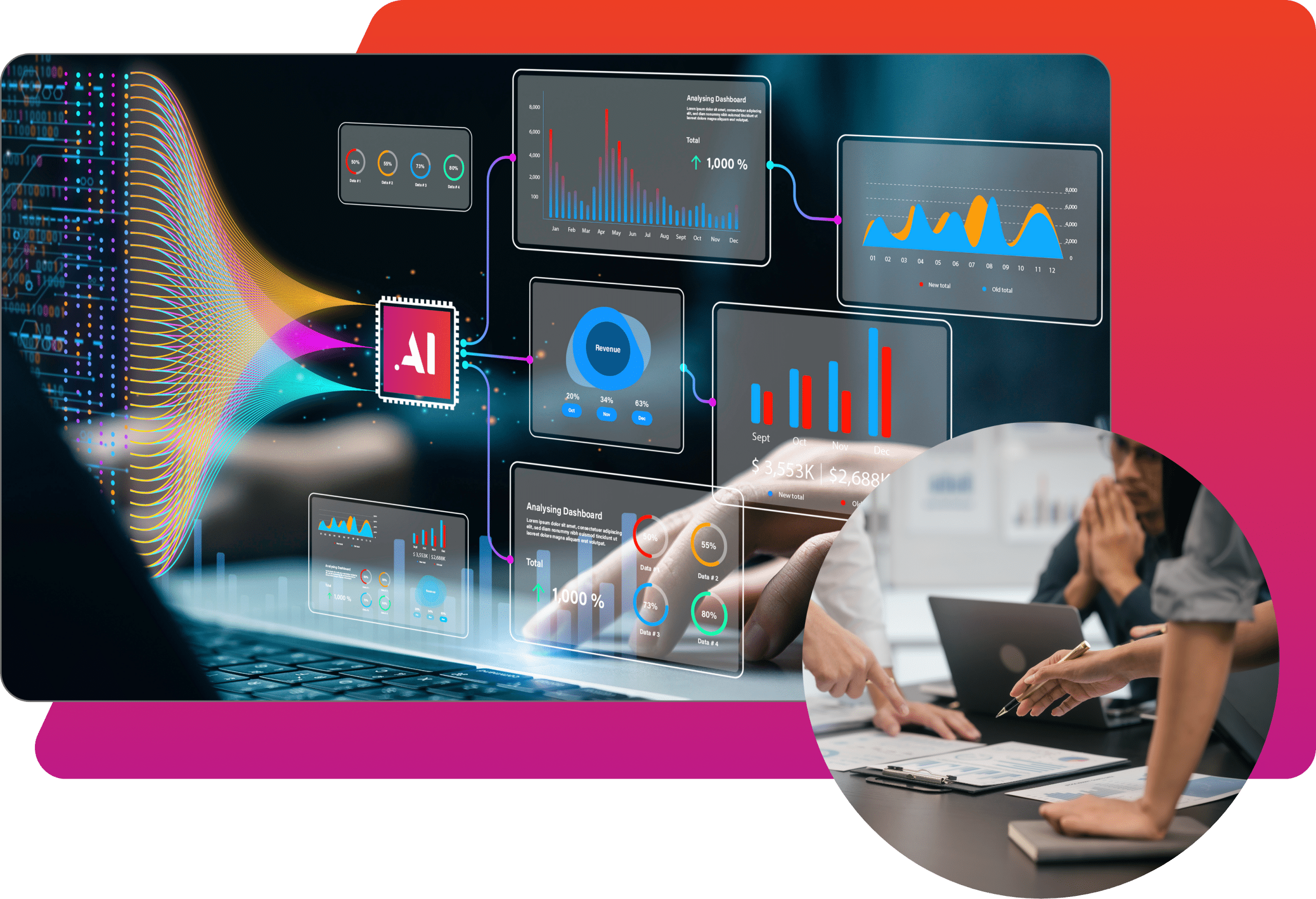
Bronson.AI implements the AI and automation capability that turns data into action, identifying inefficiencies, flagging anomalies, and triggering workflow responses without manual intervention. We help the function move from monitoring to orchestrating.
- Process automation across high-volume, rule-based workflows to reduce manual effort and error rates.
- Predictive anomaly detection that flags deviations before they escalate into failures or cost overruns.
- AI-powered forecasting and prioritisation that connects data signals to operational resource allocation.
Fractional Data and AI Services
For functions that need specialist data and AI capability without the timeline and cost of permanent recruitment, Bronson.AI provides experienced fractional professionals who integrate directly with the internal team, accelerating delivery while building internal capability in parallel.
- Fractional data engineers who build and maintain the data pipelines and integration infrastructure the function depends on.
- Machine learning and AI specialists who design, validate, and deploy analytical models to production standard.
- Analytics translators who bridge the gap between technical outputs and the business decisions they are designed to inform.

Data Strategy and Governance
Bronson.AI builds the data architecture, ownership model, and governance framework that connects operational data into a single, governed layer, so that decisions are made from one version of the truth rather than competing reports.
- Data standards framework covering metric definitions, KPI structures, and cross-functional data taxonomy.
- Data ownership and stewardship model assigning accountability for each data domain.
- AI governance policy ensuring automated decisions are auditable, explainable, and compliant.
Unlock your potential
Unlock the Power of Data in Marketing
Data is the backbone of effective marketing execution. For the Marketing Coordinator, having access to live, connected campaign performance data - and the tools to work with it efficiently - is what enables execution decisions to be informed by evidence rather than intuition and what builds the analytical skills that accelerate career progression.
Overcome Data Challenges Effortlessly
One of the primary challenges facing Marketing Coordinators is campaign data fragmented across multiple platforms with no automated way to connect it into a coherent performance picture. The manual compilation process that results is both time-consuming and error-prone - consuming time that should be spent on execution and analysis. Building the connected analytics infrastructure that eliminates this compilation work is the data investment that transforms the coordinator role.
The Promise of Data, Analytics, and AI Advancements
Imagine a marketing execution environment where campaign performance data is live and connected across all platforms, where reports are available on demand rather than compiled manually, and where AI tools handle the repetitive execution tasks so coordinator time can be focused on the analysis and strategy work that develops real marketing skills. This is not just a vision but the very real value proposition that our Data, Analytics, and AI Consulting and Solutions offer.
Realize the Value of Advanced Data Solutions
Our services are designed to guide Marketing Coordinators through:
- Connected Campaign Analytics: Live, integrated performance data across all channels without manual compilation.
- Self-Serve Reporting: Tools that allow coordinators to answer performance questions independently and produce reports on demand.
- AI-Assisted Execution: Automation of repetitive marketing tasks freeing time for the analysis and strategic work that builds career capital.
See Results
4x ROI
payback with AI is guaranteed
90 DAYS
to a funded, board-ready AI roadmap
18 MONTHS
from pilots to
AI-centric enterprise
Get started today!
Frequently asked questions
Automate the data gathering to streamline the work and free your time for actual analysis, because compiling data from platforms is mechanical and repeatable while understanding what it means is the work that adds value, and a coordinator buried in manual compilation is spending time on assembly rather than insight. Setting up the campaign data to be gathered from the platforms and combined automatically means the reports build themselves from current data, so you are freed from the compilation and can focus on what the data shows.
This depends on the platform data being connectable and consistent, which is often the real constraint, because automating the compilation of data that does not align across platforms just automates the assembly of inconsistency. Getting the platform data connected and made consistent is part of making the automation genuinely useful, and it addresses the underlying problem of inconsistent cross-platform data rather than just speeding up its manual compilation.
The payoff is hours reclaimed each cycle and reports that are current and consistent rather than manually assembled and already dated. The time previously spent gathering and combining platform data goes into analysing what the campaigns are actually achieving, which is more valuable work and better for your development than compilation. Automated reports are also more reliable, because they assemble the data the same way every time rather than depending on you correctly following the steps under deadline pressure. Automating the campaign data compilation is what frees a marketing coordinator from the repetitive cross-platform assembly that consumes so much reporting time, letting you spend it on the analysis that actually helps the campaigns and builds your skills, rather than on the mechanical gathering that a person should not be doing by hand every cycle.
Establish secure, well governed data management across the tools, because consistent, connected data is what lets the tools work together rather than as disconnected silos, and that connection is the foundation that ends the manual compilation and enables a coherent view. The work is connecting the tools' data into a common environment, aligning it so it is consistent across tools, and governing it so the connection stays reliable as tools change. This is the underlying fix for the symptom of constant manual compilation, because once the data is connected, the reports that required manual assembly can draw from the connected foundation instead.
The reason disconnected tools are so problematic for a coordinator is that they create constant manual work, gathering and reconciling data across tools for every report, and they prevent seeing marketing as a whole, because each tool shows only its own slice. The coordinator spends time being the human connection between tools that should share data automatically, which is both a poor use of time and a source of the inconsistency that comes from manually combining data that does not align.
The payoff is tools that work together rather than as silos, which ends the manual compilation and provides the coherent view that disconnected tools prevent. When the tools' data is connected and consistent, reporting can draw from the connected foundation automatically rather than requiring manual assembly, and marketing can be seen as a whole rather than tool by tool. Connecting the tools is the foundation that makes the reporting automation possible and the coherent view achievable, addressing the root cause rather than the recurring symptom. Fixing the tool fragmentation through a connected foundation is what turns a collection of disconnected tools that generate constant manual work into a connected system that supports automated reporting and coherent analysis, which is what lets a coordinator spend time on marketing rather than on being the manual bridge between tools that should talk to each other.
Turn the connected activity and outcome data into a clear, comprehensible view, because seeing which activities drive results rests on relating activity to outcome and presenting it legibly, and that requires the data connected and the relationship made visible rather than buried across separate tools. The work is connecting the data on marketing activities to the data on outcomes, and presenting which activities relate to which results clearly, so you can see what is actually driving results rather than guessing from activity metrics that show effort but not effect.
The reason this visibility is hard to get is that activity data and outcome data usually live in different places, activity in the execution tools, outcomes further down in pipeline or revenue data, and without connecting them you can see what you did and, separately, what happened, but not which of your activities caused which results. That leaves you optimising on activity metrics, clicks, opens, engagement, that feel like results but may not connect to actual outcomes, which is how marketing effort gets spent on things that look busy but do not work.
The payoff is the ability to see and act on what actually drives results, rather than optimising for activity that may not matter. When you can see which activities connect to outcomes, you can do more of what works and less of what merely generates activity, which makes your marketing genuinely more effective rather than just busier. The visibility also helps your development, because understanding what drives results is what distinguishes a coordinator who executes from one who understands marketing. Connecting activity to outcomes and making the relationship visible is what turns marketing from a set of activities you hope are working into a practice where you can see what actually drives results and focus accordingly, which is the foundation of effective marketing and of your own growth in it.
Build the skills that turn data into actionable insight, because the ability to take marketing data and draw out what it means for the business is what marks the marketers who progress, and that is a practical analytical skill built on real work rather than an abstract technical qualification. In practice this means learning to work with marketing data properly, to connect activity to outcomes, to distinguish the metrics that matter from the vanity ones, and to present what the data shows clearly enough that others act on it, which together make you the coordinator who explains what is working rather than just reporting what happened.
The reason these skills advance a career is that marketing increasingly runs on data, and the marketers who progress are those who can use it to understand and demonstrate impact, while those who only execute activities without understanding their effect tend to stay where they are. The valuable capability is not deep data science but the practical analytical literacy to connect marketing to outcomes and communicate it, which is what lets you contribute to decisions rather than just carry them out.
The payoff is becoming the kind of marketer who understands and can demonstrate what marketing achieves, which is what gets noticed and promoted. As you build the ability to connect activity to outcomes, identify what actually works, and present it persuasively, you shift from executing campaigns to informing how they are run, which is the path from coordinator to more senior roles. Learning the practical analytics skills that turn marketing data into insight, rather than either avoiding data or pursuing technical depth you will not use, is what most effectively advances a marketing career, because it makes you the marketer who understands the impact of the work, which is exactly what marketing increasingly values and rewards.