
Specialist | Compliance & Regulatory
Compliance & Regulatory Specialist
"If a regulator asked today what our compliance position is, I could not show them one."
Quick Facts
Role
Specialist | Compliance & Regulatory
Level
Specialist
Dept
Compliance & Regulatory
Industry
Legal
Env
Hybrid GRC
Tools
ServiceNow GRC, Excel, Power BI
Sound familiar?
Manual compliance tracking across multiple frameworks duplicates effort, while inconsistent evidence and ownership allow gaps to persist
Compliance data are scattered across systems, so the organisation lacks a current, defensible view of obligations, controls, evidence, and status
Current, overdue, and failing controls cannot be identified quickly without manually investigating multiple systems and owners
Incidents, breaches, complaints, and control failures are analysed separately, allowing cross-business patterns and root causes to remain hidden
Regulatory change is tracked inconsistently across jurisdictions, creating a real risk that new obligations are missed or implemented late
AI regulation is evolving, but the organisation lacks a reliable inventory of AI systems, uses, vendors, data, and risk classifications
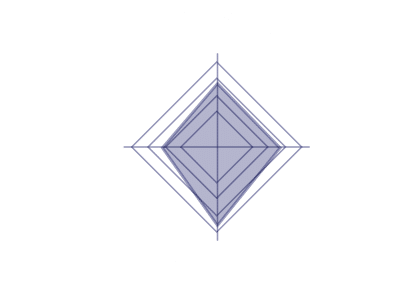
How AI-ready is your organization?
Complete the 10-minute assessment.
Pinpoint operational gaps, benchmark your maturity across key pillars, and chart a clear path to scalable AI success.
Pillars of Success
You are not alone
$20B
in annual savings that AI could deliver to the US legal industry (Azumo, 2026).
32.5 days
the working time per year lawyers report saving by using generative AI (Azumo, 2026).
20%
of firms are measuring generative AI ROI, leaving most without a clear view of returns (Azumo, 2026).
3.9x
more likely that firms with a formal AI strategy experience critical benefits (Thomson Reuters & Georgetown Law, 2026).
Join those who are leveraging data to move from financial stewardship to strategic business leadership.

How is AI raising the stakes

AI is creating new compliance challenges at the same time as it offers compliance solutions.
The EU AI Act, emerging data protection guidance, and sector-specific AI regulations are requiring compliance functions to assess, document, and monitor AI systems across their organisations - a new category of work that most compliance functions are not yet equipped to do systematically. The specialists who build AI compliance capability now are ahead of the regulatory curve; those who wait until examination pressure forces the issue are facing a compliance gap that is already growing.
The incident and breach analysis problem is becoming structural.
Most compliance functions handle incidents reactively - each one investigated on its own terms, remediated, and closed without systematic analysis of the patterns across incidents. The systemic issues, the recurring control weaknesses, the concentrations of risk that the pattern reveals - these stay invisible until a regulatory investigation or a significant breach exposes them. Compliance functions that analyse incidents systematically are finding and addressing the root causes; those that do not are managing the same underlying issues incident by incident until they become large enough to be unavoidable.
Compliance functions are operating in a regulatory environment that is expanding in scope, increasing in complexity, and shortening in lead time for implementation.
The organisations that have built systematic, automated compliance monitoring - control-centric approaches that track each control once and map it to every framework that depends on it - are keeping pace with this environment. Those managing compliance framework by framework in separate spreadsheets are not: the duplicated effort, the coverage gaps, and the risk of missing a framework requirement are all growing with each new regulation added.
Specialist | Compliance & Regulatory
How Bronson can help

AI and Agentic Automation
Bronson.AI implements the AI and automation capability that turns data into action, identifying inefficiencies, flagging anomalies, and triggering workflow responses without manual intervention. We help the function move from monitoring to orchestrating.
- Process automation across high-volume, rule-based workflows to reduce manual effort and error rates.
- Predictive anomaly detection that flags deviations before they escalate into failures or cost overruns.
- AI-powered forecasting and prioritisation that connects data signals to operational resource allocation.

Dashboards and Data Visualisation
Bronson.AI designs and builds dashboards that give real-time visibility into the metrics that matter, in a format that supports decisions rather than just reporting activity. We replace manual compilation with a live, governed view.
- Executive dashboard covering key performance indicators in real time with drill-down capability.
- Self-serve reporting views that allow non-specialist stakeholders to access current data without relying on analysts.
- Trend and exception analytics that surface what needs attention rather than displaying everything equally.

Data Strategy and Governance
Bronson.AI builds the data architecture, ownership model, and governance framework that connects operational data into a single, governed layer, so that decisions are made from one version of the truth rather than competing reports.
- Data standards framework covering metric definitions, KPI structures, and cross-functional data taxonomy.
- Data ownership and stewardship model assigning accountability for each data domain.
- AI governance policy ensuring automated decisions are auditable, explainable, and compliant.
Unlock your potential
Unlock the Power of Data in Compliance and Regulatory
Compliance management is most effective when it is systematic rather than reactive - when controls are tested continuously rather than periodically, when the compliance status across all frameworks is visible in one place, and when incidents are analysed for patterns rather than handled in isolation. The compliance specialist with that capability is managing compliance proactively; the one without it is discovering gaps when they become findings and patterns when they become enforcement actions.
Overcome Data Challenges Effortlessly
Building that systematic capability depends on data. Connected control and testing data that is maintained and governed, compliance status that is visible without manual assembly, incident data that can be analysed across events rather than within each one. These are not luxuries in a complex regulatory environment - they are what makes systematic compliance management possible at all.
The Promise of Data, Analytics, and AI Advancements
Bronson.AI builds the connected compliance data environment, the automated monitoring, and the dashboards that make compliance status visible and manageable. The result is a compliance function that can demonstrate its coverage, respond to regulatory requests with current data, and find the systemic issues before they find the function.
Realize the Value of Advanced Data Solutions
Our services are designed to guide Compliance and Regulatory Specialists through:
- Continuous Control Monitoring: Automated testing that replaces periodic, point-in-time compliance checks.
- Compliance Status Dashboards: Live visibility into control performance, obligations, and evidence.
- Governed Control Data: Standards and ownership that make testing evidence reliable and audit-ready.
See Results
4x ROI
payback with AI is guaranteed
90 DAYS
to a funded, board-ready AI roadmap
18 MONTHS
from pilots to
AI-centric enterprise
Get started today!
Frequently asked questions
Automate the tracking to streamline it and remove the duplication, because the repeated manual checking of controls across overlapping frameworks is exactly the kind of work automation handles, and a control-centric approach tracks each control once and maps the result to every framework that relies on it. The work is codifying the controls, tracking them automatically, and mapping each to the frameworks it satisfies, so a single tracked control serves multiple compliance requirements rather than being checked separately for each framework.
The reason the manual approach is so wasteful is that frameworks overlap heavily, the same control often satisfies requirements across several, but compliance is typically tracked framework by framework, so the same control gets checked multiple times because each framework's checklist demands it. A control-centric model, enabled by automation, tracks the control once and credits it to every framework that depends on it, which eliminates the duplication that consumes compliance effort.
The payoff is compliance tracking that covers more frameworks with less effort and gives a current rather than periodic view. When tracking is automated and control-centric, it covers the frameworks efficiently rather than duplicatively, provides a current view of compliance status rather than a periodic one, and makes adding a new framework largely a matter of mapping existing controls rather than building tracking from scratch. The automation also makes the compliance status available when needed rather than assembled under pressure. Automating compliance tracking on a control-centric basis is what turns multi-framework compliance from a duplicative manual burden into an efficient, current, and comprehensive capability, which is what lets a compliance specialist cover the frameworks the organisation faces without the duplicated effort that tracking each framework separately requires.
Establish secure, well governed data management for the compliance data, because seeing compliance status as a whole and managing it depends on connected, consistent data, and the scattering is precisely what makes that impossible. The work is connecting the compliance data from across the systems, controls, obligations, testing, incidents, aligning it so it can be seen and analysed together, and governing it so the connected view stays reliable, which is what lets compliance be seen and managed as a connected whole rather than as fragments in separate systems.
The reason scattered data is so limiting for compliance is that compliance is inherently about connections, between controls and the frameworks they satisfy, between obligations and their status, between incidents and the patterns they form, and scattered data severs exactly those connections, so you cannot see your true compliance status, track issues to resolution, or spot the patterns that matter. The scattering turns compliance into a set of disconnected records rather than a manageable whole.
The payoff is the ability to see and manage compliance as a connected whole rather than as scattered fragments. With the compliance data connected and governed, you can see your true compliance status across frameworks, track issues through to resolution rather than losing them between systems, and spot the patterns that scattered data hides, which is what lets you manage compliance deliberately rather than reactively. The connected foundation also enables the automated tracking and analysis that depend on connected data. Fixing the scattering through a governed foundation is what turns compliance data from disconnected fragments across systems into a connected picture that supports seeing, tracking, and managing compliance as a whole, which is what a compliance specialist needs to manage the organisation's compliance deliberately rather than from the fragments that scattered systems leave.
Turn the control and testing data into a clear, comprehensible view of control status, because seeing whether controls are being tested and staying current depends on the testing data connected and presented clearly, and that is what shows control status at a glance rather than leaving it buried in scattered records. The work is connecting the control and testing data and presenting it so control status is visible, which controls have been tested, which are current, which are overdue or failing, so you can see the state of the control environment at a glance rather than reconstructing it from scattered records.
The reason this visibility matters is that the control environment is only effective if controls are actually tested and current, and when control status is scattered and hard to see, controls quietly fall out of testing or currency without anyone noticing, which undermines the control environment and is exactly what surfaces badly in an audit or examination. A clear view of control status makes the gaps visible, which is what lets you address them before they become findings.
The payoff is a control environment you can actually see and manage, with the gaps visible before they become problems. When control status is clearly visible, you can see which controls need testing, which are falling out of currency, and where the control environment has gaps, which lets you address them proactively rather than discovering them in an audit. The clear view also makes the control environment defensible, because you can demonstrate its status rather than asserting it. Building the clear view of control status is what turns the control environment from something whose state is hard to see and therefore quietly degrades into something visible and manageable, which is what lets a compliance specialist keep the control environment effective and demonstrate its effectiveness, rather than discovering in an examination that controls had fallen out of testing or currency without anyone seeing it happen.
Turn the incident and breach data into actionable insight, because spotting the patterns depends on analysing incidents together to find what they have in common, and that analysis is what reveals the systemic issues that handling incidents individually misses. The work is connecting and analysing the incident and breach data to find the patterns, the common causes, the recurring weaknesses, the concentrations in particular areas or processes, so the systemic issues behind the incidents become visible and can be addressed at the root rather than incident by incident.
The reason pattern analysis matters is that incidents handled in isolation each get addressed individually while the systemic causes behind them go unseen, so the same kinds of incident keep recurring because the root cause was never identified and addressed. Analysing incidents together to find the patterns is what surfaces the systemic issues, which is what lets you address the causes rather than perpetually responding to the symptoms.
The payoff is the ability to address the systemic causes of incidents rather than just handling each as it occurs, which reduces recurrence. When the patterns across incidents are surfaced, you can identify and address the common causes and recurring weaknesses, which prevents the incidents that share those causes rather than responding to them one by one, and you can direct attention to the areas where incidents concentrate. The pattern analysis turns incident management from reactive handling into systemic prevention. Analysing incident and breach data to spot the patterns is what turns incident management from handling each in isolation while the causes recur into identifying and addressing the systemic issues behind them, which is what genuinely reduces incidents rather than perpetually responding to the symptoms of causes that pattern analysis would reveal but that individual incident handling never surfaces.