
Manager / Counsel | In-House Legal
In-House Counsel / Legal Manager
"Everything arrives as urgent, because nothing sorts requests by risk before they reach me."
Quick Facts
Role
Manager / Counsel | In-House Legal
Level
Manager / Counsel
Dept
In-House Legal
Industry
Legal
Env
Cloud CLM + DMS
Tools
Ironclad, iManage, Outlook
Sound familiar?
Contract obligations, renewals, and notice dates are tracked manually, so missed deadlines recur despite substantial administrative effort
Legal request volume exceeds capacity because intake data, priority, risk, and status are not captured through a consistent triage process
Contract review backlogs grow because demand, complexity, turnaround, and business dependencies are not visible enough to manage capacity
Non-standard and risky clauses remain hidden across the portfolio because manual review cannot analyse contracts systematically at scale
Administrative and routine work is consuming the capacity that should go to the complex advice the business actually needs
AI could support routine review and triage, but privilege, confidentiality, accuracy, approval, and accountability controls are unclear
How AI-ready is your organization?
Complete the 10-minute assessment.
Pinpoint operational gaps, benchmark your maturity across key pillars, and chart a clear path to scalable AI success.
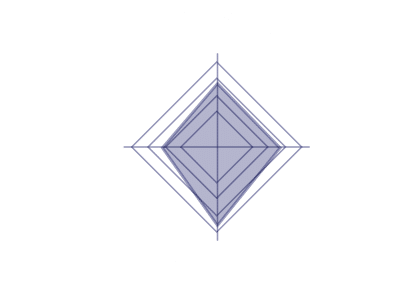
Pillars of Success
You are not alone
52%
of corporate legal departments are actively using generative AI (Azumo, 2026).
$20B
in annual savings that AI could deliver to the US legal industry (Azumo, 2026).
32.5 days
the working time per year lawyers report saving by using generative AI (Azumo, 2026).
20%
of firms are measuring generative AI ROI, leaving most without a clear view of returns (Azumo, 2026).
Join those who are leveraging data to move from financial stewardship to strategic business leadership.

How is AI raising the stakes

AI is changing what contract review means.
The counsel who can use AI to read a contract and surface the clauses that need attention are reviewing contracts faster and more consistently than those reading end-to-end manually - and the risk of missing a material clause in a reviewed contract is lower when AI provides a first pass that catches what a fatigued manual reviewer might miss. But the AI is only as reliable as the governance around it: unsupervised AI contract review that misidentifies risk is worse than no review at all, and counsel who understand how to use AI as a supervised tool are capturing the productivity benefit while managing the risk.
The obligation tracking problem is becoming structural as contract portfolios grow.
A legal function managing hundreds or thousands of contracts cannot rely on individual counsel to remember renewal dates, notice periods, and ongoing obligations across the portfolio. The functions that have built systematic obligation tracking - automated surfacing of upcoming dates, consistent obligation extraction from contracts, workflow to manage the response - are meeting their obligations reliably. Those that have not are discovering missed deadlines at their worst moment: after they have already cost the business.
In-house counsel are increasingly expected to be faster, cover more ground, and handle more complexity - while the volume of legal requests, contracts, and compliance obligations keeps growing.
The counsel who have found ways to use AI and automation for the repeatable, high-volume parts of their work - contract review, obligation tracking, request intake - are creating the capacity to do the complex advisory work that actually requires their expertise. Those who have not are perpetually behind, managing a workload that is growing faster than their capacity to handle it manually.
Manager / Counsel | In-House Legal
How Bronson can help

Generative AI and LLMs
Bronson.AI implements generative AI and large language model solutions that accelerate operational workflows, from drafting and summarisation to intelligent search and recommendation, grounded in the organisation's own governed data.
- Generative AI use case design identifying where LLM capability delivers genuine productivity and quality gains.
- Retrieval-augmented generation connecting LLM outputs to internal knowledge bases and governed data sources.
- Output governance framework ensuring AI-generated content is accurate, auditable, and aligned with organisational standards.

AI and Agentic Automation
Bronson.AI implements the AI and automation capability that turns data into action, identifying inefficiencies, flagging anomalies, and triggering workflow responses without manual intervention. We help the function move from monitoring to orchestrating.
- Process automation across high-volume, rule-based workflows to reduce manual effort and error rates.
- Predictive anomaly detection that flags deviations before they escalate into failures or cost overruns.
- AI-powered forecasting and prioritisation that connects data signals to operational resource allocation.

Modern Data Analytics
Bronson.AI builds the analytics infrastructure that gives real-time visibility into operational performance, connected across every relevant system. We move the function from lagging indicator reporting to forward-looking insight that enables proactive decisions at scale.
- Unified data layer integrating source systems into a single analytics environment.
- Leading indicator frameworks that surface risk and opportunity before they become problems.
- ROI measurement connecting improvement initiatives to business outcomes in real time.
Unlock your potential
Unlock the Power of Data in In-House Legal
The in-house counsel's value is in their legal judgment - the advice that shapes a deal, the risk assessment that protects the business, the contract position that creates or preserves value. That value cannot be delivered if the counsel is spending most of their time on administrative work: manually tracking renewal dates, reading contracts end-to-end to find the clause that needs attention, triaging a flood of undifferentiated requests from the business.
Overcome Data Challenges Effortlessly
AI and automation do not replace that legal judgment - they create the capacity for it. When obligation tracking is systematic and automatic, when AI flags the contract clauses worth looking at, when intake and routing are structured and managed, the counsel's time goes to the work that only a qualified lawyer can do. The advisory output improves, the business gets better answers faster, and the legal function is perceived as an enabler rather than a bottleneck.
The Promise of Data, Analytics, and AI Advancements
Bronson.AI builds the AI and automation capability that creates that capacity - contract review assistance, obligation tracking, request triage - grounded in the data and governance that makes AI tools reliable rather than risky in a legal context. The result is an in-house counsel who manages a larger portfolio with greater confidence, spending their expertise where it matters rather than where it is consumed.
Realize the Value of Advanced Data Solutions
Our services are designed to guide In-House Counsel and Legal Managers through:
- AI Contract Review: LLM assistance that accelerates first-pass review and surfaces the clauses that need judgment.
- Automated Obligation Tracking: Agentic automation that monitors obligations and triages incoming requests.
- Matter Analytics: Visibility into workload, cycle time, and risk across the legal team portfolio.
See Results
4x ROI
payback with AI is guaranteed
90 DAYS
to a funded, board-ready AI roadmap
18 MONTHS
from pilots to
AI-centric enterprise
Get started today!
Frequently asked questions
Turn the contract data into actionable insight that surfaces obligations and dates before they fall due, because reliably tracking them depends on capturing them systematically and surfacing them in time, rather than relying on memory and scattered records that miss things. The work is capturing the obligations and renewal dates from the contracts into a system that tracks them and surfaces them in time to act, so each is flagged before it falls due rather than discovered after it has been missed.
The reason reliable tracking matters is that missed obligations and renewals carry real consequences, breached commitments, unwanted auto-renewals, lost rights, and tracking them manually across a portfolio of contracts inevitably fails, because it depends on someone remembering and checking, which does not scale. Systematic tracking that captures and surfaces the obligations and dates removes the dependence on memory, which is what makes the tracking reliable.
The payoff is obligations and renewals met reliably rather than missed, which avoids the consequences that missing them brings. When obligations and dates are tracked systematically and surfaced in time, you act on them before they fall due, which avoids the breaches, unwanted renewals, and lost rights that missing them causes, and lets you manage the contracts deliberately rather than reactively. Reliable tracking also gives a clear forward view of what is coming, which supports planning your work. Building the capability to track obligations and renewal dates reliably from the contract data is what turns contract management from a process that misses things because it depends on memory into one that surfaces obligations and dates in time to act, which is what protects against the consequences of missed obligations and renewals and lets in-house counsel manage the contract portfolio with confidence that nothing is slipping through unnoticed.
Automate the intake and triage to streamline the workflow and manage the volume, because capturing, categorising, and routing legal requests is exactly the kind of process automation streamlines, replacing the manual handling of every incoming request with an automated intake that captures and triages them efficiently. The work is automating the intake, so requests come in through a structured channel that captures what is needed, and the triage, so requests are categorised and routed appropriately, with the routine ones handled efficiently and the complex ones directed to the right person, rather than every request landing on the team to handle manually.
The reason this matters is that legal functions are often overwhelmed by request volume, much of it routine, and handling every request manually, including the intake and routing, consumes capacity that should go to the genuine legal work. Automating the intake and triage handles the volume efficiently, directing attention to the requests that actually need legal judgement rather than spending it on the mechanical handling of every incoming request.
The payoff is a legal function that manages request volume rather than being overwhelmed by it, with attention directed to the requests that genuinely need it. When intake and triage are automated, the volume is handled efficiently, routine requests are dealt with or routed without consuming legal judgement, and the team's attention goes to the requests that actually require it, rather than being spread thin across every incoming request. The automation also gives the requesters a clearer, faster process and gives the function visibility into the request volume and patterns. Automating legal request intake and triage is what turns an overwhelmed function handling every request manually into one that manages the volume efficiently and directs its attention where it is genuinely needed, which both relieves the overwhelm and ensures the legal judgement goes to the requests that actually require it rather than being consumed by the mechanical handling of the volume.
Use AI to drive efficiency in contract review while keeping the risk judgement human, because generative AI can transform the speed of contract review by surfacing the relevant clauses, deviations, and risks for the lawyer's attention, but the judgement about what the risks actually mean stays with the lawyer. The approach uses AI to read the contract and surface what matters, the non-standard terms, the risk clauses, the deviations from the playbook, so the lawyer reviews a focused set of flagged items rather than reading everything from scratch, while applying their judgement to assess the risks the AI surfaces.
The discipline that makes this safe is treating the AI as an aid that surfaces items for the lawyer's judgement rather than as a reviewer that replaces it, because AI can miss risks, misjudge significance, or misread context, so it has to accelerate the lawyer's review rather than substitute for it, particularly where missing a risk has real consequences. The AI speeds the review by focusing attention; the lawyer ensures the risks are actually caught and correctly assessed, which is where their expertise is genuinely needed.
The payoff is contract review that is far faster without sacrificing the reliability of catching risks, which resolves the tension between the volume of contracts to review and the care that reviewing them properly requires. Used well, AI handles the reading and surfacing while the lawyer applies the judgement, which lets the lawyer review more contracts more quickly while still catching the risks that matter, rather than either reviewing slowly and thoroughly or quickly and carelessly. Using AI to speed contract review while keeping the risk judgement human is what lets in-house counsel review contracts faster without missing risks, which is the balance that makes AI genuinely useful in contract review rather than a shortcut that trades speed for the risk of missing something that matters, and it depends on the AI accelerating the review while the lawyer's judgement remains firmly in control of assessing the risks.
Use AI to find and surface risky clauses across the portfolio efficiently, because generative AI can read across a contract portfolio and identify the clauses that carry risk, surfacing them for the lawyer's review, which is what makes finding risky clauses across many contracts practical rather than a manual impossibility. The approach uses AI to read the portfolio and flag the clauses that match the risk patterns you are looking for, so you can review a surfaced set of risky clauses across the whole portfolio rather than reading every contract manually, with your judgement assessing what the flagged clauses actually mean.
The reason this is so valuable is that questions like which contracts carry a particular risky term, or which expose the organisation in a particular way, are nearly impossible to answer by manually reviewing a large portfolio, so they go unanswered and the risk stays unknown, whereas AI can read the whole portfolio and surface the relevant clauses quickly. The AI makes the portfolio searchable for risk in a way that manual review cannot match at scale.
The payoff is the ability to find risky clauses across the whole portfolio quickly, which lets you understand and manage portfolio-wide risk rather than leaving it unknown. When AI surfaces the risky clauses across the portfolio, you can see which contracts carry a particular risk, assess the organisation's exposure across all its contracts, and manage that exposure deliberately, rather than the portfolio-wide risk being too large to assess manually and therefore unmanaged. The lawyer's judgement assesses what the surfaced clauses mean, while the AI makes finding them across the portfolio possible. Using AI to find risky clauses across the portfolio quickly is what turns portfolio-wide contract risk from something too large to assess manually into something you can actually understand and manage, which is what lets in-house counsel get on top of the risk across all the organisation's contracts rather than only the ones they happen to review individually.