
Specialist | Legal Data & Contract Analytics
Legal Data & Contract Analytics Specialist
"We are pointing AI at contract data that was never organised for it, and I cannot check the answers."
Quick Facts
Role
Specialist | Legal Data & Contract Analytics
Level
Specialist
Dept
Legal Data & Contract Analytics
Industry
Legal
Env
Cloud CLM + analytics
Tools
Kira, Ironclad, Power BI
Sound familiar?
Contract, matter, and spend data are fragmented and inconsistently structured, leaving no reliable foundation for legal analytics
AI tools are applied to poorly organised contract data and inconsistent playbooks, producing outputs that are difficult to validate
Portfolio-wide analysis of non-standard, risky, or missing terms is not feasible at the scale of manual review
Liability, renewal, termination, privacy, and change-of-control clauses remain buried without systematic extraction and comparison
Legal stakeholders question analytical outputs because source coverage, data quality, definitions, and lineage cannot be verified
Analytics remain detached from matter intake, drafting, and negotiation workflows, so insights are produced after the decision point rather than within it
How AI-ready is your organization?
Complete the 10-minute assessment.
Pinpoint operational gaps, benchmark your maturity across key pillars, and chart a clear path to scalable AI success.
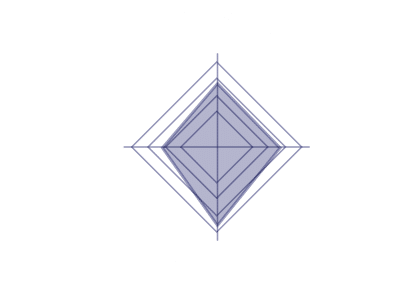
Pillars of Success
You are not alone
32.5 days
the working time per year lawyers report saving by using generative AI (Azumo, 2026).
20%
of firms are measuring generative AI ROI, leaving most without a clear view of returns (Azumo, 2026).
3.9x
more likely that firms with a formal AI strategy experience critical benefits (Thomson Reuters & Georgetown Law, 2026).
63%
of corporate legal departments use generative AI to identify contract clauses (FTI Consulting & Relativity, 2026).
Join those who are leveraging data to move from financial stewardship to strategic business leadership.

How is AI raising the stakes

The demand for contract analytics capability is accelerating as legal functions are asked to manage larger portfolios with the same or smaller teams.
Commercial, risk, finance, and legal leadership are all asking questions that require portfolio-level contract insight - what is our aggregate liability exposure, which contracts are coming up for renewal in the next 90 days, which outside counsel agreements contain rate escalators - and the legal function that cannot answer these questions systematically is failing a growing set of stakeholder expectations.
The skills combination that genuine contract analytics requires - legal domain knowledge, data engineering, and AI fluency - is rare and valuable.
Organisations that have found people who combine all three, or built teams that cover the combination, are ahead. Those looking for a single hire who brings all three are searching for someone who barely exists in the market. The practical path is usually to combine some domain knowledge in-house with data engineering and AI capability that is built or accessed from outside, and the specialists who understand how to direct and use that combination are the ones delivering the most value.
Contract analytics is one of the highest-potential applications of AI in the legal function - and one of the most dependent on data quality.
The organisations that have built a clean, structured contract data foundation are deploying AI to analyse their portfolios at a scale and speed that manual review cannot approach: identifying non-standard terms across thousands of contracts, flagging liability clauses by risk level, mapping renewal obligations across the whole portfolio. Those working with unstructured, poorly extracted contract data are finding that the AI produces confident but unreliable outputs, which is worse than no analysis.
Specialist | Legal Data & Contract Analytics
How Bronson can help

Generative AI and LLMs
Bronson.AI implements generative AI and large language model solutions that accelerate operational workflows, from drafting and summarisation to intelligent search and recommendation, grounded in the organisation's own governed data.
- Generative AI use case design identifying where LLM capability delivers genuine productivity and quality gains.
- Retrieval-augmented generation connecting LLM outputs to internal knowledge bases and governed data sources.
- Output governance framework ensuring AI-generated content is accurate, auditable, and aligned with organisational standards.

Modern Data Analytics
Bronson.AI builds the analytics infrastructure that gives real-time visibility into operational performance, connected across every relevant system. We move the function from lagging indicator reporting to forward-looking insight that enables proactive decisions at scale.
- Unified data layer integrating source systems into a single analytics environment.
- Leading indicator frameworks that surface risk and opportunity before they become problems.
- ROI measurement connecting improvement initiatives to business outcomes in real time.
Fractional Data and AI Services
For functions that need specialist data and AI capability without the timeline and cost of permanent recruitment, Bronson.AI provides experienced fractional professionals who integrate directly with the internal team, accelerating delivery while building internal capability in parallel.
- Fractional data engineers who build and maintain the data pipelines and integration infrastructure the function depends on.
- Machine learning and AI specialists who design, validate, and deploy analytical models to production standard.
- Analytics translators who bridge the gap between technical outputs and the business decisions they are designed to inform.
Unlock your potential
Unlock the Power of Data in Contract Analytics
Contract analytics delivers value proportional to the quality of the data it works from. AI that reads well-structured, consistently attributed contract data produces reliable, useful output - clause identification that the legal team can act on, risk flags that hold up to scrutiny, portfolio analysis that stakeholders trust. AI that reads poorly structured, inconsistently extracted data produces confident-sounding output that is frequently wrong in ways that are hard to detect without expert review.
Overcome Data Challenges Effortlessly
The foundation of reliable contract analytics is therefore the data, not the AI. Getting the contract data structured, consistently attributed, and governed before applying AI to it is what makes the AI useful rather than risky. And maintaining that data quality as contracts are added and amended is what keeps the analytics reliable over time.
The Promise of Data, Analytics, and AI Advancements
Bronson.AI builds both layers - the governed contract data foundation and the AI analytics on top of it. The result is contract portfolio analytics that the legal function can rely on, board-level stakeholders can trust, and the business can act on - rather than AI-generated analysis that looks impressive but requires constant expert verification to be safe to use.
Realize the Value of Advanced Data Solutions
Our services are designed to guide Legal Data and Contract Analytics Specialists through:
- AI Contract Analytics: LLM extraction that works reliably because the underlying contract data is structured and attributed.
- Portfolio Analytics: Obligation, risk, and commercial term visibility across the full contract portfolio.
- Embedded Analytics Capacity: Fractional data and AI expertise to build the structured contract foundation the analytics depend on.
See Results
4x ROI
payback with AI is guaranteed
90 DAYS
to a funded, board-ready AI roadmap
18 MONTHS
from pilots to
AI-centric enterprise
Get started today!
Frequently asked questions
Turn the contract portfolio into actionable insight on non-standard and risky terms, because identifying these terms across the portfolio depends on analysing the contracts against your standards, and that requires the contract content extracted into analysable form and analysed systematically rather than reviewed by hand. The work is getting the contract terms into a form that can be analysed, then analysing them against your standard positions and risk criteria to surface where contracts deviate, so the non-standard and risky terms across the whole portfolio become visible rather than hidden in contracts nobody has time to review individually.
The reason this analysis is valuable is that a contract portfolio accumulates non-standard and risky terms that nobody has the capacity to find by manually reviewing every contract, so the portfolio-wide risk those terms represent stays unknown and unmanaged. Analysing the portfolio systematically against your standards is what surfaces the deviations, which is the precondition for understanding and managing the risk they carry.
The payoff is visibility of the non-standard and risky terms across the whole portfolio, which lets you understand and manage portfolio-wide contract risk. When the portfolio is analysed against your standards, the non-standard and risky terms are surfaced, which lets you assess the organisation's exposure across all its contracts, prioritise the terms that matter most, and manage the risk deliberately rather than leaving it unknown. The analysis also reveals where your standard positions are being eroded in practice, which informs your contracting. Analysing the contract portfolio for non-standard and risky terms is what turns portfolio-wide contract risk from something too large to assess manually into something you can see and manage, which is what lets the legal function understand and control the risk across all its contracts rather than only the ones that happen to get individual review.
Use AI to extract and structure the contract data at scale, because generative AI can read contracts and extract the key terms, dates, parties, and clauses into structured data far faster than manual extraction, which is what makes structuring a large contract portfolio practical rather than impossibly laborious. The approach uses AI to read the contracts and extract the relevant information into a structured form, with appropriate verification, so the information locked in the contract documents becomes structured data that can be analysed, tracked, and reported on.
The reason this is so valuable is that contracts hold information the legal function needs, obligations, dates, terms, risk provisions, but it is locked in unstructured documents, so without extraction it cannot be analysed, tracked, or reported on, and manual extraction across a large portfolio is impossibly laborious. AI extraction at scale unlocks that information, turning a portfolio of documents into structured data, which is the foundation for nearly everything else the function wants to do with its contracts.
The payoff is contract information as structured data that can be analysed, tracked, and reported on, rather than locked in documents nobody can extract at scale. When AI extracts and structures the contract data, the obligations can be tracked, the terms can be analysed, the portfolio can be reported on, and the risk can be assessed across all the contracts, which transforms the function's ability to manage its contracts. The extraction needs verification, because AI can misread, but it makes structuring the portfolio practical in a way manual extraction never could. Using AI to extract and structure contract data at scale is what turns a contract portfolio from documents whose information is locked away into structured data the function can actually use, which is the foundation for the obligation tracking, risk analysis, and reporting that depend on having the contract information in a form that can be analysed rather than buried in unstructured documents.
Establish secure, well governed data management as the clean foundation, because reliable contract and matter analysis depends on connected, consistent, clean data, and the fragmentation is precisely what undermines it. The work is connecting the contract and matter data from across the systems, cleaning and aligning it so it is consistent and reliable, and governing it so the foundation stays clean, which is what lets analysis and reporting work from a dependable foundation rather than from fragmented, inconsistent data.
The reason a clean foundation matters is that everything the analytics specialist does, the portfolio analysis, the risk assessment, the reporting, depends on the underlying contract and matter data being clean and connected, and fragmented, inconsistent data undermines all of it, producing analysis whose reliability is always in question. The clean foundation is the precondition for analysis the function can trust, which is why fixing the fragmentation comes before the analysis rather than being worked around.
The payoff is a clean foundation that makes the analysis and reporting reliable. With the contract and matter data connected, cleaned, and governed, the analysis draws from a dependable foundation, so the portfolio analysis, risk assessment, and reporting are reliable rather than undermined by the data underneath, and the specialist's effort goes into analysis rather than perpetually cleaning fragmented data. The clean foundation also makes the AI extraction and analysis more effective, because they work from connected data. Fixing the fragmentation through a clean, governed foundation is what turns contract and matter data from fragmented, inconsistent sources that undermine analysis into a clean foundation that supports reliable analysis and reporting, which is the precondition for everything the analytics specialist is trying to deliver, because analysis built on fragmented, unreliable data is itself unreliable no matter how good the analysis.
Use AI to find and flag the liability and renewal clauses across the portfolio, because generative AI can read across all the contracts and identify these specific clauses, surfacing them for review, which is what makes flagging them across the whole portfolio practical rather than a manual impossibility. The approach uses AI to read the contracts and flag the liability and renewal clauses wherever they appear, so you have visibility of these clauses across the entire portfolio rather than only in the contracts that have been manually reviewed, with verification of what the AI flags.
The reason this is so valuable is that liability and renewal clauses carry significant consequences, exposure in the case of liability, missed deadlines and unwanted commitments in the case of renewals, and finding them across a large portfolio manually is impractical, so the portfolio-wide picture of these clauses stays unknown and the risks they carry go unmanaged. AI flagging them across the portfolio makes that picture visible, which is the precondition for managing the risks.
The payoff is visibility of the liability and renewal clauses across the whole portfolio, which lets you manage the exposure and the renewals deliberately. When AI flags these clauses across all the contracts, you can assess the organisation's liability exposure across its whole portfolio, track all the renewal clauses so none is missed, and manage both deliberately rather than leaving the portfolio-wide picture unknown. The verification ensures the flagging is reliable, while the AI makes finding the clauses across the portfolio possible. Using AI to flag liability and renewal clauses across all contracts is what turns the portfolio-wide picture of these consequential clauses from something too large to assemble manually into something you can actually see and manage, which is what lets the legal function get on top of its liability exposure and its renewal obligations across all its contracts rather than only the ones that happen to get individual review.