
Director | Sales
Director of Revenue Operations & Sales Analytics
"I can be right and still be ignored, because none of it shows up where selling actually happens."
Quick Facts
Role
Director | Sales
Level
Director
Dept
Sales
Industry
Sales
Env
Cloud CRM + warehouse
Tools
Salesforce, Snowflake, Tableau
Sound familiar?
Revenue systems are fragmented enough that producing a consistent, trusted view of pipeline and performance requires manual reconciliation
Analytics outputs may be correct, but sellers ignore them because they are not embedded in the decisions and tools used during selling
Attribution is contested between marketing, sales, and Finance because there is no single agreed methodology backed by shared data
Forecast accuracy is too weak for Finance to rely on, and the repeated gap between called and closed revenue erodes confidence
Each new revenue tool adds integration complexity, duplicate data, and another point where metric definitions can diverge
AI forecasting and scoring tools keep being added to the stack without the clean, connected data they need to perform
How AI-ready is your organization?
Complete the 10-minute assessment.
Pinpoint operational gaps, benchmark your maturity across key pillars, and chart a clear path to scalable AI success.
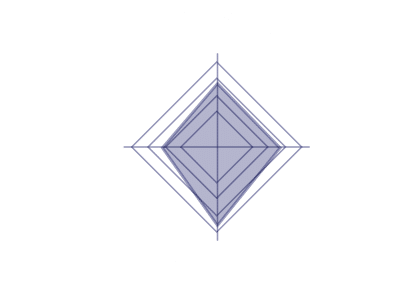
Pillars of Success
You are not alone
25-35%
forecast miss rate for bottom-quartile sales organisations, while the top quartile stays within 5% (Gartner, via DataGardeners).
40%
of salespeople still use informal methods like spreadsheets and email to store customer data (HubSpot, State of Marketing).
27%
increase in customer retention that CRM platforms can deliver by unifying data across teams (Teamgate, 2026).
42%
improvement in sales forecast accuracy reported by organisations implementing CRM (Salesforce, via CRM.org).
Join those who are leveraging data to move from financial stewardship to strategic business leadership.

How is AI raising the stakes

Forecast accuracy is the most visible performance metric for Revenue Operations, and it is the one that most directly exposes the quality of the underlying data and process infrastructure.
CROs and CFOs who have lost confidence in sales forecasts are often - explicitly or implicitly - expressing a lack of confidence in the RevOps function's ability to produce reliable revenue intelligence. Rebuilding that confidence requires both improving the data quality and process discipline that forecasting depends on, and building the AI-powered forecasting capability that signals and CRM data alone cannot produce.
The revenue tech stack proliferation problem is becoming unmanageable at many organisations.
The average revenue tech stack has grown significantly in the last five years as point solutions for every stage of the revenue cycle have proliferated, and RevOps teams are spending an increasing proportion of their time managing integrations, resolving data conflicts between platforms, and cleaning the data quality problems that accumulate at every integration point. Directors of RevOps who have not rationalised and integrated their tech stack are managing a data environment that gets more fragile with every tool added.
Revenue Operations is the discipline that makes AI-enabled selling possible - and Directors of RevOps who have not yet built the data and systems foundation that AI tools require are managing a function that is promising AI-powered revenue intelligence while sitting on the data infrastructure problems that make it unreliable.
The 2025 Salesforce State of Sales report found that 51% of sales leaders with AI say tech silos delay or limit their AI initiatives - a finding that points directly at the RevOps function's core responsibility. Every AI tool in the revenue stack is only as good as the data it operates on, and that data is RevOps' domain.
Director | Sales
How Bronson can help

Fractional Data and AI Services
For functions that need specialist data and AI capability without the timeline and cost of permanent recruitment, Bronson.AI provides experienced fractional professionals who integrate directly with the internal team, accelerating delivery while building internal capability in parallel.
- Fractional data engineers who build and maintain the data pipelines and integration infrastructure the function depends on.
- Machine learning and AI specialists who design, validate, and deploy analytical models to production standard.
- Analytics translators who bridge the gap between technical outputs and the business decisions they are designed to inform.

AI Readiness and Data Management Assessment
Bronson.AI assesses the data foundation and process maturity that determines whether AI investments will deliver. Before committing to AI tools, the function needs an honest picture of where the data actually stands, and a prioritised roadmap for closing the gaps.
- Data maturity assessment evaluating completeness, consistency, quality, and governance readiness across relevant systems.
- AI use case prioritisation identifying which applications the current data foundation can support now versus after remediation.
- Prioritised roadmap sequencing the data and process work that AI adoption requires.

Generative AI and LLMs
Bronson.AI implements generative AI and large language model solutions that accelerate workflows, from drafting and summarisation to intelligent search and recommendation, grounded in the organisation's own governed data.
- Generative AI use case design identifying where LLM capability delivers genuine productivity and quality gains.
- Retrieval-augmented generation connecting LLM outputs to internal knowledge bases and governed data sources.
- Output governance framework ensuring AI-generated content is accurate, auditable, and aligned with organisational standards.
Unlock your potential
Unlock the Power of Data in Revenue Operations
Data is the backbone of an effective Revenue Operations function. For the Director of Revenue Operations, harnessing clean, integrated, and governed revenue data across the full customer lifecycle is what enables the function to deliver the forecasting accuracy, attribution credibility, and performance analytics that the revenue organisation depends on.
Overcome Data Challenges Effortlessly
One of the primary challenges facing Revenue Operations leaders is revenue data that is fragmented across disconnected systems, inconsistently defined across functions, and manually reconciled by the RevOps team rather than flowing automatically into a trusted analytical layer. Building the revenue data architecture that eliminates these problems is the foundational investment that determines the quality of everything the function produces.
The Promise of Data, Analytics, and AI Advancements
Imagine a revenue operations function where CRM, marketing, customer success, and finance data flow automatically into a single trusted analytical layer, where AI-powered forecasting produces the accuracy that Finance relies on for planning, and where attribution methodology is agreed and trusted across all revenue functions. This is not just a vision but the very real value proposition that our Data, Analytics, and AI Consulting and Solutions offer.
Realize the Value of Advanced Data Solutions
Our services are designed to guide Directors of Revenue Operations through:
- Unified Revenue Data Architecture: Integrated, governed data layer connecting all revenue systems into one trusted source.
- AI-Powered Revenue Analytics: Forecasting, attribution, and performance analytics that Finance and the revenue team both trust.
- Tech Stack Rationalisation: Revenue technology architecture that scales without accumulating integration complexity and data quality debt.
See Results
4x ROI
payback with AI is guaranteed
90 DAYS
to a funded, board-ready AI roadmap
18 MONTHS
from pilots to
AI-centric enterprise
Get started today!
Frequently asked questions
Establish secure, well governed data management across the revenue stack, because a trusted view of revenue depends on consistent, connected, governed data, and the lack of trust comes directly from systems that each hold their own version of the truth. The work is connecting the revenue systems into a common foundation, aligning definitions so revenue concepts mean the same thing across systems, and governing the result so it stays consistent as the stack evolves. The effort is in the alignment and governance, because revenue data recorded differently across a sprawling stack cannot become a trusted whole until the definitions agree and someone owns keeping them aligned.
The reason fragmentation is so damaging in revenue operations is that the function exists to give the go-to-market organisation a reliable view of revenue, and a fragmented stack makes that impossible, producing competing numbers that erode trust until each team relies on its own system and the organisation has no shared truth. The forecast is disputed, attribution is contested, and performance numbers vary by source, all because the systems are not connected on a governed foundation.
The payoff is the trusted, single view of revenue that revenue operations is supposed to provide, replacing the competing numbers that fragmentation produces. When the revenue stack is connected and governed, the forecast, attribution, and performance metrics all draw from the same consistent foundation, so they agree and the organisation can rely on them, which is the precondition for the data-driven go-to-market the function is meant to enable. Building the governed foundation that connects the revenue systems is what turns revenue operations from a function fighting a fragmented stack into one providing the trusted revenue view the whole go-to-market organisation depends on, which is its core purpose.
Turn consistent, governed data into a forecast with a transparent methodology, because a forecast Finance will rely on rests on data it can trust and a method it can see, and improving reliability means fixing the inputs and making the approach transparent rather than just adjusting the model. The work is getting the forecast's input data, pipeline, historical performance, the signals that inform the forecast, onto a consistent governed footing, and building the forecasting methodology so it is documented and explainable rather than a black box Finance is asked to accept on faith.
The reason Finance distrusts forecasts is usually well founded: sales forecasts often rest on inconsistent CRM data and optimistic rep input, processed through methodology Finance cannot examine, producing numbers that miss and that Finance therefore learns to discount and work around. The distrust is rational, and it is not resolved by defending the forecast but by making it trustworthy, fixing the data so the inputs are sound and exposing the methodology so Finance can see why the forecast says what it does.
The payoff is a forecast Finance actually uses for planning, which is what a forecast is for. When the forecast rests on consistent data and transparent methodology, and when its accuracy improves as a result, Finance can rely on it rather than building its own competing estimate, which aligns the organisation around one set of numbers rather than several. Reliable forecasting also improves decision-making throughout the business, because plans built on a trustworthy forecast are sounder than those built on one everyone secretly distrusts. Improving the forecast by fixing its data foundation and making its methodology transparent is what turns it from a number Finance discounts into one the organisation plans on, which is the difference between a forecast that informs the business and one that everyone quietly ignores.
Turn the analytics into clear, comprehensible insight delivered where reps work, because analysis that reaches reps in their existing workflow, in a form they immediately grasp, is what gets used, while analysis that lives in a separate tool reps must seek out does not. The work is understanding how reps actually work and what decisions the analytics should inform, then delivering the insight into that workflow, in the CRM or wherever reps spend their time, presented so the implication is immediately clear and actionable rather than requiring interpretation.
The reason reps do not adopt analytics is rarely that the analytics are poor; it is that they are delivered in a way that does not fit how reps work. A rep focused on their deals will not regularly visit a separate analytics tool, will not interpret complex dashboards, and will not act on insight that does not connect to what they are doing right now. Analytics that demand the rep come to them fail; analytics that come to the rep, in their workflow and in actionable form, succeed.
The payoff is analytics that reps actually use, which is the only kind worth building. When insight is delivered where reps work, in a form they can act on, it influences their behaviour, the deals they prioritise, the actions they take, which is the whole point of sales analytics. That also justifies the analytics investment, because adopted analytics that change rep behaviour deliver value, while ignored analytics, however sophisticated, deliver none. Delivering analytics into the reps' workflow rather than producing them in a separate tool is what closes the gap between building analytics and having them used, which is where most sales analytics investment succeeds or fails, and it usually fails on delivery rather than on the quality of the analysis itself.
Approach it as a planned migration to a more scalable and efficient architecture, because seamlessly rationalising the stack is what reduces the integration complexity that is degrading your data and slowing the function, and that is a migration to be sequenced rather than a big-bang replacement. The work starts with understanding the current stack, what each tool does, where they overlap, how they integrate, where the fragile connections and data-quality losses occur, then planning a move toward a simpler, better-integrated architecture that eliminates redundancy and replaces brittle point-to-point connections with something more robust.
The reason stack complexity matters beyond annoyance is that every fragile integration is a point where data quality degrades, and a stack of overlapping tools connected by brittle integrations produces exactly the inconsistent, unreliable revenue data that undermines forecasting, attribution, and trust. The complexity is not just operationally burdensome; it actively damages the data the revenue function depends on, which is why rationalising it improves outcomes and not just tidiness.
The payoff is a stack that is simpler to run, more reliable, and produces better data, because eliminating redundant tools and fragile integrations removes both the operational burden and the data-quality losses they cause. A rationalised, well-integrated stack scales more gracefully, costs less to maintain, and produces the consistent data that trusted revenue analytics require. The migration takes effort and has to be sequenced to avoid disrupting the go-to-market operation, but the honest comparison is not rationalisation versus a stable status quo; it is rationalisation versus a stack that grows more complex, more fragile, and more data-degrading with every tool added. Planning the migration to a rationalised architecture is what turns an accreted, complexity-ridden stack into one that supports the revenue function rather than undermining it.