
Manager | Sales
Sales Manager
"Pipeline review is me asking reps how their deals feel, because I have nothing objective to check against."
Quick Facts
Role
Manager | Sales
Level
Manager
Dept
Sales
Industry
Sales
Env
Cloud CRM
Tools
Salesforce, Outreach, Excel
Sound familiar?
More time goes into compiling pipeline reports than into coaching the team and both suffer as a result
Pipeline reviews rely on what reps say about their deals rather than objective signals about how those deals are actually progressing
Deals slipping out of the forecast are discovered at the end of a period when there is no time left to recover them
New reps take too long to become productive because onboarding is inconsistent and not informed by evidence on what successful sellers do
What separates top performers from the rest is understood by feel but has never been identified and codified from the data
AI assistants promise to reduce reporting effort, but adoption is ad hoc and their effect on selling behaviour and data quality is unmeasured
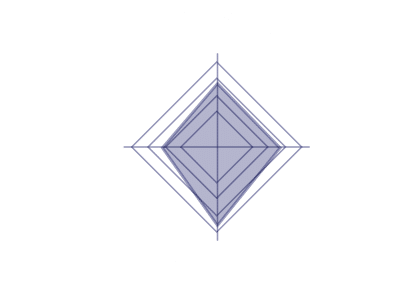
How AI-ready is your organization?
Complete the 10-minute assessment.
Pinpoint operational gaps, benchmark your maturity across key pillars, and chart a clear path to scalable AI success.
Pillars of Success
You are not alone
37%
of CRM users report revenue loss due to poor data quality (Teamgate, 2026).
76%
of CRM users admit that less than half their CRM data is accurate and complete (Teamgate, 2026).
70%
of companies now use AI in their CRM, and 65% leverage generative AI for forecasting and lead scoring (Teamgate, 2026).
25-35%
forecast miss rate for bottom-quartile sales organisations, while the top quartile stays within 5% (Gartner, via DataGardeners).
Join those who are leveraging data to move from financial stewardship to strategic business leadership.

How is AI raising the stakes

AI conversation intelligence tools are creating a widening capability gap in sales team development.
Organisations using tools like Gong or Chorus are automatically capturing and analysing every sales call, identifying the questions, objections, and competitor mentions that characterise winning conversations, and surfacing specific coaching moments for each rep based on their actual call behaviour rather than general training content. Sales Managers without this capability are coaching based on what reps tell them happened in a meeting rather than on objective evidence of what was said, how it landed, and what was left unaddressed.
The new rep ramp problem is also intensifying as remote and hybrid work makes informal skill transfer less reliable.
New reps who previously learned by sitting alongside experienced colleagues are now onboarding in environments where that proximity-based learning does not happen naturally. Sales Managers without data on which activities, conversations, and early pipeline milestones correlate with reaching full productivity cannot design onboarding programmes that accelerate the ramp or identify early which new reps are on track and which need intervention.
Sales Managers are being squeezed from both directions.
Leadership wants more forecast accuracy and more granular performance visibility. Reps want coaching that is specific and useful rather than generic and prescriptive. The manual processes that most Sales Managers use to collect pipeline information - chasing reps for CRM updates, running weekly review meetings based on self-reported forecasts, pulling activity reports from a system that reps do not maintain consistently - are both time-consuming and unreliable. Managers who have access to real-time, data-driven pipeline and performance intelligence are spending that time coaching and managing rather than gathering and reconciling data.
Manager | Sales
How Bronson can help

Modern Data Analytics
Bronson.AI builds the analytics infrastructure that gives real-time visibility into performance, connected across every relevant system. We move the function from lagging indicator reporting to forward-looking insight that enables proactive decisions at scale.
- Unified data layer integrating source systems into a single analytics environment.
- Leading indicator frameworks that surface risk and opportunity before they become problems.
- ROI measurement connecting improvement initiatives to business outcomes in real time.

AI and Agentic Automation
Bronson.AI implements the AI and automation capability that turns data into action, identifying inefficiencies, flagging anomalies, and triggering workflow responses without manual intervention. We help the function move from monitoring to orchestrating.
- Process automation across high-volume, rule-based workflows to reduce manual effort and error rates.
- Predictive anomaly detection that flags deviations before they escalate into failures or cost overruns.
- AI-powered forecasting and prioritisation that connects data signals to operational resource allocation.

Generative AI and LLMs
Bronson.AI implements generative AI and large language model solutions that accelerate workflows, from drafting and summarisation to intelligent search and recommendation, grounded in the organisation's own governed data.
- Generative AI use case design identifying where LLM capability delivers genuine productivity and quality gains.
- Retrieval-augmented generation connecting LLM outputs to internal knowledge bases and governed data sources.
- Output governance framework ensuring AI-generated content is accurate, auditable, and aligned with organisational standards.
Unlock your potential
Unlock the Power of Data in Sales
Data is the backbone of effective sales team management. For the Sales Manager, harnessing real-time, objective pipeline and performance data enables coaching conversations that are specific and evidence-based, pipeline reviews that surface real risk rather than optimistic forecasts, and onboarding programmes that accelerate new rep productivity.
Overcome Data Challenges Effortlessly
One of the primary challenges facing Sales Managers is management processes that depend on rep self-reporting and manual data gathering rather than objective, real-time data. Building the analytics and intelligence infrastructure that makes the pipeline and performance picture always current and always accurate is what transforms sales management from administrative oversight to genuine performance leadership.
The Promise of Data, Analytics, and AI Advancements
Imagine managing a team where deal risk is flagged automatically before deals slip, where coaching recommendations are generated from objective call and activity data, and where you spend your week coaching rather than chasing CRM updates and compiling reports. This is not just a vision but the very real value proposition that our Data, Analytics, and AI Consulting and Solutions offer.
Realize the Value of Advanced Data Solutions
Our services are designed to guide Sales Managers through:
- Real-Time Pipeline Intelligence: Objective deal health data that replaces subjective self-reporting in pipeline reviews.
- Evidence-Based Coaching: AI conversation and activity analytics that surface specific coaching opportunities for each rep.
- Performance Analytics: Leading indicator tracking that identifies performance risk before it shows up in outcomes.
See Results
4x ROI
payback with AI is guaranteed
90 DAYS
to a funded, board-ready AI roadmap
18 MONTHS
from pilots to
AI-centric enterprise
Get started today!
Frequently asked questions
Automate the routine reporting to streamline the work and free your time for coaching, because compiling reports is mechanical and repeatable while coaching is the judgement-based work that actually improves the team, and a manager consumed by reporting is an expensive resource doing low-value work. Setting up the reports to generate automatically from the CRM and performance data means they are produced and current without your effort, so the time previously spent assembling them goes to the team.
This depends on the underlying data being consistent and connected, which is often the real constraint, because automated reporting built on inconsistent data just produces current but unreliable reports. Getting the data right is part of making the automation worthwhile, and it tends to surface the data issues that manual compilation was quietly absorbing.
The payoff is a manager who spends time coaching rather than compiling, which is where a sales manager actually adds value. The hours reclaimed from manual reporting go into the one-to-ones, deal coaching, and team development that improve performance, rather than into assembling numbers that the team could see automatically. Coaching is consistently what distinguishes effective sales managers, and it is consistently what gets squeezed out by the administrative burden of manual reporting, so automating the reporting directly addresses the thing that most limits a manager's impact. Automating the routine reporting is what shifts the manager's time from producing reports about the team to actually developing the team, which is both a better use of the manager and the thing most likely to improve the numbers the reports track in the first place.
Turn the activity and engagement data into actionable insight that informs the review, because objective signals about deal health, real engagement, genuine progression, multi-stakeholder contact, are what let you test the rep's optimistic account against reality, and that requires the data analysed and available rather than relying on the rep's narrative alone. The approach surfaces the actual engagement and progression data for each deal, so the review combines the rep's account with the evidence, letting you probe where the two diverge.
The reason self-reporting alone is unreliable is not that reps are dishonest but that they are optimistic, attached to their deals, and motivated to present them favourably, so a review based purely on what reps say tends toward a rosy picture that reality later corrects. Objective data, what the customer is actually doing, how the deal is genuinely progressing, grounds the review in evidence and lets you identify the deals that are not as healthy as the rep believes, which are exactly the ones that slip and surprise the forecast.
The payoff is pipeline reviews that surface the truth rather than confirm the rep's optimism, which is what makes them useful for forecasting and coaching. When reviews combine the rep's account with objective data, you can identify at-risk deals the rep has not recognised, coach based on what is actually happening, and forecast on evidence rather than on aggregated optimism. That makes the forecast more reliable and the coaching more effective, because both rest on reality rather than on the rep's hopes. Bringing objective data into pipeline reviews is what turns them from a recital of optimistic rep accounts into an evidence-based assessment of where deals actually stand, which is what a pipeline review is supposed to deliver but rarely does when it relies on self-reporting alone.
Turn the deal data into forward-looking insight, because the shift from noticing deals after they have slipped to spotting the risk while there is still time to act is what early warning provides, and that depends on monitoring the leading signals rather than waiting for the deal to fall out of the forecast. The signals that precede a deal slipping include engagement going quiet, the deal sitting too long in a stage, contact narrowing to a single stakeholder, and momentum slowing relative to a healthy deal, and monitoring these is what flags a deal at risk before it is lost.
The reason this matters is that an at-risk deal caught early can often be saved, while the same deal noticed only when it slips out of the forecast usually cannot, because by then the customer has moved on or the moment has passed. Early warning is the difference between intervening, re-engaging a stalling deal, addressing a single-threaded relationship, responding to lost momentum, and discovering too late that a deal you were counting on has gone.
The payoff is more deals saved and a more reliable forecast, because early warning lets you act on at-risk deals while intervention is still possible, and it surfaces the risk in the forecast before it becomes a miss. Instead of forecasts that look healthy until deals suddenly slip, you get visibility of the risk as it develops, which both improves the forecast's reliability and gives you the chance to do something about the deals it flags. Monitoring the leading signals of deal risk is what turns deal management from reacting to slips after they happen into intervening before they do, which over a quarter is the difference between hitting the number and explaining why you missed it.
Turn the leading-indicator data into a clear, comprehensible view, because a dashboard of the activities and signals that predict whether the team will hit its number is what lets you manage forward rather than react to results, and that requires identifying the right indicators and presenting them clearly and currently. The build identifies the leading indicators that actually predict outcomes in your business, pipeline coverage, activity levels, deal progression, engagement, and presents them by rep and team in a view that updates as the data changes, so you see the leading signals rather than only the lagging results.
The reason leading indicators matter more than results for management is that results are lagging, they tell you what already happened, when it is too late to change it, while leading indicators tell you what is likely to happen, when you can still affect it. A dashboard of results lets you explain the quarter; a dashboard of leading indicators lets you manage toward it, by showing whether the activities and pipeline that produce results are on track while there is still time to adjust.
The payoff is the ability to manage proactively toward the number rather than reactively explaining it. When you can see the leading indicators currently and by rep, you know early whether the team is on track, which reps need attention, and where the pipeline or activity is falling short of what hitting the number requires, all while there is time to act. That shifts management from after-the-fact explanation to in-flight steering, which is what actually influences whether the number gets hit. Building the leading-indicator dashboard, focused on the signals that genuinely predict results in your business and presented currently and clearly, is what gives a sales manager the forward visibility to manage toward outcomes rather than the backward visibility to account for them.