
Entry Level | Sales
Sales Development Representative
"Nobody can tell me which messages or timing actually work, so I am guessing and calling it a strategy."
Quick Facts
Role
Entry Level | Sales
Level
Entry Level
Dept
Sales
Industry
Sales
Env
Cloud CRM + sales engagement
Tools
Salesforce, Outreach, LinkedIn
Sound familiar?
Prospect lists are poorly targeted and rejection rates are high enough that significant time is being spent on the wrong people
The team does not know which channels, messages, sequences, and timing produce responses, so each rep optimises from personal experience
CRM data entry is time-consuming enough that it competes with selling time and the data quality suffers as a result
Prospect prioritisation relies on gut feel because account fit, intent, and engagement signals are not connected into a usable score
Whether prospects are engaging with content before a first conversation is invisible because the signals are not being tracked
AI outreach tools increase volume, but their effect on response quality, conversion, brand risk, and deliverability is not measured
How AI-ready is your organization?
Complete the 10-minute assessment.
Pinpoint operational gaps, benchmark your maturity across key pillars, and chart a clear path to scalable AI success.
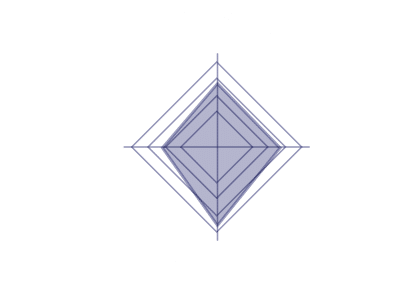
Pillars of Success
You are not alone
70%
of companies now use AI in their CRM, and 65% leverage generative AI for forecasting and lead scoring (Teamgate, 2026).
25-35%
forecast miss rate for bottom-quartile sales organisations, while the top quartile stays within 5% (Gartner, via DataGardeners).
40%
of salespeople still use informal methods like spreadsheets and email to store customer data (HubSpot, State of Marketing).
27%
increase in customer retention that CRM platforms can deliver by unifying data across teams (Teamgate, 2026).
Join those who are leveraging data to move from financial stewardship to strategic business leadership.

How is AI raising the stakes

Data quality at the top of the funnel is becoming a career-defining issue for SDRs.
When prospect data is inaccurate - wrong contact details, outdated company information, misclassified industries - outreach that could be productive is wasted on unqualified targets, and the CRM records that are built from that outreach are unreliable for the analytics that sales leadership increasingly relies on. SDRs who develop the discipline of data quality at the prospecting stage are contributing to the organisation's revenue intelligence infrastructure rather than degrading it.
The signal-based prospecting shift is the most significant capability change facing SDRs right now.
Traditional prospecting approaches - cold call lists based on firmographic criteria - are being replaced by intent-signal-based approaches where outreach is triggered by specific buying signals: a prospect viewing a pricing page, a company posting a job description for a role that indicates the need for the seller's solution, a news event that creates a specific business need. SDRs who have not developed the capability to identify and act on these signals are using prospecting approaches that were state-of-the-art five years ago, in a world where buyers have significantly higher expectations of the relevance of the outreach they receive.
The SDR role is being transformed by AI faster than any other sales function, and the gap between SDRs who are working with AI-enabled prospecting and outreach tools and those who are not is becoming visible in pipeline generation rates.
AI tools for prospect identification, personalisation at scale, and signal-based outreach prioritisation are enabling SDRs with good process to produce significantly more qualified pipeline than was achievable through manual research and generic sequencing. SDRs without access to these tools - or without the data literacy to use them effectively - are competing with a significant disadvantage that compounds over time.
Entry Level | Sales
How Bronson can help

Cloud and Application Migration
Bronson.AI helps modernise the underlying technology infrastructure, migrating legacy systems to cloud platforms that integrate cleanly, scale with the organisation, and support the analytics and AI capabilities the function requires.
- Cloud migration strategy assessing current systems and sequencing the transition to minimise operational disruption.
- Application rationalisation identifying which systems can be consolidated onto modern platforms.
- Data migration and validation programme ensuring historical data is preserved and accessible in the new environment.

Fractional Data and AI Services
For functions that need specialist data and AI capability without the timeline and cost of permanent recruitment, Bronson.AI provides experienced fractional professionals who integrate directly with the internal team, accelerating delivery while building internal capability in parallel.
- Fractional data engineers who build and maintain the data pipelines and integration infrastructure the function depends on.
- Machine learning and AI specialists who design, validate, and deploy analytical models to production standard.
- Analytics translators who bridge the gap between technical outputs and the business decisions they are designed to inform.

Data Strategy and Governance
Bronson.AI builds the data architecture, ownership model, and governance framework that connects operational data into a single, governed layer, so that decisions are made from one version of the truth rather than competing reports.
- Data standards framework covering metric definitions, KPI structures, and cross-functional data taxonomy.
- Data ownership and stewardship model assigning accountability for each data domain.
- AI governance policy ensuring automated decisions are auditable, explainable, and compliant.
Unlock your potential
Unlock the Power of Data in Sales
Data is the backbone of effective sales development. For the SDR, having access to prospect intelligence, intent signals, and outreach performance analytics is what separates productive prospecting from wasted effort - enabling the right message to the right prospect at the right time rather than high-volume, low-relevance outreach that generates rejections and damages the brand.
Overcome Data Challenges Effortlessly
One of the primary challenges facing SDRs is poor prospect data quality and the absence of prioritisation intelligence - leaving outreach effort distributed across a list of contacts with no objective basis for knowing which ones are worth the most attention. Building the signal-based prospecting capability and performance analytics that make every outreach decision data-informed is what drives pipeline generation efficiency.
The Promise of Data, Analytics, and AI Advancements
Imagine a prospecting environment where outreach is triggered by specific buying signals, where personalisation is AI-assisted at scale, where CRM entry happens automatically rather than manually, and where your own performance data tells you which approaches are working and which to adjust. This is not just a vision but the very real value proposition that our Data, Analytics, and AI Consulting and Solutions offer.
Realize the Value of Advanced Data Solutions
Our services are designed to guide SDRs through:
- Signal-Based Prospecting: Intent data and prospect scoring that directs outreach effort toward the highest-probability buyers.
- AI-Assisted Personalisation: Research and message personalisation at scale without hours of manual preparation per contact.
- Outreach Performance Analytics: Data on which messages, channels, and timing approaches generate meetings so you can replicate what works.
See Results
4x ROI
payback with AI is guaranteed
90 DAYS
to a funded, board-ready AI roadmap
18 MONTHS
from pilots to
AI-centric enterprise
Get started today!
Frequently asked questions
Turn the prospect and engagement data into actionable insight that ranks who to contact, because effective prioritisation rests on the evidence of fit and intent rather than on working alphabetically or by gut, and that requires the relevant data analysed into a usable ranking. The approach scores prospects on how well they match your best customers and on signals of engagement and intent, so you work the prospects most likely to convert first rather than treating every name on the list as equal.
The reason this matters for an SDR is that time is the binding constraint, and spending it equally across prospects of wildly different potential is what limits results. A prospect who fits your ideal profile and is showing buying signals is worth far more of your time than one who matches neither, and working them in the order they happen to appear in the list wastes effort on low-potential prospects while high-potential ones go cold. Prioritisation directs the scarce resource of your time to where it pays off.
The payoff is more meetings and pipeline from the same effort, because the same hours spent on better-prioritised prospects produce more results than spread evenly across good and poor prospects alike. Working the highest-potential prospects first means more of your conversations are with people likely to convert, which lifts your productivity without working more hours. Data-driven prioritisation also improves over time as the scoring learns from what actually converts, getting better at identifying the prospects worth your attention. Using data to prioritise rather than working the list in arbitrary order is what turns an SDR's limited time into the maximum pipeline it can produce, which is the difference between a productive SDR and one working just as hard for less return.
Automate the routine capture to streamline your workflow and free your time for actual selling, because the mechanical logging of activity is exactly the kind of repetitive task that should happen automatically, and every minute spent on data entry is a minute not spent selling. Setting up the automatic capture of activity, so calls, emails, and meetings are logged without manual entry, removes much of the CRM burden while keeping the data current, leaving you to add only the judgement-based notes that genuinely require your input.
The reason this matters is that CRM data entry is widely resented by salespeople precisely because it feels like administrative overhead that takes them away from selling, and that resentment leads to the inconsistent, incomplete CRM data that undermines everything built on it. Automating the capture addresses both problems at once: it reclaims the selling time and it improves the data quality, because automatically captured activity is more complete and consistent than what gets manually entered by reps in a hurry.
The payoff is more time selling and better CRM data simultaneously, which are usually in tension when data entry is manual. The time reclaimed from logging activity goes back to prospecting and conversations, while the data improves because automatic capture does not skip or vary the way manual entry does. That better data then supports the prioritisation, coaching, and forecasting that depend on it, so automating the capture helps not just the individual SDR but everything the organisation does with CRM data. Automating the routine CRM capture is what resolves the perennial tension between data entry and selling, letting an SDR spend more time on the work that generates pipeline while producing the clean data the organisation needs, rather than trading one against the other.
Turn your outreach data into actionable insight, because identifying what genuinely works rests on analysing which messages, channels, and timing actually produce responses in your context, and that requires the outcomes tracked and analysed rather than guessed at. The approach captures the outcomes of your outreach, which messages got replies, which channels connected, which timing worked, and analyses the patterns, so you can do more of what works and less of what does not, based on your actual results rather than on what is supposed to work.
The reason this matters is that outreach effectiveness varies enormously by audience, and the generic advice about the best message, channel, or time may be wrong for your specific prospects, so following it blindly leaves results on the table. Two SDRs working similar territories can have very different results, and the difference is often in the specifics of their approach, which the data reveals and intuition does not. Analysing your own outcomes is what tells you what actually works for the people you are contacting.
The payoff is steadily improving outreach effectiveness, because each cycle of analysing what worked and adjusting accordingly lifts your response rates. Rather than persisting with approaches that feel right but do not perform, you converge on the messages, channels, and timing that actually produce results for your prospects, which compounds into materially better productivity over time. The analysis also surfaces what your most effective colleagues do differently, which you can adopt. Tracking and analysing which outreach actually works is what turns an SDR's approach from a fixed set of habits into a continuously improving practice grounded in evidence, which is the difference between an SDR whose results plateau and one who keeps getting better at connecting with prospects.
Use AI to drive efficiency in personalisation while keeping the judgement human, because generative AI can transform how quickly you produce genuinely personalised outreach, but it works best grounded in real information about the prospect and refined by your sense of what will resonate, not generating generic personalisation unsupervised. The approach uses AI to pull together what is known about a prospect and draft personalised outreach quickly, which you then refine and send, so personalisation that would take significant manual research and writing happens in a fraction of the time.
The discipline that makes AI personalisation effective rather than off-putting is grounding it in real, specific information about the prospect and refining its output with your judgement, because AI-generated personalisation that is actually generic, or that gets the specifics wrong, is worse than no personalisation, signalling effort without substance. The AI accelerates the research and drafting; you ensure the result is genuinely relevant and appropriately pitched, which is where your understanding of the prospect matters.
The payoff is personalised outreach at a speed that makes it practical at scale, which is the persistent tension in outreach: personalisation works but takes time, so SDRs either personalise a few prospects well or contact many generically. AI resolves the tension by making personalisation fast enough to do at scale, letting you personalise more outreach without the time cost that usually limits it. Used well, with real prospect data and human refinement, AI lets an SDR combine the effectiveness of personalisation with the volume that hitting targets requires, which is what turns personalisation from a luxury reserved for top prospects into a standard practice across the outreach, and that is where the productivity gain genuinely lies.