
Director | Transport Analytics
Director of Transport Analytics & Optimisation
"The gains are real in the pilot and nobody can tell me whether they survived the rollout."
Quick Facts
Role
Director | Transport Analytics
Level
Director
Dept
Transport Analytics
Industry
Transportation
Env
Cloud data platform
Tools
Snowflake, Python, Power BI
Sound familiar?
Transport data are fragmented across TMS, carrier, telematics, warehouse, and finance systems, leaving no governed foundation for analytics
Analytics improves service, cost, and emissions trade-offs in controlled pilots, but those gains are not measured or sustained once rolled out across regions, partners, and daily operations
Operations teams do not use analytics consistently because outputs are not embedded in dispatch, planning, procurement, or exception-management workflows
The analytics function does not have the capacity to meet the demand the transport business is placing on it
Without governed definitions, lineage, and quality controls, every metric can be contested and every model is vulnerable to source changes
AI investment cases are requested before the data platform, operating model, controls, and deployment capability needed to deliver them exist
How AI-ready is your organization?
Complete the 10-minute assessment.
Pinpoint operational gaps, benchmark your maturity across key pillars, and chart a clear path to scalable AI success.
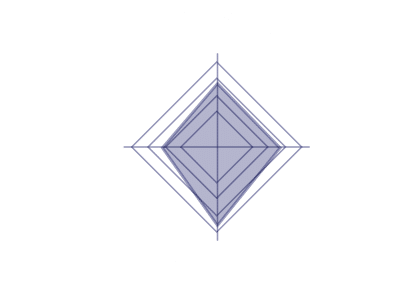
Pillars of Success
You are not alone
$18.50B
transportation management system market value in 2025, projected to reach $37.04B by 2030 at a 14.9% CAGR (MarketsandMarkets).
12-18%
reductions in cost-per-mile reported by fleets using utilisation analytics within six months (FleetRabbit, 2026).
$150-300
in fixed ownership costs drained per day by a single idle truck generating zero revenue (FleetRabbit, 2026).
80%
of commercial fleets globally will use telematics for tracking and optimisation by 2025 (Berg Insight, via Carriyo).
Join those who are leveraging data to move from financial stewardship to strategic business leadership.

How is AI raising the stakes

The pressure to prove analytics ROI is intensifying.
Transport boards are asking not just what analytical capability exists but what it has actually changed - which routes were optimised, what carrier costs were reduced, how much unplanned downtime was prevented. Analytics directors who can answer those questions with evidence are securing continued investment; those who can only point to impressive models that operations does not use are seeing their budgets questioned and their roadmaps deferred.
The talent and capability problem is becoming structural.
The combination of transport domain knowledge, data engineering skill, and AI/ML capability that transport analytics requires is genuinely scarce, and organisations that are trying to build it entirely through hiring are finding the timeline too slow and the attrition too high. The analytics functions finding ways to scale capability through a combination of focused in-house development and experienced external support are moving faster; those waiting for the perfect team composition are falling further behind.
Transport analytics directors are caught between accelerating business demand for AI and analytics capability and the data foundation problems that prevent scaling it.
The organisations that have resolved this - unified transport data, governed pipelines, production-ready infrastructure - are deploying analytics that changes operational decisions at scale. Those still running pilots that work in controlled conditions but fail to extend across the operation are accumulating demonstrated capability without operational impact, and the frustration is becoming visible at board level.
Director | Transport Analytics
How Bronson can help

Cloud and Application Migration
Bronson.AI helps modernise the underlying technology infrastructure, migrating legacy systems to cloud platforms that integrate cleanly, scale with the organisation, and support the analytics and AI capabilities the function requires.
- Cloud migration strategy assessing current systems and sequencing the transition to minimise operational disruption.
- Application rationalisation identifying which systems can be consolidated onto modern platforms.
- Data migration and validation programme ensuring historical data is preserved and accessible in the new environment.
Fractional Data and AI Services
For functions that need specialist data and AI capability without the timeline and cost of permanent recruitment, Bronson.AI provides experienced fractional professionals who integrate directly with the internal team, accelerating delivery while building internal capability in parallel.
- Fractional data engineers who build and maintain the data pipelines and integration infrastructure the function depends on.
- Machine learning and AI specialists who design, validate, and deploy analytical models to production standard.
- Analytics translators who bridge the gap between technical outputs and the business decisions they are designed to inform.

Generative AI and LLMs
Bronson.AI implements generative AI and large language model solutions that accelerate operational workflows, from drafting and summarisation to intelligent search and recommendation, grounded in the organisation's own governed data.
- Generative AI use case design identifying where LLM capability delivers genuine productivity and quality gains.
- Retrieval-augmented generation connecting LLM outputs to internal knowledge bases and governed data sources.
- Output governance framework ensuring AI-generated content is accurate, auditable, and aligned with organisational standards.
Unlock your potential
Unlock the Power of Data in Transport Analytics
Transport analytics functions are judged on impact, not on the quality of the models they build. The director who has connected the transport data, solved the production deployment problem, and embedded analytics into how operations actually makes decisions is delivering that impact - fewer disruptions caught earlier, lower cost per shipment, better carrier decisions. The one whose analytics sits in dashboards that operations rarely opens is not, regardless of the analytical sophistication involved.
Overcome Data Challenges Effortlessly
Closing that gap requires solving three problems together: the data foundation that makes analytics reliable, the infrastructure that makes models production-viable, and the workflow integration that makes outputs actionable for the operations teams who need to use them. Solving any one without the others produces impressive but underutilised capability.
The Promise of Data, Analytics, and AI Advancements
Bronson.AI builds across all three - the governed transport data foundation, the production infrastructure, and the analytics that embed in operational workflows. The result is a transport analytics function that delivers measurable operational improvement rather than accumulated capability that the business has stopped waiting for.
Realize the Value of Advanced Data Solutions
Our services are designed to guide Directors of Transport Analytics and Optimisation through:
- Scalable Analytics Infrastructure: Cloud migration that gives the analytics function the performance and headroom it needs to grow.
- Embedded Delivery Capacity: Fractional data and AI expertise that closes the gap between models built and models in production.
- Generative AI Applications: LLM-based tools that put transport insight directly into the hands of operational teams.
See Results
4x ROI
payback with AI is guaranteed
90 DAYS
to a funded, board-ready AI roadmap
18 MONTHS
from pilots to
AI-centric enterprise
Get started today!
Frequently asked questions
Examine what lies beneath the pilots before blaming the scaling, because the gap between a pilot that works and production that does not is almost always the data foundation, the pilot ran on prepared data that does not exist at that quality across the operation, and assessing that foundation is what reveals why scaling stalls. The reality is that pilots are often set up under conditions that do not hold at scale, clean data assembled specially, a single well-understood case, controlled circumstances, and when you try to scale, the data across the broader operation is not connected, not consistent, and not of the quality the pilot enjoyed, so the analytics that worked in the pilot fail in production.
The reason this pattern is so common is that pilots are designed to prove the analytics concept, not to test the data foundation, so they succeed at showing the analytics can work while quietly relying on a data quality the rest of the operation does not have. The scaling then fails not because the analytics are wrong but because the foundation they need does not exist beyond the pilot, which is a foundation problem that looks like a scaling problem.
The payoff of recognising this is that you can address the actual barrier, the data foundation, rather than repeatedly running pilots that work and then fail to scale for the same reason. Assessing and building the data foundation that production analytics requires, across the operation rather than just in the pilot, is what lets analytics actually scale, because the foundation the analytics depend on then exists where it needs to. Understanding that pilots fail to scale because of the foundation rather than the analytics is what breaks the frustrating cycle of successful pilots and failed deployments, redirecting effort from proving the analytics again to building the data foundation that scaling actually requires, which is the thing that was missing all along.
Establish secure, well governed data management as the foundation, because consistent, connected, governed data is what analytics is built on, and informed decisions depend on a foundation the analysis can trust. The work is connecting the transport data sources, aligning definitions so data means the same thing across systems and carriers, and putting governance in place so the foundation stays reliable, which is the groundwork that determines whether the analytics built on it are dependable.
The reason fragmentation and inconsistency are fatal to analytics is that they force every analysis to start by reconciling and cleaning inconsistent inputs, which consumes the analytical capacity that should go into actual analysis and produces results whose reliability is always in question. A function working on fragmented, inconsistent data spends its time fighting the data rather than learning from it, and its outputs carry an asterisk because nobody is sure the inputs were consistent.
The payoff is analytics that is both reliable and efficient. With a governed foundation, analysts work from data they can trust rather than reconstructing it each time, so their effort goes into analysis rather than preparation, and the results carry credibility because the inputs are known to be consistent. The foundation also makes the move to production analytics and AI possible, because both demand the consistency that fragmented data lacks. Fixing the fragmentation and inconsistency through a governed foundation is the precondition for transport analytics being worth anything, which is why it is the first thing to get right rather than the thing to work around, and it is usually what most needs fixing before analytics can deliver reliably or scale.
Turn the analytics into clear, comprehensible insight delivered where operational decisions happen, because analytics that inform operations have to reach operations teams in their context and at the point of decision, not be produced in the analytics team's terms and left to be found. The work is understanding the operational decisions the analytics should inform, then delivering the insight into the operations workflow accordingly, in a form operations teams immediately grasp, at the moment the decision is made, rather than as standalone outputs disconnected from how operations actually work.
The reason operations teams do not use analytics is usually not that the analytics are poor but that they are delivered in a way that does not fit how operations work. An operations team focused on running the network will not regularly consult a separate analytics tool, interpret complex outputs, or act on insight that does not connect to what they are doing now, so analytics that demand operations come to them fail, while analytics that come to operations, in their workflow and in actionable form, succeed.
The payoff is analytics that operations teams actually use, which is the only kind worth building in an operational context. When insight is delivered into the operations workflow, in a form they can act on, it influences the operational decisions it was built to inform, and the function shifts from producing analytics to improving operations. That also justifies the analytics investment, because adopted analytics that change operational decisions deliver value while ignored analytics deliver none. Delivering analytics into the operations workflow rather than producing them separately is what closes the gap between building analytics and having them used, which is where transport analytics most often succeeds or fails, and it usually fails on delivery rather than on the quality of the analysis itself.
Draw on the analytics, engineering, and AI support of a full data capability to scale across the function, because that support is what lets you extend analytics beyond a specialist team without the slow, expensive build of a much larger one, and capability spreads through enabling and supporting the wider function rather than concentrating it in specialists. The approach combines accessing experienced capability for the work that exceeds the specialist team with enabling the wider function to handle more of the routine analytics itself, so analytics scales across the function without the headcount growth that simply scaling the team would require.
The reason analytics stays confined is usually that it depends on a few specialists who become a bottleneck, and scaling by hiring more is slow and expensive, while expecting the wider function to pick up analytics without support produces the familiar failure where the capability does not actually spread. Extending it requires both enabling the wider function and supporting them through the transition, which is where experienced external capability helps.
The payoff is analytics capability spread across the function rather than confined to specialists, which is what lets analytics become part of how the function works rather than a service a small team provides. When the wider function can apply analytics to its own work, supported by specialists and experienced capability for the harder problems, the function's overall analytics capacity multiplies without a proportional increase in specialist headcount, and the capability becomes more resilient because it no longer depends on a few individuals. Scaling analytics across the function through experienced support and enablement rather than headcount alone is what turns transport analytics from a bottlenecked specialism into a capability the whole function uses, which is what scaling actually requires and what lets analytics keep pace with the demand the operation places on it.