
Data Scientist | Transport Analytics
Transport Data Scientist
"Nothing I build gets past pilot, because nobody owns the pipeline that would actually run it."
Quick Facts
Role
Data Scientist | Transport Analytics
Level
Data Scientist
Dept
Transport Analytics
Industry
Transportation
Env
Cloud-native + telematics feeds
Tools
Python, Databricks, MLflow
Sound familiar?
Telematics data are inconsistent in structure, frequency, coverage, and quality, limiting reliable model development and deployment
Models cannot progress beyond pilots because production pipelines, monitoring, integration, and ownership are not established
Anomaly models produce too many false positives, causing operations teams to disregard alerts and reducing trust in analytics
Data science capacity is too limited to meet the volume and variety of analytical demand coming from the transport business
Models that work in development degrade in production as routes, vehicles, sensors, and operating conditions change
GenAI and AutoML are proposed as capacity solutions, but they can accelerate weak analysis when data quality and validation remain unresolved
How AI-ready is your organization?
Complete the 10-minute assessment.
Pinpoint operational gaps, benchmark your maturity across key pillars, and chart a clear path to scalable AI success.
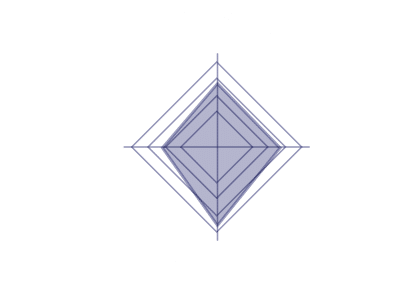
Pillars of Success
You are not alone
72%
of logistics providers now use advanced visibility platforms to track assets in real time (Gartner, 2024 Logistics Insight Report).
$18.50B
transportation management system market value in 2025, projected to reach $37.04B by 2030 at a 14.9% CAGR (MarketsandMarkets).
12-18%
reductions in cost-per-mile reported by fleets using utilisation analytics within six months (FleetRabbit, 2026).
$150-300
in fixed ownership costs drained per day by a single idle truck generating zero revenue (FleetRabbit, 2026).
Join those who are leveraging data to move from financial stewardship to strategic business leadership.

How is AI raising the stakes

The demand for transport analytics capability is accelerating faster than organisations can hire for it.
Route optimisation, predictive maintenance, demand forecasting, anomaly detection, carrier risk scoring - the use case backlog in most transport functions far exceeds what any realistically-sized data science team can deliver. The teams finding ways to scale capacity, through better infrastructure, automation, and targeted external support, are keeping pace; those relying on headcount alone are perpetually behind.
The production deployment problem is increasingly the defining challenge in transport data science.
Models that demonstrate value in controlled conditions but fail to move into reliable operational use represent stranded investment - the analytical capability exists but delivers no operational value. Solving the production gap, through proper infrastructure, monitored pipelines, and the integration between model outputs and operational workflows, is what separates transport analytics functions that deliver impact from those that accumulate impressive but unused models.
Transport data science is at an inflection point.
The functions that have solved the data foundation problem - clean telematics, connected operational data, reliable pipelines - are deploying models that actually run in production and change operational decisions. Those still wrestling with messy data and fragile pipelines are producing impressive development-environment models that never make it out of the analytics team. The gap between building a model and operating one is where most transport data science programmes stall.
Data Scientist | Transport Analytics
How Bronson can help
Fractional Data and AI Services
For functions that need specialist data and AI capability without the timeline and cost of permanent recruitment, Bronson.AI provides experienced fractional professionals who integrate directly with the internal team, accelerating delivery while building internal capability in parallel.
- Fractional data engineers who build and maintain the data pipelines and integration infrastructure the function depends on.
- Machine learning and AI specialists who design, validate, and deploy analytical models to production standard.
- Analytics translators who bridge the gap between technical outputs and the business decisions they are designed to inform.

AI Readiness and Data Management Assessment
Bronson.AI assesses the data foundation and process maturity that determines whether AI investments will deliver. Before committing to AI tools, the function needs an honest picture of where the data actually stands, and a prioritised roadmap for closing the gaps.
- Data maturity assessment evaluating completeness, consistency, quality, and governance readiness across relevant systems.
- AI use case prioritisation identifying which applications the current data foundation can support now versus after remediation.
- Prioritised roadmap sequencing the data and process work that AI adoption requires.

Data Strategy and Governance
Bronson.AI builds the data architecture, ownership model, and governance framework that connects operational data into a single, governed layer, so that decisions are made from one version of the truth rather than competing reports.
- Data standards framework covering metric definitions, KPI structures, and cross-functional data taxonomy.
- Data ownership and stewardship model assigning accountability for each data domain.
- AI governance policy ensuring automated decisions are auditable, explainable, and compliant.
Unlock your potential
Unlock the Power of Data in Transport Data Science
Transport data science delivers value when models run in production, not when they run in development. The distinction matters enormously - a route optimisation model that demonstrates 12% cost reduction in a pilot and then never deploys at scale has not delivered that saving. The capability only becomes value when it operates continuously, feeds reliable data, and integrates with the operational workflows that act on its outputs.
Overcome Data Challenges Effortlessly
Building that full journey - from clean data through reliable modelling to operational deployment - is what most transport data science functions are trying to solve. It requires infrastructure as much as analytical skill, and the data engineering and deployment work is often what a small data science team cannot get to because the modelling workload is already filling their time.
The Promise of Data, Analytics, and AI Advancements
Bronson.AI provides both the data foundation and the deployment infrastructure that transport data science depends on, alongside the additional analytical capacity that lets the function cover more use cases. The result is models that actually run, capacity that matches the demand, and a data science function that delivers operational impact rather than accumulating development-environment demonstrations.
Realize the Value of Advanced Data Solutions
Our services are designed to guide Transport Data Scientists through:
- Production Deployment Support: Fractional data and AI engineering capacity that moves models from development into live operations.
- Model-Ready Data Assessment: A clear view of whether transport data can support the models being built, and what to remediate first.
- Governed Data Foundation: Lineage, quality, and ownership standards that make model inputs trustworthy.
See Results
4x ROI
payback with AI is guaranteed
90 DAYS
to a funded, board-ready AI roadmap
18 MONTHS
from pilots to
AI-centric enterprise
Get started today!
Frequently asked questions
Establish secure, well governed data management that cleans and structures the telematics data, because reliable analysis and modelling depend on clean, structured data, and the messiness of raw telematics is exactly what defeats them. The work is building the pipeline that cleans the telematics data, handling the gaps, noise, and inconsistencies, and structures it into a form analysis and modelling can use, with governance that maintains the quality, so the data arrives usable rather than requiring manual cleaning for every analysis.
The reason raw telematics is so hard to use is that it arrives in large volumes with the gaps, noise, and inconsistencies that telematics inherently produces, and without systematic cleaning and structuring, working with it consumes most of the data scientist's time, leaving little for the actual modelling. Building the cleaning and structuring into the foundation does once, systematically, what would otherwise be redone manually for every analysis.
The payoff is telematics data that arrives ready for analysis and modelling, freeing the data scientist for the work that delivers value. When the cleaning and structuring is built into the foundation, the data scientist works from usable data rather than spending most of their time preparing it, which both increases how much analysis and modelling gets done and improves it because the time goes into the work rather than the preparation. The systematic cleaning also produces more consistent results than manual cleaning. Establishing the foundation that cleans and structures telematics data systematically is what turns it from messy, high-volume raw data that consumes the data scientist's time into usable data that lets them focus on the analysis and modelling that is the actual value of the role, rather than perpetually cleaning data before they can begin.
Build the infrastructure that streamlines models into production, because deploying models beyond prototypes depends on a production environment that runs them reliably, and the absence of that environment is exactly what keeps models stuck in development. The work is establishing the production infrastructure, the environment to run models, the pipelines to feed them live data, the monitoring to track their performance, and the processes to maintain them, so a model that works in development can be moved into reliable operational use rather than remaining a prototype.
The reason models get stuck is that building a model and operating a model are different things, and a transport analytics function may be able to build models, route optimisation, demand forecasting, anomaly detection, but lack the production infrastructure to run them reliably in operations, so the models that work in development have nowhere to go. The gap is the operational environment, which is what production deployment requires and development does not.
The payoff is models that move into reliable operational use and deliver continuous value, rather than prototypes that work once and then stall. With a production environment, models can be deployed to run continuously on live data, their performance monitored and maintained, and their value realised operationally rather than just demonstrated. The infrastructure also makes deploying subsequent models far easier, because the environment exists rather than being improvised each time. Building the production environment is what turns transport models from prototypes that work in development into operational capabilities that deliver continuously, which is the difference between a data science function that produces promising demonstrations and one that delivers models actually running in transport operations, optimising routes, forecasting demand, flagging anomalies, day in and day out.
Turn the fleet and route data into actionable insight that surfaces anomalies, because detecting the signals of problems depends on analytics that identify what genuinely deviates from normal, and that requires both the analytical approach and a data foundation clean enough for the detection to be reliable. The work is establishing what normal looks like in the fleet and route data, building the detection that flags genuine deviations, vehicle behaviour that signals a developing problem, route execution that signals an issue, performance that signals something wrong, and tuning it so it surfaces real anomalies without drowning in false ones.
The reason the data foundation matters as much as the technique is that anomaly detection on messy data produces false anomalies from the noise and misses real ones in the inconsistency, so the detection is only as good as the data underneath, and clean, structured data is what lets the detection reliably distinguish genuine anomalies from normal variation. The technique and the foundation work together, and neither alone is sufficient.
The payoff is reliable detection of the anomalies that signal problems, which lets you act on them early. When anomaly detection is built on a sound foundation and well-tuned, it surfaces the genuine signals of developing problems, in vehicles, routes, or performance, while there is still time to act, rather than missing them in the data or burying them in false alarms. Early detection of anomalies is what allows intervention before problems become failures or losses. Building reliable anomaly detection on a sound data foundation is what turns fleet and route data from a record of what happened into an early warning of what is going wrong, which is what lets a transport data scientist deliver the proactive problem-detection that anomaly analytics promises, provided the data underneath is clean enough for the detection to distinguish genuine anomalies from the noise.
Draw on the analytics, engineering, and data science support of a full data capability without building it all internally, because that on-demand access is what lets you add capacity now, scaled to need, rather than waiting through a slow and competitive hiring process. This gives you the capability the work requires when you need it, without carrying permanent cost through the periods when demand is lower, which suits the often-variable nature of analytics demand in transport.
The advantage beyond capacity is experience, because a capability that has done transport analytics elsewhere brings knowledge of the domain's challenges, the messy telematics data, the production deployment gap, the optimisation problems, that a function building capacity from scratch tends to learn slowly. That experience accelerates the work and avoids the pitfalls that consume time for those meeting them for the first time.
The consideration that should shape the arrangement is capability transfer, because the best support builds your team's capability over time, developing the skills that let you do more internally and depend on outside help less. That way you add capacity now while growing the internal capability that reduces the dependency. The decision is rarely a pure build-versus-buy in the abstract; it is how to add data science capacity now, given competitive hiring and variable demand, while building internal capability over time, and on-demand access to an experienced capability is usually the most pragmatic answer to a capacity gap that direct hiring struggles to fill quickly, while building toward the internal capability that reduces the dependency over time.