
Specialist | Operations
Business Process Analyst
"The same step is recorded differently in every system, so my cycle times are never quite comparable."
Quick Facts
Role
Specialist | Operations
Level
Specialist
Dept
Operations
Industry
Operations
Env
Cloud / Hybrid
Tools
Visio, Celonis, Excel
Sound familiar?
Process data is scattered across systems and pulling it together to run an end-to-end analysis takes longer than the analysis itself
Process definitions and event timestamps vary by system, making cycle-time, bottleneck, and conformance analysis unreliable
Process improvement recommendations are technically sound but rarely get implemented because the business case is hard to prove
Process mining and automation tools are on the roadmap but the underlying event data is too incomplete to support them
Once a process change is implemented there is no ongoing measurement to confirm the gains were realised and sustained
Stakeholders want to know where AI can streamline work, but there is no process data or baseline to support a credible answer
How AI-ready is your organization?
Complete the 10-minute assessment.
Pinpoint operational gaps, benchmark your maturity across key pillars, and chart a clear path to scalable AI success.
Pillars of Success
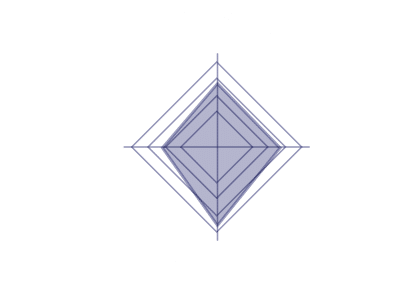
You are not alone
72%
of supply chain executives say automated mitigation is now mandatory for managing disruptions (Tradeverifyd, 2025).
25%
of supply chain leaders admit their organisations are unprepared for geopolitical tensions such as wars or tariffs (EY, 2024).
$163B
in inventory is lost annually due to overproduction and expiration, eroding roughly 3.6% of profit in high-volume businesses (Avery Dennison, via ISM).
$160M
in annual supply chain cost savings achieved by IBM after integrating analytics across its operations (IBM).
Join those who are leveraging data to move from financial stewardship to strategic business leadership.

How is AI raising the stakes

The data quality problem is becoming more acute as AI tools proliferate.
Process analysts are increasingly being asked to validate AI-generated process recommendations, evaluate the outputs of automation deployments, and diagnose why AI tools are not delivering the efficiency gains they promised. All of these tasks require the analyst to have access to reliable process data - system logs, transaction records, time-stamped activity data - that many organisations have not yet structured or governed in a way that supports analytical use. The analyst without access to clean process data cannot evaluate AI performance objectively, which means they cannot fulfil their quality assurance role in an AI-enabled operations environment.
The influence problem is intensifying alongside the analytical problem.
Business process analysis has always been a discipline where insights fail to deliver value not because the analysis is wrong but because the recommendations are not implemented. In an environment where AI tools are generating process recommendations automatically and competing for implementation priority alongside analyst recommendations, the Business Process Analyst who cannot quantify the ROI of their recommendations in business terms is at risk of being bypassed by tools that package their outputs in more immediately actionable forms.
AI is changing the nature of business process analysis faster than most practitioners have had time to adapt.
Automated process mining tools can now map end-to-end process flows from system logs in hours, surfacing deviations, bottlenecks, and inefficiencies that previously required weeks of manual observation and interview-based analysis. Business Process Analysts who are still mapping processes on whiteboards and validating them through stakeholder workshops are producing insights at a pace that is increasingly inadequate for the speed at which the business is being asked to change.
Specialist | Operations
How Bronson can help

Generative AI and LLMs
Bronson.AI implements generative AI and large language model solutions that accelerate workflows, from drafting and summarisation to intelligent search and recommendation, grounded in the organisation's own governed data.
- Generative AI use case design identifying where LLM capability delivers genuine productivity and quality gains.
- Retrieval-augmented generation connecting LLM outputs to internal knowledge bases and governed data sources.
- Output governance framework ensuring AI-generated content is accurate, auditable, and aligned with organisational standards.

AI and Agentic Automation
Bronson.AI implements the AI and automation capability that turns data into action, identifying inefficiencies, flagging anomalies, and triggering workflow responses without manual intervention. We help the function move from monitoring to orchestrating.
- Process automation across high-volume, rule-based workflows to reduce manual effort and error rates.
- Predictive anomaly detection that flags deviations before they escalate into failures or cost overruns.
- AI-powered forecasting and prioritisation that connects data signals to operational resource allocation.

Data Strategy and Governance
Bronson.AI builds the data architecture, ownership model, and governance framework that connects operational data into a single, governed layer, so that decisions are made from one version of the truth rather than competing reports.
- Data standards framework covering metric definitions, KPI structures, and cross-functional data taxonomy.
- Data ownership and stewardship model assigning accountability for each data domain.
- AI governance policy ensuring automated decisions are auditable, explainable, and compliant.
Unlock your potential
Unlock the Power of Data in Operations
Data is the backbone of effective business process analysis. For the Business Process Analyst, harnessing structured, end-to-end process data enables analysis that is faster, more objective, and more credible than interview-based mapping - and recommendations that are grounded in evidence rather than stakeholder opinion.
Overcome Data Challenges Effortlessly
One of the primary challenges facing Business Process Analysts is process data that is dispersed across systems, unstructured, and time-consuming to collect manually. Building the analytical infrastructure that makes process data available and ready for analysis is the difference between spending most of your time on data collection and spending it on the insight generation that creates actual value.
The Promise of Data, Analytics, and AI Advancements
Imagine a world where end-to-end process flows are visible from system data without weeks of stakeholder interviews, where bottlenecks and deviations are surfaced automatically, and where the ROI of every improvement recommendation is quantified before it is presented. This is not just a vision but the very real value proposition that our Data, Analytics, and AI Consulting and Solutions offer.
Realize the Value of Advanced Data Solutions
Our services are designed to guide Business Process Analysts through:
- Process Data Integration: End-to-end process visibility from structured system data rather than manual collection.
- Process Mining and Analytics: Automated process discovery and bottleneck identification at the pace the business requires.
- ROI Quantification: Business impact measurement that makes improvement recommendations impossible to ignore.
See Results
4x ROI
payback with AI is guaranteed
90 DAYS
to a funded, board-ready AI roadmap
18 MONTHS
from pilots to
AI-centric enterprise
Get started today!
Frequently asked questions
Establish secure, well governed data management that brings the process data together, because end-to-end process analysis depends on data that is connected across the systems the process touches, and informed conclusions about where the process fails are impossible while the data is fragmented. The work is connecting the relevant sources and aligning them so the process can be followed across system boundaries, with a consistent way of identifying the same case or transaction as it moves through, which is usually the hard part because the same item is often represented differently in each system.
The reason this connection is foundational is that process problems frequently live in the handoffs between systems, exactly where fragmented data makes them invisible. Each system shows its own part working fine, while the delay, error, or rework happens in the gap between them, which no single system reveals. Connecting the data is what makes those cross-system problems visible, and they are often the most significant ones.
The payoff is the ability to analyse the process as it actually operates, end to end, rather than in the disconnected fragments each system shows. You can see where time is lost, where errors occur, where the process branches and varies, across the whole flow rather than within single steps. That complete view is what lets process analysis find the real problems rather than the visible ones, and it is the foundation for everything more advanced, from process mining to measuring the impact of changes. Getting the process data connected, resolving the fragmentation that hid the end-to-end flow, is what turns process analysis from examining isolated steps into understanding the process as a whole.
Automate the repetitive data gathering to streamline your work and free your effort for the analysis only you can do, because collecting and assembling the data is mechanical while interpreting it is the judgement the organisation actually needs from you. Setting up the process data to be gathered and combined automatically means the data you need is ready when you start an analysis rather than something you spend days assembling first, and your time shifts to finding the insights rather than preparing the inputs.
This depends on the process data being accessible and connectable, which is often the underlying constraint, because automating the collection of data that is fundamentally fragmented just automates the assembly of fragments. Getting the data sources connected is part of the work, and it tends to surface the inconsistencies that manual collection was quietly working around, which is better brought into the open than perpetually patched.
The payoff is a fundamental change in how your time is spent. The analyst who spends most of an analysis collecting data and a fraction analysing it can invert that once collection is automated, and the value of the work rises accordingly, because the organisation gets insight and recommendations rather than evidence of effort spent gathering data. The analysis, the interpretation, and the recommendations are what justify the role; the data collection is overhead that does not need a skilled person doing it manually. Automating the collection is what lets you do more of the analytical work you are actually there for and less of the assembly that merely precedes it, which is the difference between a process analyst who produces occasional deep insights and one who produces them routinely.
Turn the event data your systems already capture into actionable insight about the process, because process mining works by analysing those digital traces to show the real process, including the variations, delays, and rework that manual analysis misses. Every step a process takes through a system leaves a record, and process mining stitches those records into a picture of how the process genuinely flows, where it branches, where cases get stuck, how often the actual path differs from the intended one. That picture is usually far messier and more revealing than the tidy process diagrams organisations believe describe their work.
The reason process mining finds inefficiencies that other methods miss is that it is based on what actually happened rather than on interviews or assumptions. People describe the process they think they follow, or the one they are supposed to follow, while process mining shows the process they actually execute, including the workarounds, the rework loops, and the cases that take ten times longer than average. Those gaps between intended and actual are where inefficiency hides, and they are exactly what process mining exposes.
The payoff is inefficiency findings grounded in evidence rather than opinion, which makes them both more accurate and more persuasive. Instead of suspecting where a process is slow, you can show it, with the data on how often and how much. That evidence is what turns process improvement from a debate about whose impression is right into a fact-based exercise targeting the inefficiencies that genuinely cost most. Process mining depends on having the event data, which most systems generate, brought into a form the mining can use, and getting that data ready is the foundation that makes this powerful analysis possible.
Transform the complex process data into clear, comprehensible visuals, because that translation from detailed analysis into something a stakeholder grasps at a glance is what turns analysis into action, and analysis nobody understands changes nothing. The work is presenting process performance, cycle times, bottlenecks, error rates, variation, in a way that shows the story clearly: where the process is slow, where it fails, where it deviates, without requiring the audience to interpret raw data or follow the analytical detail.
The principle that makes process visualisation effective is showing the implication, not just the measurement. A chart of cycle times is data; a visual that shows this stage is where cases pile up, costing this much delay, and here is what is causing it, is insight a stakeholder can act on. Building the visualisation around what the audience needs to decide, rather than around what the analysis produced, is what makes it land.
The payoff is process analysis that actually drives change, because stakeholders act on what they understand and ignore what they do not. A clear visualisation makes the case for improvement self-evident, turning a process problem from something the analyst asserts into something the stakeholder sees for themselves, which is far more persuasive. It also makes the conversation productive, because everyone is looking at the same clear picture rather than debating interpretations of complex data. Building clear process visualisations, rather than presenting raw analysis, is what closes the gap between finding a process problem and getting it fixed, which is ultimately where the value of process analysis is realised or lost.