
Entry Level | Operations
Supply Chain / Procurement Lead
"Order updates still reach me by phone and email rather than showing up anywhere I can actually see them."
Quick Facts
Role
Entry Level | Operations
Level
Entry Level
Dept
Operations
Industry
Operations
Env
Cloud SCM
Tools
SAP, Excel, Power BI
Sound familiar?
Purchase orders, supplier data, and inventory records live across multiple systems and getting a single view requires manual reconciliation
Order status and delivery updates still arrive by email and phone instead of flowing into a shared, current operational view
Stock shortages and late deliveries are discovered at the last moment rather than flagged in time to take action
Comparing supplier pricing and performance requires pulling data together by hand every time a decision needs to be made
Spend, order, and stock reports take hours to compile and are already partially out of date when they arrive
AI-based demand and supply predictions cannot be trusted while the purchase order and inventory data feeding them is unreconciled
How AI-ready is your organization?
Complete the 10-minute assessment.
Pinpoint operational gaps, benchmark your maturity across key pillars, and chart a clear path to scalable AI success.
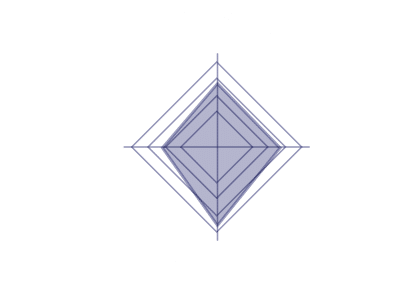
Pillars of Success
You are not alone
25%
of supply chain leaders admit their organisations are unprepared for geopolitical tensions such as wars or tariffs (EY, 2024).
$163B
in inventory is lost annually due to overproduction and expiration, eroding roughly 3.6% of profit in high-volume businesses (Avery Dennison, via ISM).
$160M
in annual supply chain cost savings achieved by IBM after integrating analytics across its operations (IBM).
33%
of corporate leaders globally cite cost management as their most critical priority in 2025, up eight points from 2024 (BCG, 2025).
Join those who are leveraging data to move from financial stewardship to strategic business leadership.

How is AI raising the stakes

The data quality problem falls disproportionately on entry-level operations staff.
Manual data entry across multiple systems is inherently error-prone, and in most organisations the Operations Coordinator is the last line of defence before inaccurate data reaches a decision-maker or a customer. Without tools that validate data at the point of entry, flag inconsistencies across systems, or surface anomalies that require human review, coordinators are expected to catch errors through vigilance alone - an approach that fails at the rate that human attention always fails under repetitive, high-volume conditions.
The career development dimension is also changing.
Operations Coordinator roles that progress to process analyst, operations manager, or business analyst positions have historically been advanced by demonstrating operational discipline and stakeholder management capability. Increasingly, those progression paths also require data literacy - the ability to work with operational data, build basic reports, interpret analytical outputs, and contribute to process improvement initiatives. Coordinators who are not developing these skills alongside their operational experience are narrowing their career options at precisely the point in their careers where building analytical capability is most accessible.
Entry-level operations roles are being reshaped by AI faster than most organisations have trained their people to adapt.
The administrative and coordination tasks that have historically defined the Operations Coordinator role - data entry, report compilation, status tracking, scheduling - are exactly the tasks that AI-powered workflow automation and intelligent data tools are designed to handle. Coordinators who have not built proficiency with these tools are being asked to operate in an environment where the expectations around their productivity and output quality are rising, while the tools that would enable them to meet those expectations are not being provided or taught.
Entry Level | Operations
How Bronson can help

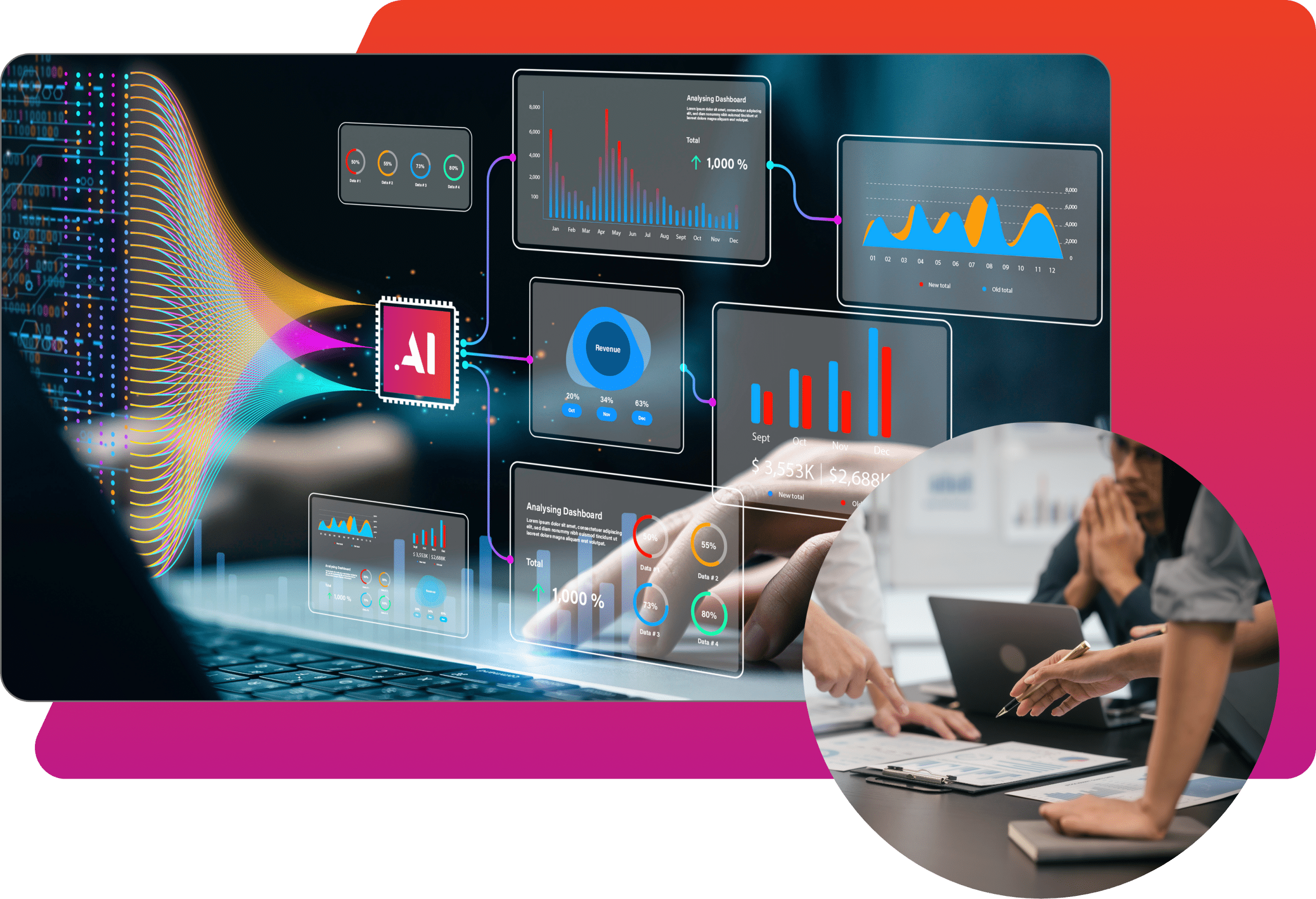
Dashboards and Data Visualisation
Bronson.AI designs and builds dashboards that give real-time visibility into the metrics that matter, in a format that supports decisions rather than just reporting activity. We replace manual compilation with a live, governed view.
- Executive dashboard covering key performance indicators in real time with drill-down capability.
- Self-serve reporting views that allow non-specialist stakeholders to access current data without relying on analysts.
- Trend and exception analytics that surface what needs attention rather than displaying everything equally.
Fractional Data and AI Services
For functions that need specialist data and AI capability without the timeline and cost of permanent recruitment, Bronson.AI provides experienced fractional professionals who integrate directly with the internal team, accelerating delivery while building internal capability in parallel.
- Fractional data engineers who build and maintain the data pipelines and integration infrastructure the function depends on.
- Machine learning and AI specialists who design, validate, and deploy analytical models to production standard.
- Analytics translators who bridge the gap between technical outputs and the business decisions they are designed to inform.

Cloud and Application Migration
Bronson.AI helps modernise the underlying technology infrastructure, migrating legacy systems to cloud platforms that integrate cleanly, scale with the organisation, and support the analytics and AI capabilities the function requires.
- Cloud migration strategy assessing current systems and sequencing the transition to minimise operational disruption.
- Application rationalisation identifying which systems can be consolidated onto modern platforms.
- Data migration and validation programme ensuring historical data is preserved and accessible in the new environment.
Unlock your potential
Unlock the Power of Data in Operations
Data is the backbone of effective operational coordination. For the Operations Coordinator, having access to real-time, accurate operational data - and the tools to work with it efficiently - is what enables high-quality coordination without the manual overhead that consumes time that should be spent on higher-value work.
Overcome Data Challenges Effortlessly
One of the primary challenges facing Operations Coordinators is operational data that is fragmented across systems, entered manually, and compiled into reports through processes that are both time-consuming and error-prone. Building the automation and integration layer that makes operational data flow accurately and automatically is the change that transforms the coordinator role from data administration to operational contribution.
The Promise of Data, Analytics, and AI Advancements
Imagine a world where data entry is automated, workflow status is visible in real time, reports are available on demand rather than compiled manually, and data anomalies are flagged before they become problems. This is not just a vision but the very real value proposition that our Data, Analytics, and AI Consulting and Solutions offer.
Realize the Value of Advanced Data Solutions
Our services are designed to guide Operations Coordinators through:
- Workflow Automation: Eliminating manual, repetitive data entry and status-tracking tasks through intelligent automation.
- Real-Time Visibility: Live dashboards that replace manual status-checking across multiple systems and communication channels.
- Data Literacy Development: Tools and skills that enable coordinators to move from data entry to data insight and operational contribution.
See Results
4x ROI
payback with AI is guaranteed
90 DAYS
to a funded, board-ready AI roadmap
18 MONTHS
from pilots to
AI-centric enterprise
Get started today!
Frequently asked questions
Automate the data movement to streamline your day and remove the error-prone duplication, because the same data entered into several systems by hand is exactly the kind of repetitive task that should flow automatically, and every manual re-entry is both wasted time and a chance to introduce a mistake. Connecting the systems so data entered once propagates to where it is needed eliminates the re-keying entirely, rather than just making it faster.
The reason this work persists is usually that the systems were adopted separately and never integrated, so the people using them became the integration, manually carrying data from one to another. That makes the coordinator a human bridge between systems, which is a poor use of a person and a reliable source of transcription errors, since manual data entry across multiple systems inevitably produces inconsistencies when a value is entered slightly differently in each.
The payoff is reclaimed time and better data quality at once. The hours spent re-entering data go back to actual coordination work, and the errors that come from manual duplication disappear, because data entered once and propagated automatically is consistent everywhere by construction. Eliminating the re-entry also removes a daily frustration that wears people down and makes the role feel like data entry rather than coordination. Automating the data flow between systems is often a quick and high-value improvement, because the manual cost is daily and the error cost is ongoing, and connecting the systems addresses both at the source rather than asking people to be more careful with work they should not be doing by hand at all.
Turn the scattered status information into one clear, comprehensible view, because a real-time picture of every task and its status is what stops things slipping and lets you see at a glance what is on track, what is blocked, and what needs attention. The work is bringing the task and workflow data into a single view that reflects current status as work moves, so instead of piecing together where things stand from multiple sources, you have one place that shows it, updated as the work itself updates.
The reason scattered status is so costly is that it relies on people remembering and checking, which fails exactly when workload is high and the stakes are greatest. A task agreed in an email, tracked in someone's head, and never recorded centrally is a task waiting to be forgotten, and the coordinator discovers it has slipped only when someone chases. A single current view removes that dependence on memory and manual checking, making status visible rather than something to be reconstructed.
The payoff is fewer things falling through the cracks and far less time spent chasing status. When the current state of all work is visible in one place, you can manage proactively, seeing what needs attention before it becomes a problem, rather than reactively discovering slips when others complain. The view also makes handoffs and dependencies visible, so work flows more smoothly between people. Building the single real-time view, replacing the scattered and memory-dependent tracking, is what turns coordination from a constant struggle to keep track into a managed process where the status of everything is simply visible, which is both less stressful and far more reliable.
Automate the report assembly to streamline the work and make the reports available on demand, because the gathering and formatting is routine while your attention is better spent on what the reports actually show, and a report that builds itself is available whenever needed rather than only after hours of manual effort. Setting up the data to be pulled, combined, and formatted automatically means the report generates on demand, current and consistent, instead of being reconstructed by hand each time it is wanted.
This depends on the underlying data being accessible and consistent, which is often where the real work sits, because automating a report built on fragmented data just automates the assembly of fragments. Getting the data sources connected is part of making the automation work, and it tends to surface inconsistencies that manual compilation was quietly absorbing, which is better resolved than hidden.
The payoff is hours reclaimed and reports that are always available and always current. The time spent manually compiling reports goes back to actual operational work, and instead of reports being produced periodically after significant effort, they are available on demand, so anyone who needs the current picture can have it without waiting for someone to build it. Automated reports are also more reliable, because they assemble the data the same way every time rather than depending on a person following the steps correctly under time pressure. Making reports on-demand through automation is one of the clearer efficiency wins available to a coordinator, because the manual cost is recurring and often substantial, and automating it frees significant time while improving both the availability and the accuracy of the reporting.
Turn the data into the insight that surfaces errors as they occur, because automated checks that flag anomalies and inconsistencies in real time are what catch mistakes while they can still be fixed cheaply, rather than after they have propagated into something costly. The approach defines what valid data looks like, the ranges, formats, and relationships that should hold, and applies those checks automatically as data is entered or arrives, flagging what does not fit for review before it flows downstream.
The reason manual error detection fails is that it depends on a person noticing something wrong among a large volume of mostly-correct data, which human attention is poorly suited to, particularly under time pressure. Automated validation does not tire or overlook, applying the same checks consistently to everything, which is why it catches what manual review misses. It also catches errors at the point of entry rather than later, when they have already been used in reports and decisions and are far harder to unpick.
The payoff is fewer errors reaching the point where they cause problems, and less of the costly downstream cleanup that undetected errors require. An error caught as it is entered is a quick correction; the same error discovered after it has flowed into reports, decisions, and other systems is a serious unpicking exercise. Automated validation moves error-catching to the cheapest possible point and removes the dependence on someone happening to notice. Building the validation into the data flow is what turns data quality from a matter of individual vigilance into a systematic control, which is both more reliable and far less stressful than depending on people to catch every mistake by eye.