
Director | Operations
Director of Data & Operational Analytics
"I hired analysts and most of their week goes on preparing data before anyone can look at it."
Quick Facts
Role
Director | Operations
Level
Director
Dept
Operations
Industry
Operations
Env
Cloud data platform
Tools
Snowflake, dbt, Power BI
Sound familiar?
Operational data is too fragmented and inconsistent to support analytics that the business will trust and act on
The analytics team spends most of its time cleaning and preparing operational data rather than generating insight from it
Analytical outputs exist but are not connected to the operational decisions they were designed to support
Leadership funds and staffs analytics on faith because downtime avoided, throughput gained, and cost-to-serve improvements have never been measured consistently
Skills, platforms, and deployment practices for predictive operational analytics are not yet mature enough to support production use
Pressure to deliver AI use cases is growing faster than the data foundations they depend on are being built
How AI-ready is your organization?
Complete the 10-minute assessment.
Pinpoint operational gaps, benchmark your maturity across key pillars, and chart a clear path to scalable AI success.
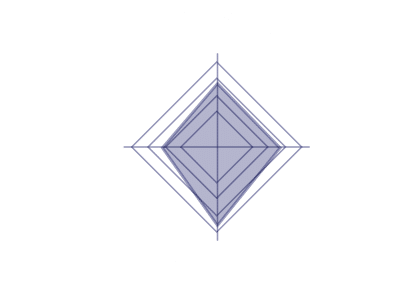
Pillars of Success
You are not alone
$163B
in inventory is lost annually due to overproduction and expiration, eroding roughly 3.6% of profit in high-volume businesses (Avery Dennison, via ISM).
$160M
in annual supply chain cost savings achieved by IBM after integrating analytics across its operations (IBM).
33%
of corporate leaders globally cite cost management as their most critical priority in 2025, up eight points from 2024 (BCG, 2025).
86%
of supply chain executives plan AI and analytics investments for cost reduction across the supply chain (BCG, 2025).
Join those who are leveraging data to move from financial stewardship to strategic business leadership.

How is AI raising the stakes

The technical debt problem is compounding.
Analytics teams that have built reporting infrastructure on legacy platforms, inconsistent data definitions, and manual data pipelines are spending an increasing proportion of their capacity maintaining what already exists rather than building what is needed. Every new data source, business unit integration, or reporting requirement added to a fragile infrastructure makes the maintenance burden heavier and the path to predictive analytics more distant. The analytics leader who does not have a credible roadmap for retiring this technical debt and building on a modern data foundation is managing a function that is falling further behind with each passing quarter.
Organisational influence is the third dimension under pressure.
Analytics functions that produce technically accurate outputs that are not connected to operational decisions or do not reach the people who could act on them are increasingly being questioned about their value. As AI tools proliferate and business leaders gain direct access to data through self-service platforms, the analytics function that cannot demonstrate clear causal links between its outputs and operational outcomes is vulnerable to budget and headcount pressure. Building the adoption infrastructure - the dashboards, the HRBP-equivalent analytics business partners, the decision integration - is as important as building the analytical capability itself.
The Director of Data and Operational Analytics is facing a widening gap between what the business expects from analytics and what the current infrastructure can deliver.
AI has raised the expectation floor dramatically - organisations that have invested in modern data platforms are running real-time operational optimisation, predictive maintenance, and demand forecasting at scale. The analytics leader who is still managing a function that produces weekly operational reports from manually compiled data is not just behind on technology - they are at risk of losing relevance as the business finds other ways to get the analytical capability it needs.
Director | Operations
How Bronson can help
Fractional Data and AI Services
For functions that need specialist data and AI capability without the timeline and cost of permanent recruitment, Bronson.AI provides experienced fractional professionals who integrate directly with the internal team, accelerating delivery while building internal capability in parallel.
- Fractional data engineers who build and maintain the data pipelines and integration infrastructure the function depends on.
- Machine learning and AI specialists who design, validate, and deploy analytical models to production standard.
- Analytics translators who bridge the gap between technical outputs and the business decisions they are designed to inform.

AI Readiness and Data Management Assessment
Bronson.AI assesses the data foundation and process maturity that determines whether AI investments will deliver. Before committing to AI tools, the function needs an honest picture of where the data actually stands, and a prioritised roadmap for closing the gaps.
- Data maturity assessment evaluating completeness, consistency, quality, and governance readiness across relevant systems.
- AI use case prioritisation identifying which applications the current data foundation can support now versus after remediation.
- Prioritised roadmap sequencing the data and process work that AI adoption requires.

Generative AI and LLMs
Bronson.AI implements generative AI and large language model solutions that accelerate workflows, from drafting and summarisation to intelligent search and recommendation, grounded in the organisation's own governed data.
- Generative AI use case design identifying where LLM capability delivers genuine productivity and quality gains.
- Retrieval-augmented generation connecting LLM outputs to internal knowledge bases and governed data sources.
- Output governance framework ensuring AI-generated content is accurate, auditable, and aligned with organisational standards.
Unlock your potential
Unlock the Power of Data in Operations
Data is the backbone of a high-impact operational analytics function. For the Director of Data and Operational Analytics, harnessing integrated, governed, and reliable operational data enables the function to deliver the forward-looking insight that drives operational strategy - rather than the retrospective reporting that describes what has already happened.
Overcome Data Challenges Effortlessly
One of the primary challenges facing operational analytics leaders is building a data foundation mature enough to support analytics at scale. Connecting fragmented operational data sources, retiring the technical debt that consumes the team's capacity, and moving the function beyond descriptive reporting toward predictive capability requires both the right architecture and the right sequencing of investment.
The Promise of Data, Analytics, and AI Advancements
Imagine a world where operational data flows automatically from every source system into a stable, governed analytics layer, where predictive models surface operational risk and opportunity before the business notices them, and where analytical insight is embedded in operational decision-making rather than sitting in reports that are read after the decisions have been made. This is not just a vision but the very real value proposition that our Data, Analytics, and AI Consulting and Solutions offer.
Realize the Value of Advanced Data Solutions
Our services are designed to guide Directors of Data and Operational Analytics through:
- Data Infrastructure and Governance: Scalable, governed data architecture connecting all operational source systems.
- Predictive Analytics Capability: Models and platforms that move the function beyond reporting into operational foresight.
- Analytics Adoption: Decision integration and self-serve tools that connect analytical outputs to operational action.
See Results
4x ROI
payback with AI is guaranteed
90 DAYS
to a funded, board-ready AI roadmap
18 MONTHS
from pilots to
AI-centric enterprise
Get started today!
Frequently asked questions
Establish secure, well governed data management as the foundation, because consistent, governed, connected data is what analytics is built on, and informed decisions depend on a foundation the analysis can trust. The work is connecting the operational sources, aligning definitions so data means the same thing across systems, and putting governance in place, ownership, standards, controls, so the foundation stays reliable as the business changes. This is the unglamorous groundwork that determines whether everything built on top of it stands or wobbles.
The reason fragmentation is fatal to analytics specifically is that fragmented data forces every analysis to start by reconciling and cleaning inconsistent inputs, which consumes the analytical capacity that should go into actual analysis and produces results whose reliability is always in question. A function working on fragmented data spends its time fighting the data rather than learning from it, and its outputs carry an asterisk because nobody is quite sure the inputs were consistent.
The payoff is analytics that is both reliable and efficient. With a governed foundation, analysts work from data they can trust rather than reconstructing it each time, so their effort goes into analysis rather than preparation, and the results carry credibility because the inputs are known to be consistent. The foundation also makes the move from descriptive to predictive analytics possible, because models demand the consistency and connectedness that fragmented data lacks. Fixing the fragmentation through a governed foundation is not a side project to the analytics; it is the precondition for the analytics being worth anything, which is why it is the first thing to get right rather than the thing to work around.
Automate the repetitive preparation to streamline the team's work and free them for the analysis only they can do, because data prep is mechanical and repeatable while analysis is the judgement the organisation actually needs, and an analytics team consumed by preparation is an expensive resource doing low-value work. Building a foundation where data arrives clean, consistent, and ready, with the recurring preparation automated, is what shifts the team's time from assembling inputs to generating insight.
The reason this matters so much is the economics of analytical talent. Skilled analysts are expensive and scarce, and having them spend the majority of their time on data preparation that does not require their skill is a poor return, as well as demoralising work that drives good analysts away. Automating the preparation and building the analysis-ready foundation is what lets that expensive capability do the work it is actually for.
The payoff is more analysis, better analysis, and a happier team. With preparation automated, the same team produces far more actual analysis, because the time previously lost to data wrangling is recovered, and the analysis tends to be better because the analysts are engaged in the work they are skilled at rather than grinding through preparation. It is also what enables the move to predictive work, which requires the analytical capacity that preparation was consuming. The shift from preparation to analysis is rarely a skills problem; it is a foundation problem, where fragmented data forces manual prep. Fixing the foundation and automating the prep is what unlocks the analytical value the team was hired to deliver but has been too busy preparing data to provide.
Turn the analysis into actionable insight that lands where decisions happen, because analysis that informs decision-making has to be delivered in the decision-maker's context and language, not produced in the analytics team's, and the most rigorous analysis changes nothing if it arrives as a report nobody acts on. The work is understanding the decisions the analysis should inform, then delivering the insight in a form the decision-maker can use, at the point and time the decision is made, rather than as a standalone output the team produces and hopes lands.
The reason analytics so often fails to drive decisions is a disconnect between the analytics function and the decision process. The team produces technically excellent work measured by its analytical quality, while the business measures usefulness by whether it changed a decision, and those are different things. An analysis that is correct but arrives too late, in the wrong form, or without a clear implication does not drive a decision regardless of its quality, and the team puzzles over why its good work is ignored.
The payoff of closing the gap is analytics that actually earns its keep, because driving better decisions is the only reason the function exists. When insight is delivered where and when decisions are made, in a form that makes the implication clear, it gets used, and the function shifts from producing outputs to influencing outcomes. That also transforms how the function is perceived and funded, because demonstrable impact on decisions is a far stronger position than a record of producing analysis. Fixing the gap between analysis and decision, by embedding insight in the decision process rather than producing it alongside, is what turns an analytics function from a cost that generates reports into a capability that drives the business.
Draw on the analytics, engineering, and machine-learning support of a full data capability without building it from scratch, because that on-demand access is what lets you move into predictive work now while growing internal capability at a sustainable pace. This gives you the range of skills the move genuinely requires, scaled to actual need, so you are not carrying permanent specialist cost through the periods when the predictive workload does not justify it.
The advantage beyond capacity is hard-won experience, because a team that has made this move elsewhere knows where it goes wrong, around the data readiness predictive models demand, the validation that keeps them reliable, and the persistent gap between a model that works technically and one the business will trust and act on. A function making the move for the first time tends to learn those lessons slowly and expensively, often stalling on the data foundation that predictive work requires and descriptive work tolerates.
The consideration that should shape the arrangement is capability transfer, because the best external support leaves your team more capable than it found them, building the skills and ways of working that let you take on more predictive work over time and depend on outside help less. That way you make the move now while developing the internal capability that reduces the dependency later. The decision is rarely a pure build-versus-buy in the abstract; it is how to move into predictive analytics quickly while growing internal skill, and on-demand access to an experienced team is usually the most pragmatic answer to both at once.