
C-Suite | Operations
COO – Chief Operating Officer
"We have spent heavily on automation and I still cannot tell the board what it returned."
Quick Facts
Role
C-Suite | Operations
Level
C-Suite
Dept
Operations
Industry
Operations
Env
Cloud / Hybrid ERP
Tools
ERP, Excel, Power BI
Sound familiar?
Every function and business unit reports operational performance differently and there is no single version anyone agrees on
Operational metrics and financial outcomes sit in separate systems with no way to connect what drives what
Significant automation investment has been made but no one can produce a credible measure of what it returned
Problems surface in results after they have already happened as there are no leading indicators to act on earlier
AI investment is being requested across operations without a trusted assessment of whether the data, controls, and workflows are ready
Major operating-model decisions on footprint, capacity, sourcing, and automation are made without scenario modelling that shows the trade-offs across growth, cost, service, and resilience
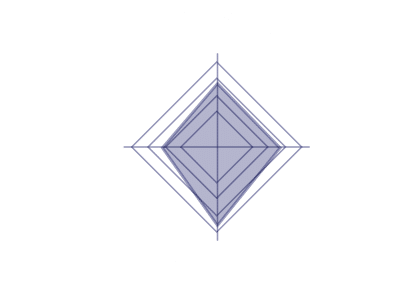
How AI-ready is your organization?
Complete the 10-minute assessment.
Pinpoint operational gaps, benchmark your maturity across key pillars, and chart a clear path to scalable AI success.
Pillars of Success
You are not alone
86%
of supply chain executives plan AI and analytics investments for cost reduction across the supply chain (BCG, 2025).
69%
of compliance and supply chain teams spend 11 or more hours every week on manual data translation (Tradeverifyd, 2025).
56%
of organisations can trace material origins to Tier-3 or Tier-4 suppliers, despite 93% reporting high confidence in oversight (Tradeverifyd, 2025).
72%
of supply chain executives say automated mitigation is now mandatory for managing disruptions (Tradeverifyd, 2025).
Join those who are leveraging data to move from financial stewardship to strategic business leadership.

How is AI raising the stakes

The pressure to connect operational performance to financial outcomes has never been more acute.
Boards and CFOs are no longer satisfied with operational metrics in isolation - they want to see how process efficiency translates to margin, how supply chain decisions affect revenue, and how workforce capacity planning impacts cost. COOs who cannot make that connection with data are losing the ability to influence capital allocation decisions and strategic investment in their function.
AI adoption is simultaneously creating opportunity and risk.
Operations functions that are deploying AI tools for demand forecasting, process automation, and anomaly detection are compressing cycle times and reducing error rates that manual processes cannot match. Those that have not built the data foundation to support AI - clean, integrated, governed operational data - are not just missing the upside. They are accumulating a competitive deficit that compounds with every quarter they delay.
AI is redefining what operational excellence looks like - and COOs who are still managing from weekly reports and lagging KPIs are already behind the organisations using real-time operational intelligence to make faster, better decisions.
PwC's 2025 Digital Trends in Operations Survey found that agility and real-time responsiveness are now the defining differentiators between high-performing and average operations functions. COOs without the data infrastructure to act in real time are not just slower - they are structurally disadvantaged.
C-Suite | Operations
How Bronson can help

Data Strategy and Governance
Bronson.AI builds the data architecture, ownership model, and governance framework that connects operational data into a single, governed layer, so that decisions are made from one version of the truth rather than competing reports.
- Data standards framework covering metric definitions, KPI structures, and cross-functional data taxonomy.
- Data ownership and stewardship model assigning accountability for each data domain.
- AI governance policy ensuring automated decisions are auditable, explainable, and compliant.

Modern Data Analytics
Bronson.AI builds the analytics infrastructure that gives real-time visibility into performance, connected across every relevant system. We move the function from lagging indicator reporting to forward-looking insight that enables proactive decisions at scale.
- Unified data layer integrating source systems into a single analytics environment.
- Leading indicator frameworks that surface risk and opportunity before they become problems.
- ROI measurement connecting improvement initiatives to business outcomes in real time.

AI and Agentic Automation
Bronson.AI implements the AI and automation capability that turns data into action, identifying inefficiencies, flagging anomalies, and triggering workflow responses without manual intervention. We help the function move from monitoring to orchestrating.
- Process automation across high-volume, rule-based workflows to reduce manual effort and error rates.
- Predictive anomaly detection that flags deviations before they escalate into failures or cost overruns.
- AI-powered forecasting and prioritisation that connects data signals to operational resource allocation.
Unlock your potential
Unlock the Power of Data in Operations
Data is the backbone of a high-performing operations function. For the COO, harnessing real-time, integrated operational data enables decisions that are not only efficient but strategically aligned with financial and business outcomes. When operational intelligence is connected across functions, the COO moves from managing by exception to leading by design.
Overcome Data Challenges Effortlessly
One of the primary challenges facing COOs today is operational data that is fragmented across systems, business units, and geographies, producing an incomplete and often contradictory picture of performance. Building the integrated data layer that makes real-time operational insight possible is the foundational challenge - and the one that determines whether every other operations initiative delivers.
The Promise of Data, Analytics, and AI Advancements
Imagine a world where every operational system feeds into a unified performance layer, where AI surfaces inefficiencies before they become failures, and where operational decisions are informed by leading indicators rather than lagging reports. This is not just a vision but the very real value proposition that our Data, Analytics, and AI Consulting and Solutions offer.
Realize the Value of Advanced Data Solutions
Our services are designed to guide COOs through:
- Unified Operational Data: Connecting ERP, supply chain, workforce, and financial data into one operational intelligence layer.
- Real-Time Performance Analytics: Moving from weekly reports to live dashboards that surface operational risk as it emerges.
- AI-Powered Process Optimisation: Automating operational workflows and deploying predictive models that reduce cost and improve throughput.
See Results
4x ROI
payback with AI is guaranteed
90 DAYS
to a funded, board-ready AI roadmap
18 MONTHS
from pilots to
AI-centric enterprise
Get started today!
Frequently asked questions
Turn the scattered operational data into one clear, comprehensible view, because a single picture of performance across the business is what lets you see what is really happening rather than piecing it together from reports that never quite agree. The work is connecting the operational systems across business units into a consolidated environment, aligning the definitions so a metric means the same thing everywhere, and presenting it so the whole business is visible at a glance with the ability to drill into any unit. The genuine effort is in the alignment, because operational data recorded inconsistently across units cannot be compared until it is brought to common standards.
The design that makes such a view useful is building it around the decisions a COO actually makes, surfacing where performance is off target and letting you drill into why, rather than displaying every available metric. A view that shows everything is read by nobody; one that highlights what needs attention and lets you investigate it gets used because it answers the questions you actually have.
The payoff is the ability to manage operations from a current, consistent picture rather than from reports that are partial, inconsistent, and out of date. Instead of discovering performance problems after they have played out, you see them as they develop and can act, and instead of arguing about whose numbers are right, the business works from one trusted view. Building that consolidated view, resolving the fragmentation that left performance scattered across systems, is what shifts operational leadership from reactive firefighting to proactive management based on what the data actually shows.
Establish secure, well governed data management spanning both, because connecting operational activity to financial outcome depends on data that is consistent and joined across the two domains, and informed decisions about where operations actually drive value are impossible until that connection exists. The work is establishing the common dimensions, time, business unit, product, process, that let operational and financial data be related, then connecting the sources into a governed environment where the link is reliable rather than reconstructed by hand for each analysis.
The reason this matters is that operational decisions made without their financial consequence are made half-blind. Knowing that a process is slow or a site is underperforming is useful; knowing what that costs, and therefore what fixing it is worth, is what lets you prioritise rationally. The operational-financial connection is what turns operational data from a record of activity into a basis for decisions about where to invest effort and money.
The payoff is operational management grounded in financial reality. You can see which operational improvements actually move the financial needle, justify operational investment in terms Finance accepts, and stop optimising things that do not matter financially while ignoring things that do. The connection also runs both ways, letting Finance understand the operational drivers behind financial results rather than seeing only the outcomes. Building the governed foundation that joins operational and financial data is what makes that two-way understanding possible, and it is the difference between operations and finance working from separate pictures and the two functions sharing one view of how activity translates into value.
Turn your operational data into the actionable insight that reveals what the automation actually delivered, because measuring its impact depends on analytics that isolate the automation's effect from the noise of everything else moving, and that is an analytical capability, not a gut feel. The work is establishing the metrics the automation was meant to improve, capturing the baseline, and then measuring the change in a way that controls for other factors, so the ROI you report reflects the automation rather than coincident changes.
The reason automation ROI is so often invisible is that operational performance has many moving parts, and without deliberate measurement the automation's contribution is lost in the general variation. A genuine measurement approach defines success up front, captures the right data, and attributes change rigorously, which is what lets you say with confidence what the investment returned rather than hoping it helped.
The payoff is twofold. First, you can finally answer whether the automation paid off, which matters for the credibility of the investment and for the case for further automation. Second, the measurement reveals where the automation is and is not working, so you can tune it, extend what works, and stop what does not. Most automation underdelivers not because the technology fails but because nobody measures and adjusts it. Building the analytics to measure operational performance properly, ideally before automating but valuably even after, is what turns automation from an act of faith into a managed investment whose return you can demonstrate and improve.
Look at what lies beneath the ambition before chasing the technology, because the readiness of the data and the process determines whether AI automation delivers value or amplifies existing problems. A readiness assessment examines the data, whether it is complete, consistent, and good enough for AI to act on reliably, and the processes, whether they are well-enough understood and stable enough to automate sensibly. The output is a clear view of which operational areas are ready for AI automation now and which need their data or process foundations sorted first.
That distinction is what makes the assessment worth doing. It stops you automating a process that should first be redesigned, or deploying AI on data it cannot trust, both of which produce expensive disappointment. Instead it sequences the work: fix the foundations where they are weak, automate where they are sound, and prioritise by where the return is greatest relative to the readiness required.
The reason this discipline matters in operations specifically is that automation failures are visible and costly, disrupting the processes the business runs on. An AI automation that acts on poor data or automates a badly understood process does not fail quietly; it produces wrong outcomes at speed, and unpicking that is harder than getting the foundations right beforehand. Knowing where you genuinely stand before you automate is what separates operations functions that adopt AI successfully from those that create new problems faster than the old ones. The assessment is modest relative to the cost of a failed automation, and it replaces optimism with a clear, sequenced roadmap of what to fix and what to automate.