
Manager | Operations
Office Operations Manager
"Too much of how this place runs lives in one person's spreadsheet."
Quick Facts
Role
Manager | Operations
Level
Manager
Dept
Operations
Industry
Operations
Env
Cloud SaaS stack
Tools
Excel, Asana, Power BI
Sound familiar?
Facilities, vendor, and operational spend data each live in separate systems and a consolidated view requires manual effort every time
Core operational processes still run on spreadsheets owned by individuals, creating continuity, control, and version risks
Operational improvements may be real, but benefits are not measured consistently enough to evidence their value to leadership
Vendor performance is tracked inconsistently and contract obligations are managed reactively rather than from a live view
Operational issues reach the business before anyone in the function has seen them coming in the data
AI tools could remove much of the manual reporting burden but the spend and vendor data is too fragmented to feed them
How AI-ready is your organization?
Complete the 10-minute assessment.
Pinpoint operational gaps, benchmark your maturity across key pillars, and chart a clear path to scalable AI success.
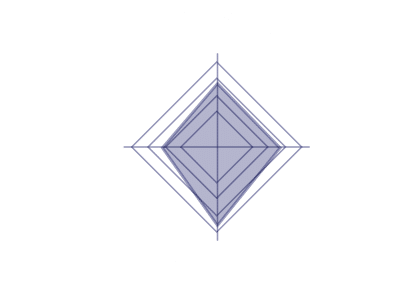
Pillars of Success
You are not alone
56%
of organisations can trace material origins to Tier-3 or Tier-4 suppliers, despite 93% reporting high confidence in oversight (Tradeverifyd, 2025).
72%
of supply chain executives say automated mitigation is now mandatory for managing disruptions (Tradeverifyd, 2025).
25%
of supply chain leaders admit their organisations are unprepared for geopolitical tensions such as wars or tariffs (EY, 2024).
$163B
in inventory is lost annually due to overproduction and expiration, eroding roughly 3.6% of profit in high-volume businesses (Avery Dennison, via ISM).
Join those who are leveraging data to move from financial stewardship to strategic business leadership.

How is AI raising the stakes

Budget pressure is intensifying at the same time.
Operational spend - facilities, vendors, consumables, services - is under increasing CFO scrutiny, and the Operations Manager who cannot demonstrate data-backed justification for spend decisions is vulnerable to cuts that undermine service delivery. The organisations that have built centralised operational spend analytics can identify consolidation opportunities, renegotiate vendor contracts from a position of data strength, and demonstrate ROI on operational investment in terms that finance leadership accepts. Those without this capability are defending spend decisions with anecdote rather than evidence.
The compliance and governance dimension is also growing.
As organisations face more regulatory scrutiny around vendor due diligence, health and safety reporting, and sustainability disclosures, the Office Operations Manager is expected to produce accurate, timely data across all of these domains. Manual processes that were adequate when reporting was infrequent are not fit for purpose in an environment where regulatory reporting requirements are increasing in frequency and granularity. Building the data infrastructure to support compliance reporting is no longer optional - it is a governance requirement.
The Office Operations Manager role is being redefined by automation and AI - and the gap between functions that have modernised their operational infrastructure and those still running on spreadsheets and email is becoming visible in both cost and service quality.
AI tools are enabling operations teams to automate vendor management workflows, predict facility maintenance needs, and optimise space utilisation in ways that manual processes simply cannot match. Managers who have not yet built the data foundation to support these capabilities are delivering a service standard that is increasingly out of step with what the rest of the business expects.
Manager | Operations
How Bronson can help

AI Readiness and Data Management Assessment
Bronson.AI assesses the data foundation and process maturity that determines whether AI investments will deliver. Before committing to AI tools, the function needs an honest picture of where the data actually stands, and a prioritised roadmap for closing the gaps.
- Data maturity assessment evaluating completeness, consistency, quality, and governance readiness across relevant systems.
- AI use case prioritisation identifying which applications the current data foundation can support now versus after remediation.
- Prioritised roadmap sequencing the data and process work that AI adoption requires.

Modern Data Analytics
Bronson.AI builds the analytics infrastructure that gives real-time visibility into performance, connected across every relevant system. We move the function from lagging indicator reporting to forward-looking insight that enables proactive decisions at scale.
- Unified data layer integrating source systems into a single analytics environment.
- Leading indicator frameworks that surface risk and opportunity before they become problems.
- ROI measurement connecting improvement initiatives to business outcomes in real time.

Dashboards and Data Visualisation
Bronson.AI designs and builds dashboards that give real-time visibility into the metrics that matter, in a format that supports decisions rather than just reporting activity. We replace manual compilation with a live, governed view.
- Executive dashboard covering key performance indicators in real time with drill-down capability.
- Self-serve reporting views that allow non-specialist stakeholders to access current data without relying on analysts.
- Trend and exception analytics that surface what needs attention rather than displaying everything equally.
Unlock your potential
Unlock the Power of Data in Operations
Data is the backbone of a well-run office operations function. For the Office Operations Manager, harnessing accurate and centralised operational data enables decisions that are not only efficient but evidence-based - demonstrating the business value of operational investment in the language that leadership and finance respond to.
Overcome Data Challenges Effortlessly
One of the primary challenges facing Office Operations Managers is operational data scattered across spreadsheets, email threads, and disconnected vendor systems, making it impossible to get a consistent view of spend, performance, or compliance without hours of manual compilation. Building the centralised data infrastructure that makes this view available in real time is the foundation for every operational improvement initiative.
The Promise of Data, Analytics, and AI Advancements
Imagine a world where vendor performance, facility utilisation, and operational spend are visible in a single dashboard, where maintenance issues are flagged before they become failures, and where compliance reporting is automated rather than manually assembled at the end of every quarter. This is not just a vision but the very real value proposition that our Data, Analytics, and AI Consulting and Solutions offer.
Realize the Value of Advanced Data Solutions
Our services are designed to guide Office Operations Managers through:
- Centralised Operational Data: Connecting vendor, facility, and spend data into one governed, accessible view.
- Operational Analytics: Live visibility into cost, performance, and utilisation to support evidence-based decisions.
- Process Automation: Eliminating manual workflows across vendor management, maintenance, and compliance reporting.
See Results
4x ROI
payback with AI is guaranteed
90 DAYS
to a funded, board-ready AI roadmap
18 MONTHS
from pilots to
AI-centric enterprise
Get started today!
Frequently asked questions
Turn the fragmented data into one clear, comprehensible view, because a single picture of facilities, vendors, and spend is what lets you actually manage them rather than chase information across systems every time a question comes up. The work is connecting the sources, aligning them so they can be seen together, and presenting them so the whole operational picture is visible at a glance with the detail available when you need it. The effort is in the connection and alignment, because data held in separate systems with different structures has to be brought together before it can be viewed as one.
The design that makes such a view useful is organising it around the decisions you make: which vendors are performing, where spend is running against budget, which contracts need attention, rather than simply displaying everything the systems hold. A view built around your actual management questions gets used because it answers them; one that dumps all the data leaves you no better off than before.
The payoff is the ability to manage facilities and vendors actively from a current, consolidated picture rather than reactively from scattered information. You can see spend as it accumulates rather than at month-end, track vendor performance across all suppliers rather than anecdotally, and spot issues, an overspending category, an underperforming vendor, a contract lapsing, while there is time to act. Building the consolidated view, replacing the scramble across separate systems, is what turns office operations from reactive administration into managed, visible operations, and it provides the foundation for the cost control and vendor management that depend on actually being able to see what is happening.
Automate the repetitive spreadsheet work to streamline operations and lift efficiency, because the manual data entry, copying, and reconciliation that spreadsheet processes depend on is mechanical effort that does not need a person doing it by hand. The processes that move data between systems, apply consistent rules, and produce regular outputs can be automated so they run themselves, removing both the time they consume and the errors that manual spreadsheet work inevitably introduces.
The reason spreadsheets persist for operational processes is usually that they were a quick solution that became permanent, not that they are genuinely the right tool. They are flexible and familiar, but they are also error-prone, hard to audit, dependent on the individuals who maintain them, and a constant manual burden. Automating the process replaces that fragility with something reliable, repeatable, and not dependent on someone remembering how the spreadsheet works.
The payoff is reclaimed time, fewer errors, and processes that do not break when a key person is away. The hours spent maintaining spreadsheets and re-entering data go back to actual operational management, the errors that creep into manual spreadsheet work disappear, and the process becomes robust rather than dependent on tribal knowledge. Automating spreadsheet-based processes is often one of the quickest operational efficiency wins available, because the processes are well-suited to automation and the current manual cost is usually higher than anyone has measured. Streamlining them is what frees the office operations function from the constant low-level manual work that spreadsheets generate and lets it focus on managing operations rather than maintaining workarounds.
Turn the fragmented vendor data into actionable insight, because consistent measurement across all suppliers is what lets you manage vendors on evidence rather than impression, and that requires the data connected and analysed rather than held in scattered records. The work is bringing together the data that reflects vendor performance, delivery, quality, cost, responsiveness, compliance, into a consistent view across all suppliers, so you can see who performs well, who does not, and how each compares, rather than relying on the loudest complaint or the most recent interaction.
The reason systematic tracking matters is that vendor management without it defaults to managing by exception and relationship, paying attention to the vendor who just caused a problem or the one you happen to know well, while the broader picture goes unseen. A consistent performance view across all vendors reveals patterns that anecdote misses: the vendor whose performance is quietly declining, the one whose true cost exceeds its low price once quality and delivery are accounted for, the one worth consolidating more spend toward.
The payoff is vendor management based on evidence, which improves both performance and cost. You can hold vendors to account against measured performance, make renewal and consolidation decisions on data rather than relationship, and identify the underperformers whose hidden costs exceed their apparent savings. The systematic view also strengthens your position in negotiations, because measured performance is harder to dispute than impression. Building the consistent vendor performance view, replacing scattered records and anecdotal judgement, is what turns vendor management from reactive relationship-handling into a managed discipline that actively improves what you get from your suppliers.
Turn your operational data into forward-looking insight, because the move from discovering issues after they bite to anticipating them before they do is what creates the window to act, and that is an analytical capability built on connected, monitored data. The signals that precede operational problems vary by context but follow a pattern: metrics drifting toward thresholds, vendor performance deteriorating, spend trending over budget, workload building beyond capacity. Bringing these together and monitoring them against what normal looks like is what surfaces emerging issues while they can still be headed off.
The reason most operational functions are caught out is that they watch outcomes rather than precursors, seeing the problem once it has happened rather than the signs that it was coming. An early-warning capability watches the leading indicators continuously and flags issues as they emerge, which is the difference between preventing a problem and explaining one.
The payoff is the ability to act before issues affect the business: to address a deteriorating vendor before it fails to deliver, to rein in spend before it breaches budget, to add capacity before workload causes a breakdown. Early intervention is cheaper and less disruptive than reacting to a problem in full flow, and over time the cumulative effect of catching issues early rather than late is a markedly smoother operation. Building the analytics that turn operational data into early warning is what shifts the office operations function from reacting to problems as they hit to anticipating and preventing them, which is the difference between operations that lurch from issue to issue and operations that run ahead of trouble.