
Director | Healthcare
Chief Medical Officer
"I can see that outcomes vary and not whether it is our practice or our patients."
Quick Facts
Role
Director | Healthcare
Level
Director
Dept
Healthcare
Industry
Healthcare
Env
Hybrid EHR
Tools
Epic, Excel, Tableau
Sound familiar?
Clinical quality and outcomes data are fragmented across departments, making fair comparison and enterprise-wide improvement labour-intensive
Unwarranted variation in practice and outcomes is difficult to identify because patient risk, definitions, and documentation differ across teams
Patient-safety signals are separated across incident, clinical, pharmacy, and operational systems, preventing consistent detection of cross-system patterns
AI clinical tools are being adopted without a consistent framework for local validation, safety, effectiveness, equity, monitoring, and appropriate use
Board, regulator, and accreditation reporting still requires manual compilation, delaying assurance and consuming clinical and analytical capacity
Clinical capacity and staffing decisions are disconnected from acuity and outcomes data, making it difficult to balance access, safety, and workforce pressure
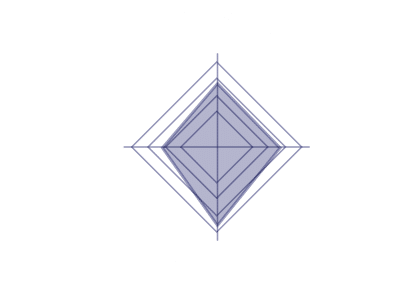
How AI-ready is your organization?
Complete the 10-minute assessment.
Pinpoint operational gaps, benchmark your maturity across key pillars, and chart a clear path to scalable AI success.
Pillars of Success
You are not alone
80%
of hospitals now use AI to improve patient care and operational efficiency (Deloitte, Health Care Outlook).
46%
of US healthcare organisations are in the early phases of implementing generative AI (LITSLINK, 2025).
$24.71B
US healthcare big-data analytics market value in 2025, projected to reach $62.43B by 2034 at a 10.9% CAGR (IMARC Group).
100%
of surveyed health systems report some usage of ambient clinical documentation tools powered by generative AI (IntuitionLabs, 2025).
Join those who are leveraging data to move from financial stewardship to strategic business leadership.

How is AI raising the stakes

AI tools for clinical education are producing genuine improvements in learning efficiency and competency assessment precision at the leading academic medical centres.
AI-powered procedural simulation with objective performance metrics, automated clinical note analysis for documentation quality assessment, and pattern recognition in assessment data that identifies early competency concerns are all moving from research settings to practical educational programmes. Chiefs of Residents at programmes that have adopted these tools are developing residents faster, identifying performance concerns earlier, and producing more defensible competency evidence than those relying on traditional methods - creating a quality differentiation that will become visible in clinical outcomes and programme accreditation outcomes.
Resident wellness and burnout are now recognised as patient safety issues, not just individual wellbeing concerns.
The research evidence linking resident burnout to medical errors, patient safety events, and adverse outcomes has made resident wellness monitoring a quality and safety obligation rather than a discretionary programme enhancement. Chiefs of Residents who have the data infrastructure to identify early burnout signals - abnormal schedule patterns, assessment trajectory changes, reduced engagement with educational activities - can intervene proactively rather than reactively, after performance has already deteriorated.
Graduate medical education is at a point of significant transition.
The competency-based medical education movement is demanding outcomes data that traditional assessment approaches - periodic evaluations by supervising attendings, milestone ratings submitted at rotation end - were not designed to produce. Residents are expected to demonstrate specific competency milestones through documented, longitudinal evidence rather than through aggregated evaluations, and the data infrastructure that would make this evidence collection systematic and reliable is absent at most programmes. Chiefs of Residents who are building competency portfolios from manually collected assessment data are creating administrative burden for both residents and faculty while producing evidence that is less comprehensive and less defensible than what rigorous competency-based education requires.
Director | Healthcare
How Bronson can help

Modern Data Analytics
Bronson.AI builds the analytics infrastructure that gives real-time visibility into operational performance, connected across every relevant system. We move the function from lagging indicator reporting to forward-looking insight that enables proactive decisions at scale.
- Unified data layer integrating source systems into a single analytics environment.
- Leading indicator frameworks that surface risk and opportunity before they become problems.
- ROI measurement connecting improvement initiatives to business outcomes in real time.

Cloud and Application Migration
Bronson.AI helps modernise the underlying technology infrastructure, migrating legacy systems to cloud platforms that integrate cleanly, scale with the organisation, and support the analytics and AI capabilities the function requires.
- Cloud migration strategy assessing current systems and sequencing the transition to minimise operational disruption.
- Application rationalisation identifying which systems can be consolidated onto modern platforms.
- Data migration and validation programme ensuring historical data is preserved and accessible in the new environment.

Dashboards and Data Visualisation
Bronson.AI designs and builds dashboards that give real-time visibility into the metrics that matter, in a format that supports decisions rather than just reporting activity. We replace manual compilation with a live, governed view.
- Executive dashboard covering key performance indicators in real time with drill-down capability.
- Self-serve reporting views that allow non-specialist stakeholders to access current data without relying on analysts.
- Trend and exception analytics that surface what needs attention rather than displaying everything equally.
Unlock your potential
Unlock the Power of Data in Graduate Medical Education
Data is the backbone of effective residency programme management. For the Chief of Residents, harnessing integrated competency, assessment, and wellness data enables the evidence-based resident development, early intervention capability, and programme quality measurement that modern graduate medical education requires.
Overcome Data Challenges Effortlessly
One of the primary challenges facing Chiefs of Residents is assessment and educational data that is fragmented across rotation sites, supervising faculty, and separate systems - making longitudinal competency tracking laborious, early warning signs for resident difficulty hard to identify, and programme outcomes evidence impossible to produce without significant manual effort. Building the integrated educational data infrastructure is the investment that makes evidence-based residency programme management achievable.
The Promise of Data, Analytics, and AI Advancements
Imagine a residency programme where resident competency progression is visible in real time across all rotations, where wellness risk signals surface early enough to intervene before performance is affected, and where programme outcomes are documented with the precision that accreditation and competency-based education standards require. This is not just a vision but the very real value proposition that our Data, Analytics, and AI Consulting and Solutions offer.
Realize the Value of Advanced Data Solutions
Our services are designed to guide Chiefs of Residents through:
- Competency Portfolio Analytics: Longitudinal resident development tracking from integrated assessment and procedural data.
- Wellness Monitoring: Early signal detection for burnout risk enabling proactive intervention.
- Programme Outcomes Measurement: Curriculum effectiveness evidence that satisfies accreditation and quality standards.
See Results
4x ROI
payback with AI is guaranteed
90 DAYS
to a funded, board-ready AI roadmap
18 MONTHS
from pilots to
AI-centric enterprise
Get started today!
Frequently asked questions
Establish secure, well governed data management for resident performance data, because seeing a resident's development whole depends on their performance data being connected across the rotations and systems that each hold a piece of it, and the fragmentation is precisely what makes that impossible. The work is connecting the performance data from across rotations, assessments, and the various systems that hold it, aligning it so a resident's performance can be seen as a coherent whole, with the governance that this sensitive data requires.
The reason fragmentation is so limiting is that a resident's development happens across many rotations and is recorded in many places, and supporting them well, or making sound assessment decisions about them, requires seeing the whole picture, which fragmentation denies. The Chief of Residents trying to support a struggling resident or make a competency decision is working from scattered fragments rather than a complete view, which makes both the support and the assessment harder and less fair.
The payoff is the ability to see and support each resident's development as a whole, which improves both the support and the fairness of assessment. With the performance data connected, the Chief of Residents can see a resident's full development across rotations, identify those who are struggling early, and make assessment decisions on a complete rather than fragmentary picture, which is fairer to the resident and sounder as a decision. The connected view also supports the programme-level analysis that demonstrates effectiveness. Fixing the fragmentation through a governed foundation is what turns resident performance data from scattered fragments across rotations and systems into a coherent view of each resident's development, which is what lets the Chief of Residents support residents well and assess them fairly, both of which depend on seeing the whole rather than the pieces.
Turn the available data into forward-looking insight on burnout risk, because spotting at-risk residents before their performance suffers depends on monitoring the leading indicators rather than the lagging one, and that is an analytical capability built on the relevant data. The signals that tend to precede burnout span several sources, patterns in schedule and hours, changes in engagement, shifts in assessment performance, and monitoring these together is what surfaces risk early, while there is still time to intervene with support.
The reason early identification matters so much is that burnout harms both the resident and, through them, patient care, and by the time it manifests in clinical performance, significant harm has often already occurred, to the resident's wellbeing and potentially to their patients. Catching the risk early, from the leading signals, allows support before the harm rather than after, which is far better for the resident and for the patients in their care.
The payoff is the ability to support at-risk residents before burnout affects their wellbeing and their clinical performance, rather than responding after the deterioration is visible. When the leading signals are monitored, the Chief of Residents can identify residents whose risk is elevated and offer support early, which both protects the resident and maintains the quality of care, rather than discovering burnout only when it has already affected performance. Monitoring the leading indicators of burnout risk is what turns the support of resident wellbeing from a reactive response to visible deterioration into an early intervention that catches risk before it causes harm, which is better for residents, for patients, and for the programme, and it depends on reading the earlier signals rather than waiting for the clinical performance decline that is the most visible but also the latest sign.
Turn the competency data into a clear, comprehensible, consistent digital view, because fair and useful competency assessment depends on consistent data, and the manual, inconsistent tracking is exactly what undermines it. The work is moving competency tracking to a digital system that captures the data consistently across specialties, structures it so competency development can be seen and assessed uniformly, and presents it clearly, replacing the manual, varying records with a consistent digital foundation.
The reason manual, inconsistent tracking is so problematic is that competency assessment has to be fair and defensible, and inconsistent data, where competencies are tracked differently across specialties and supervisors, makes fair comparison and sound assessment impossible, because the data does not mean the same thing across the residents being assessed. Inconsistent competency data is not just untidy, it is a fairness problem, because assessment decisions resting on it are resting on data that varies in ways unrelated to the residents' actual competence.
The payoff is competency data consistent and complete enough to support fair, defensible assessment, which is what competency-based education requires. When competency tracking is digitised and consistent, residents are assessed on data that means the same thing across specialties and supervisors, the assessment is fairer and more defensible, and the competency development of each resident is visible and trackable. The consistent data also supports the programme-level analysis that demonstrates effectiveness to accreditors. Digitising competency tracking to make it consistent is what turns it from manual, varying records that undermine fair assessment into a consistent foundation that supports it, which is essential for competency-based medical education to work as intended, resting as it does on competency data that has to be consistent and reliable to be fair.
Automate the scheduling to streamline the process and ensure compliance, because the manual effort of building schedules that satisfy coverage, training, and duty-hour rules is exactly the kind of complex rule-based work that automation does well, producing compliant schedules far more efficiently than manual construction. The work is implementing automated scheduling that accounts for the constraints, coverage requirements, training needs, and crucially the duty-hour limits, generating schedules that satisfy them and flagging compliance risks before they become violations.
The reason this matters is that resident scheduling is both burdensome and high-stakes, because it has to balance many constraints while strictly respecting duty-hour limits that exist for patient safety and resident wellbeing, and doing this manually is enormously time-consuming and error-prone, with the risk that manual scheduling produces duty-hour violations that carry real consequences. Automation handles the complexity reliably, ensuring compliance while removing the manual burden.
The payoff is compliant schedules produced far more efficiently, freeing the Chief of Residents from a major manual burden while reducing compliance risk. When scheduling is automated, the complex balancing of constraints and duty-hour limits is handled reliably, schedules are produced quickly rather than through laborious manual effort, and duty-hour compliance is ensured by the system rather than depending on manual checking that can miss violations. The time reclaimed goes to the support and development work that actually requires the Chief of Residents' attention. Automating resident scheduling and duty-hours compliance is what turns it from a burdensome, error-prone manual task that risks violations into an efficient, reliable process that ensures compliance, which both protects the programme from the consequences of duty-hour breaches and frees the Chief of Residents from a significant administrative burden to focus on the residents themselves.