
Manager | Healthcare
Department / Practice Manager
"I make staffing calls every morning with only part of the picture in front of me."
Quick Facts
Role
Manager | Healthcare
Level
Manager
Dept
Healthcare
Industry
Healthcare
Env
Cloud practice management
Tools
Epic, Excel, Power BI
Sound familiar?
Scheduling and capacity management remain reactive, contributing to access delays, underused capacity, staff pressure, and revenue leakage
Current productivity, demand, and staffing data are not available together, so daily operational decisions rely on partial information
Financial performance data arrives too late in the month for corrective action to be taken within the period
Patient-experience feedback is collected, but it is not linked to the operational steps, staffing, or delays that shaped the experience
Regulatory and accreditation reporting is assembled manually from multiple disconnected systems every reporting cycle
AI scheduling and triage products are marketed to the practice without local data, evaluation criteria, or monitoring plans to test their claims
How AI-ready is your organization?
Complete the 10-minute assessment.
Pinpoint operational gaps, benchmark your maturity across key pillars, and chart a clear path to scalable AI success.
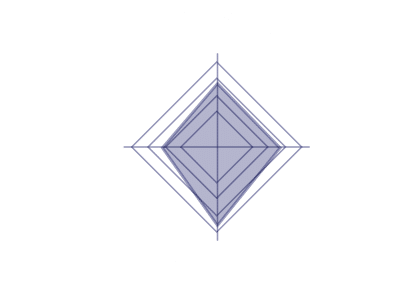
Pillars of Success
You are not alone
46%
of US healthcare organisations are in the early phases of implementing generative AI (LITSLINK, 2025).
$24.71B
US healthcare big-data analytics market value in 2025, projected to reach $62.43B by 2034 at a 10.9% CAGR (IMARC Group).
100%
of surveyed health systems report some usage of ambient clinical documentation tools powered by generative AI (IntuitionLabs, 2025).
10-20%
potential reduction in hospital labour and supply costs that AI tools could deliver (Morgan Stanley).
Join those who are leveraging data to move from financial stewardship to strategic business leadership.

How is AI raising the stakes

Patient scheduling optimisation is one of the highest-return applications of analytics in practice management, and it is one that most practices are not yet approaching analytically.
The combination of appointment type demand forecasting, no-show prediction at the individual patient level, and dynamic scheduling slot optimisation can simultaneously improve patient access, reduce clinical staff idle time, and increase the practice's revenue capacity - three outcomes that are difficult to achieve simultaneously through manual scheduling judgment. Practices that have implemented AI scheduling optimisation are seeing appointment wait times fall and capacity utilisation improve in ways that manual scheduling optimisation cannot consistently produce.
The patient experience data problem is structural and consequential.
Patient experience survey data is routinely collected, routinely reported to accreditation bodies, and routinely analysed by quality departments - but it is rarely connected to the specific operational processes and management decisions that drive it. A practice manager who receives a quarterly patient experience report showing declining satisfaction scores in appointment access has useful information but not actionable information - they cannot tell from the report which appointments types, which care providers, which days of the week, or which patient characteristics are driving the decline. Building the connection between patient experience data and operational process data is the analytical investment that turns patient satisfaction reporting from a retrospective accountability exercise into a real-time quality management tool.
Healthcare practice and department managers are responsible for operational performance in one of the most complex service delivery environments that exists - managing clinical capacity, patient flow, staff productivity, financial performance, and regulatory compliance simultaneously, often with data that is days or weeks out of date by the time it is available for decision-making.
The practices and departments that are consistently performing at the top of patient satisfaction, access, and financial metrics are almost always those where the manager has built the operational data infrastructure that enables real-time management decisions rather than retrospective analysis of what has already gone wrong.
Manager | Healthcare
How Bronson can help

AI and Agentic Automation
Bronson.AI implements the AI and automation capability that turns data into action, identifying inefficiencies, flagging anomalies, and triggering workflow responses without manual intervention. We help the function move from monitoring to orchestrating.
- Process automation across high-volume, rule-based workflows to reduce manual effort and error rates.
- Predictive anomaly detection that flags deviations before they escalate into failures or cost overruns.
- AI-powered forecasting and prioritisation that connects data signals to operational resource allocation.

Modern Data Analytics
Bronson.AI builds the analytics infrastructure that gives real-time visibility into operational performance, connected across every relevant system. We move the function from lagging indicator reporting to forward-looking insight that enables proactive decisions at scale.
- Unified data layer integrating source systems into a single analytics environment.
- Leading indicator frameworks that surface risk and opportunity before they become problems.
- ROI measurement connecting improvement initiatives to business outcomes in real time.

Dashboards and Data Visualisation
Bronson.AI designs and builds dashboards that give real-time visibility into the metrics that matter, in a format that supports decisions rather than just reporting activity. We replace manual compilation with a live, governed view.
- Executive dashboard covering key performance indicators in real time with drill-down capability.
- Self-serve reporting views that allow non-specialist stakeholders to access current data without relying on analysts.
- Trend and exception analytics that surface what needs attention rather than displaying everything equally.
Unlock your potential
Unlock the Power of Data in Healthcare Operations
Data is the backbone of effective healthcare practice management. For the Department and Practice Manager, harnessing real-time operational, financial, and patient experience data enables the proactive management decisions that improve patient access, clinical productivity, and financial performance simultaneously rather than trading one off against the others.
Overcome Data Challenges Effortlessly
One of the primary challenges facing Practice Managers is operational and financial data that arrives too slowly for real-time management decisions - leaving scheduling reactive, financial course correction too late in the month to be effective, and patient experience improvement disconnected from the operational changes that would drive it. Building the real-time management data infrastructure is the investment that transforms practice management effectiveness.
The Promise of Data, Analytics, and AI Advancements
Imagine a practice where appointment scheduling is optimised by AI in real time, where financial performance is visible in the current week rather than at month end, and where patient experience drivers are connected to the specific operational variables that the manager can actually change. This is not just a vision but the very real value proposition that our Data, Analytics, and AI Consulting and Solutions offer.
Realize the Value of Advanced Data Solutions
Our services are designed to guide Department and Practice Managers through:
- Real-Time Operations Intelligence: Live scheduling, productivity, and financial data enabling current-week management decisions.
- AI Scheduling Optimisation: Demand forecasting and dynamic scheduling that improves access and utilisation simultaneously.
- Patient Experience Analytics: Operational drivers connected to patient satisfaction for actionable quality improvement.
See Results
4x ROI
payback with AI is guaranteed
90 DAYS
to a funded, board-ready AI roadmap
18 MONTHS
from pilots to
AI-centric enterprise
Get started today!
Frequently asked questions
Turn the scheduling and demand data into actionable insight, because fixing access problems depends on understanding where capacity and demand are mismatched and redesigning scheduling accordingly, and that is an analytical exercise rather than a matter of working harder at the current approach. The work is analysing the demand and capacity data to find where the mismatch occurs, why there are waits alongside unused slots, where demand exceeds capacity and where it does not, then using that insight to redesign scheduling so capacity is allocated to match actual demand.
The reason reactive scheduling causes access problems is that it does not match capacity to demand systematically, so you get the familiar paradox of long waits for appointments alongside empty slots, because the scheduling is not designed around the actual pattern of demand. Analysing the data reveals this mismatch and its causes, which is what lets you redesign the scheduling to fix it rather than just adding capacity, which often is not the real solution.
The payoff is improved patient access without necessarily adding clinical staff, by matching the capacity you have to the demand more effectively. When scheduling is redesigned on the basis of demand and capacity analysis, the mismatches that cause waits alongside empty slots are addressed, access improves because capacity is allocated where demand actually is, and the improvement often comes from better use of existing capacity rather than from costly additional staff. The analysis also supports ongoing scheduling management as demand patterns change. Using data to understand and redesign reactive scheduling is what turns patient access from a problem of waits and unused capacity that more staff would not necessarily fix into a matter of matching capacity to demand effectively, which is what genuinely improves access, often without the additional clinical staff that reactive scheduling makes seem necessary.
Turn the financial data into a clear, comprehensible view that updates currently, because acting on financial performance while you still can depends on seeing it currently rather than at month-end, and that requires the data connected into a live view rather than compiled after the period closes. The work is connecting the financial data into a current view that shows performance as it develops, so you can see how the practice is tracking financially within the period rather than learning weeks later when it is too late to respond.
The reason month-end financial data is so limiting for a practice manager is that it arrives weeks after the period it covers, by which point the opportunity to address a problem within that period has passed, so financial management becomes reactive, explaining last month rather than managing this one. Real-time visibility changes financial data from a backward-looking record into a current management tool, letting you see a developing financial problem and address it while the period is still open.
The payoff is the ability to manage financial performance within the period rather than reviewing it afterwards, which is what lets you actually influence the outcome. With real-time visibility, a developing financial issue, costs running high, revenue tracking low, is visible while there is still time to act, rather than being discovered in reporting that arrives too late to change anything. That shift from after-the-fact review to in-period management is what turns financial data from something you account for into something you can manage. Building the real-time financial view, replacing month-end reporting that arrives too late, is what lets a practice manager manage financial performance actively within the period rather than explaining it after the period has closed and the chance to influence it has gone.
Establish secure, well governed data management that connects experience to process, because improving patient experience depends on relating it to the operational processes that drive it, and the disconnection is precisely what makes that relationship invisible. The work is connecting the patient experience data, satisfaction scores, feedback, to the operational data on the processes that shape the experience, wait times, scheduling, the patient journey, so you can see which operational factors are driving the experience and address them.
The reason the disconnection is so limiting is that patient experience is driven by operational processes, waits, scheduling, the smoothness of the journey, but when the experience data is disconnected from the process data, you can see that satisfaction is low without seeing which operational factors are causing it, so you cannot target the right improvements. The experience data tells you there is a problem; only its connection to process data tells you what to fix.
The payoff is the ability to improve patient experience by addressing its operational causes, rather than seeing low satisfaction without knowing what drives it. When experience data is connected to process data, you can identify which operational factors are driving dissatisfaction and improve them specifically, which is far more effective than responding to satisfaction scores without understanding their causes. The connection turns patient experience from a score you monitor into a problem you can actually solve by addressing the operations behind it. Connecting patient experience data to the operational processes that drive it is what lets a practice manager improve experience by fixing its operational causes, which is the only way to genuinely improve it, rather than tracking satisfaction scores without the connection to the processes that determine them and that improvement actually requires changing.
Automate the reporting to streamline the work and reduce the manual burden, because compiling accreditation data from multiple systems by hand is exactly the kind of repetitive assembly that should be automated, freeing the practice from a significant periodic burden. The work is setting up the accreditation data to be gathered from the relevant systems and compiled automatically into the required reporting, so the reporting builds from current data rather than being assembled by hand each accreditation cycle.
This depends on the underlying data being accessible and consistent across the systems it comes from, which is often the real constraint, because automating the compilation of data scattered across disconnected systems requires connecting those systems first. Getting the data connected is part of making the automation work, and it addresses the underlying fragmentation that makes accreditation reporting so laborious.
The payoff is accreditation reporting produced far more efficiently, freeing the practice from a major periodic burden and reducing the errors that manual assembly introduces. When accreditation reporting is automated, the laborious manual compilation that consumes the team before each accreditation cycle is replaced by reporting that assembles itself from current data, which both saves substantial time and improves accuracy because the assembly is consistent rather than manually performed under pressure. The reclaimed time goes to actual practice management and patient care rather than report assembly. Automating accreditation reporting is what turns it from a laborious, error-prone manual exercise that consumes the team before every accreditation cycle into an efficient process that assembles the required reporting from current data, which is both a significant time saving and a reduction in the risk of the errors that manual compilation under deadline pressure tends to introduce.