
Director | Healthcare
Director of Clinical Data & Analytics
"What my team produces arrives in a format and at a time that makes it easy for clinicians to ignore."
Quick Facts
Role
Director | Healthcare
Level
Director
Dept
Healthcare
Industry
Healthcare
Env
Cloud warehouse + EHR
Tools
Snowflake, Epic Clarity, Tableau
Sound familiar?
Clinical data quality and inconsistent definitions undermine confidence in the analytical outputs used for safety, performance, and improvement
Analytics outputs are not embedded in clinical workflows and arrive in formats or at times that make them hard to act on
Clinical departments are procuring AI tools without consistent analytics and governance input, leaving validation, integration, and monitoring risks unmanaged
Demand from clinical teams is growing faster than analytics capacity, while manual data preparation prevents the function from scaling efficiently
Executives cannot see whether clinical analytics improves care because safety events avoided, length of stay, and clinician time saved are not measured consistently
Secure access and approval processes delay timely analysis, while workarounds create privacy, reproducibility, and governance risk
How AI-ready is your organization?
Complete the 10-minute assessment.
Pinpoint operational gaps, benchmark your maturity across key pillars, and chart a clear path to scalable AI success.
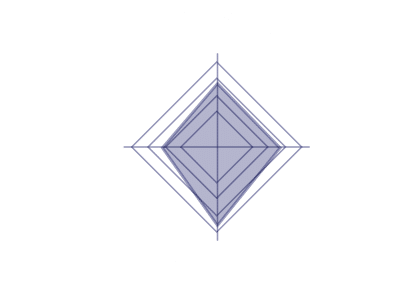
Pillars of Success
You are not alone
10-20%
potential reduction in hospital labour and supply costs that AI tools could deliver (Morgan Stanley).
38.0%
software's share of the US healthcare big-data analytics market in 2025 (IMARC Group).
60.0%
of healthcare big-data analytics revenue comes from on-demand (cloud) delivery models (IMARC Group, 2025).
71%
of hospitals reported using predictive AI integrated with the electronic health record in 2024, up from 66% in 2023 (ASTP / ONC Data Brief).
Join those who are leveraging data to move from financial stewardship to strategic business leadership.

How is AI raising the stakes

The clinical AI governance gap is the most pressing strategic challenge for this role.
Clinical departments are procuring and deploying AI tools - often described as clinical decision support, population health management, or care coordination software - without systematic data governance review, clinical validation assessment, or bias evaluation. The result is an AI deployment landscape that is inconsistent, ungovernanced, and increasingly difficult to audit. Directors of Clinical Data and Analytics who have not built the governance frameworks and evaluation processes that apply consistently to clinical AI tools are managing a liability that grows with every additional tool deployment, and that will eventually surface in a patient safety event, a regulatory inquiry, or a failed accreditation review.
The self-service analytics capability gap is both an efficiency problem and an adoption problem.
Analytics functions that are consumed by responding to ad-hoc requests from clinical and operational stakeholders cannot build the proactive analytical capability that identifies improvement opportunities before they are requested. But the self-service transition - building the tools and training that allow clinical stakeholders to answer their own routine analytical questions - requires both the technical infrastructure and the clinical stakeholder trust that most analytics functions have not yet earned at the scale needed for genuine self-service adoption.
The Director of Clinical Data and Analytics is managing a function whose influence on patient care outcomes is growing faster than most healthcare organisations have built the governance frameworks to manage responsibly.
AI tools that influence clinical decisions, data infrastructure that underpins quality measurement and regulatory reporting, and analytics outputs that drive care protocol changes all operate at the intersection of data quality, clinical validity, and patient safety - domains where the consequences of getting it wrong are not limited to reputational or financial impact. HIMSS Most Wired 2025 research found that the health systems achieving the best outcomes are those where data governance, embedded analytics, and AI oversight are treated as organisational priorities rather than IT infrastructure decisions.
Director | Healthcare
How Bronson can help

Generative AI and LLMs
Bronson.AI implements generative AI and large language model solutions that accelerate operational workflows, from drafting and summarisation to intelligent search and recommendation, grounded in the organisation's own governed data.
- Generative AI use case design identifying where LLM capability delivers genuine productivity and quality gains.
- Retrieval-augmented generation connecting LLM outputs to internal knowledge bases and governed data sources.
- Output governance framework ensuring AI-generated content is accurate, auditable, and aligned with organisational standards.
Fractional Data and AI Services
For functions that need specialist data and AI capability without the timeline and cost of permanent recruitment, Bronson.AI provides experienced fractional professionals who integrate directly with the internal team, accelerating delivery while building internal capability in parallel.
- Fractional data engineers who build and maintain the data pipelines and integration infrastructure the function depends on.
- Machine learning and AI specialists who design, validate, and deploy analytical models to production standard.
- Analytics translators who bridge the gap between technical outputs and the business decisions they are designed to inform.

Cloud and Application Migration
Bronson.AI helps modernise the underlying technology infrastructure, migrating legacy systems to cloud platforms that integrate cleanly, scale with the organisation, and support the analytics and AI capabilities the function requires.
- Cloud migration strategy assessing current systems and sequencing the transition to minimise operational disruption.
- Application rationalisation identifying which systems can be consolidated onto modern platforms.
- Data migration and validation programme ensuring historical data is preserved and accessible in the new environment.
Unlock your potential
Unlock the Power of Data in Clinical Analytics Leadership
Data is the backbone of a high-impact clinical analytics function. For the Director of Clinical Data and Analytics, building the governed data infrastructure, advanced analytical capability, and clinical AI oversight that make the function a trusted, strategic partner to clinical and operational leadership is what determines whether the organisation realises the patient outcomes and commercial value that healthcare data and AI investment should deliver.
Overcome Data Challenges Effortlessly
One of the primary challenges facing clinical analytics directors is data quality infrastructure that cannot keep pace with the analytical demand placed on it - creating a credibility gap where technically sophisticated analysis is consistently questioned because of known data reliability problems. Building the clinical data governance framework that makes data quality a managed, monitored, and continuously improving asset is the foundational investment that everything else depends on.
The Promise of Data, Analytics, and AI Advancements
Imagine a clinical analytics function with a quality-controlled, governed data foundation, production-grade AI deployment infrastructure with clinical governance oversight, and self-serve analytics capability that frees the team from routine requests and enables proactive analytical contribution to the organisation's most important improvement priorities. This is not just a vision but the very real value proposition that our Data, Analytics, and AI Consulting and Solutions offer.
Realize the Value of Advanced Data Solutions
Our services are designed to guide Directors of Clinical Data and Analytics through:
- Clinical Data Governance: Quality-controlled data foundation that makes every analytical output and AI deployment reliable.
- Clinical AI Governance: Consistent evaluation and oversight framework for clinical AI tools across the organisation.
- Advanced Clinical Analytics: Outcomes measurement, population health, and value-based care analytics that demonstrate patient and commercial impact.
See Results
4x ROI
payback with AI is guaranteed
90 DAYS
to a funded, board-ready AI roadmap
18 MONTHS
from pilots to
AI-centric enterprise
Get started today!
Frequently asked questions
Establish secure, well governed data management as the foundation, because every analytical output inherits the quality of the data beneath it, and governed, reliable clinical data is what makes the outputs trustworthy rather than perpetually undermined. The work is establishing the governance and quality management that clinical data requires, the standards, the ownership, the quality controls, the understanding of what the complex data means, so that the data the analytics function works from is reliable, and the outputs built on it can be trusted.
The reason data quality is existential for a clinical analytics function is that its entire value rests on the reliability of its outputs, and when those outputs are undermined by poor data quality, clinicians learn to distrust the analytics, at which point the function fails regardless of how sophisticated its analysis is. In clinical analytics, where outputs may inform care, unreliable data is not just a credibility problem but a safety one, which makes the data foundation a genuine priority rather than groundwork to be assumed.
The payoff is analytical outputs that clinicians trust, which is what lets the function actually influence care. When the clinical data foundation is governed and reliable, the outputs built on it are trustworthy, clinicians act on them rather than dismissing them, and the function delivers the value it exists for rather than producing analysis that is undermined before it can be used. Reliable data is the precondition for everything the function does, from routine reporting to AI. Establishing genuine data governance and quality management as the foundation is what turns clinical analytics from a function whose outputs are perpetually undermined by poor data into one whose analysis clinicians can trust, which is the difference between a clinical analytics function that influences care and one whose work, however sophisticated, is discounted because the data beneath it cannot be relied on.
Examine what lies beneath the AI being procured, because the readiness of the data and the adequacy of governance determine whether clinical AI is safe, and assessing that is what lets you bring the uncontrolled procurement under responsible governance rather than either blocking it or letting it proceed ungoverned. The approach establishes visibility into what AI clinical departments are acquiring, assesses each for clinical risk and for whether its data foundation and validation are sound, and establishes the governance, the validation requirements, the oversight, the accountability, that clinical AI requires, applied proportionately to risk.
The reason this matters acutely is that clinical AI affects patient care, so tools procured without governance, operating on unvalidated data or without proper oversight, carry genuine risk to patients and regulatory exposure to the organisation. Departments procuring tools they find useful is understandable, but ungoverned clinical AI procurement is a serious gap, because the organisation ends up with clinical AI in use that has never been assessed for whether it is safe, which in a clinical context is a real danger rather than a governance formality.
The payoff is clinical AI brought under responsible governance without simply blocking tools departments find valuable, which is the balance healthcare needs. By establishing visibility into what is being procured, assessing the risk, and applying proportionate governance, the organisation can allow beneficial clinical AI while ensuring it is validated, overseen, and accountable, which protects patients and manages regulatory risk while not stifling useful innovation. Assessing and controlling clinical AI procurement by understanding what is being acquired and whether its foundations are sound is what lets a clinical analytics director bring ungoverned procurement under control responsibly, which is increasingly essential as departments acquire AI faster than governance has kept up, and the stakes in a clinical setting make getting it right a genuine patient-safety priority rather than an administrative one.
Turn the analytics into clear, comprehensible insight delivered where clinical decisions happen, because analytics that inform care have to reach clinicians in their workflow, in a form they immediately grasp, at the moment of decision, not be produced in the analytics team's terms and left to be found. The work is understanding the clinical decisions the analytics should inform, then delivering the insight into the clinical workflow accordingly, in a form clinicians can act on, at the point and time the decision is made, rather than as standalone outputs disconnected from how care is actually delivered.
The reason analytics often fail to reach clinical decisions is a gap between the analytics function and clinical workflow, where the function produces work measured by its analytical quality while clinicians need something they can act on within the flow of care, and those are different things. Analytics that are technically excellent but arrive in the wrong form, at the wrong time, or disconnected from the clinical workflow do not get used in care regardless of their quality, because clinicians cannot act on what does not reach them when and where they decide.
The payoff is analytics that actually inform clinical care, which is the only reason a clinical analytics function exists. When analytics are delivered into the clinical workflow, at the right moment, in a form clinicians can act on, they influence the clinical decisions they were built to inform, and the function shifts from producing analytics to improving care. That also transforms how the function is valued, because demonstrable influence on care is a far stronger position than a record of sophisticated analytics clinicians do not use. Delivering analytics into the clinical workflow rather than producing them separately is what closes the gap between building analytics and having them used in care, which is where the value of clinical analytics is realised, and it usually depends on delivery into the workflow rather than on the quality of the analysis itself.
Draw on the analytics, engineering, and AI support of a full data capability to scale without proportional headcount, because that support is what lets you meet demand beyond what your team can deliver alone, scaled to need rather than carried as permanent cost, while building toward broader capability. The approach combines accessing experienced external capability for the work that exceeds your team's capacity with enabling the wider organisation to handle more of the routine analytics itself, so demand is met without the headcount growth that simply scaling the team would require.
The reason headcount-constrained scaling is so limiting is that analytics demand in healthcare tends to grow faster than headcount can, and meeting it purely by hiring is slow, expensive, and competitive, particularly for clinically-literate analysts, so the function falls behind demand and becomes a bottleneck. Accessing capability on demand and enabling the wider organisation breaks that constraint, letting the function meet more demand than its own headcount would allow.
The payoff is analytics capacity that scales with demand rather than being capped by headcount, which is what lets the function keep pace with a healthcare organisation's growing appetite for analytics. By accessing experienced capability for the work that exceeds the team and enabling the organisation to handle more itself, the function meets demand without the slow and costly headcount growth that would otherwise constrain it, and it can flex capacity to match demand that varies rather than carrying permanent cost for peak load. Scaling analytics through experienced support and enablement rather than headcount alone is what lets a clinical analytics function match the growing demand for analytics in healthcare, which is increasingly outpacing what any realistically-sized internal team could deliver on its own, particularly given the scarcity of the clinically-literate analytical talent that direct hiring depends on.