
C-Suite | Healthcare
Chief Medical Information Officer
"Tools are in clinical use before anyone has asked me whether they were ever validated here."
Quick Facts
Role
C-Suite | Healthcare
Level
C-Suite
Dept
Healthcare
Industry
Healthcare
Env
Hybrid EHR
Tools
Epic, Azure, Power BI
Sound familiar?
Clinical data are fragmented across the EHR, departmental systems, devices, and external providers, preventing a complete, timely patient view
Clinicians are adopting AI tools at the point of care without consistent informatics review, local validation, monitoring, or accountability
Documentation burden and copied or templated records reduce data quality, making clinical analytics and decision support less reliable
Interoperability gaps are blocking the data exchange that coordinated care across settings depends on
The function struggles to demonstrate that informatics investment improves safety, outcomes, access, or clinician time rather than only workflow measures
Patient identity, consent, and data provenance are inconsistent across systems, creating safety and privacy risk when information is reused for analytics or AI
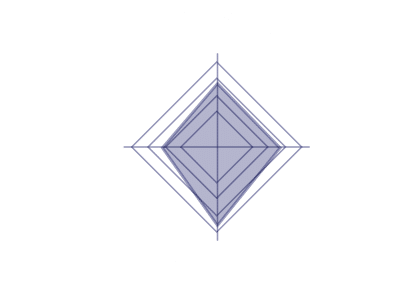
How AI-ready is your organization?
Complete the 10-minute assessment.
Pinpoint operational gaps, benchmark your maturity across key pillars, and chart a clear path to scalable AI success.
Pillars of Success
You are not alone
71%
of hospitals reported using predictive AI integrated with the electronic health record in 2024, up from 66% in 2023 (ASTP / ONC Data Brief).
80%
of hospitals now use AI to improve patient care and operational efficiency (Deloitte, Health Care Outlook).
46%
of US healthcare organisations are in the early phases of implementing generative AI (LITSLINK, 2025).
$24.71B
US healthcare big-data analytics market value in 2025, projected to reach $62.43B by 2034 at a 10.9% CAGR (IMARC Group).
Join those who are leveraging data to move from financial stewardship to strategic business leadership.

How is AI raising the stakes

The interoperability problem remains the foundational constraint that limits most healthcare AI initiatives.
Clinical data across EHR, laboratory, radiology, pharmacy, and patient-reported sources cannot be effectively integrated without the HL7 FHIR implementation and data governance investment that most healthcare organisations have been deferring. The HIMSS Most Wired 2025 survey found that the leading health systems are differentiated not by the sophistication of their AI tools but by the quality of their data governance and integration infrastructure - the foundation that makes everything else reliable. Healthcare CEOs who are investing in AI applications without first addressing the data integration layer are building on foundations that will produce inconsistent and unreliable results.
Value-based care is becoming the commercial imperative that makes patient outcomes data a financial necessity rather than a quality aspiration.
As healthcare contracts increasingly include outcomes-based payment components, the ability to measure patient outcomes accurately, connect them to specific care protocols and interventions, and report them to payers and regulators with confidence is becoming a core operational capability. Healthcare organisations that cannot produce reliable outcomes data are both commercially disadvantaged in value-based contract negotiations and vulnerable to regulatory scrutiny when they cannot support quality claims with evidence.
Healthcare CEOs are navigating the most consequential digital transformation in the sector's history - and the stakes of getting it wrong are not limited to financial loss.
AI tools that influence clinical decisions without adequate governance frameworks, patient data that is breached because security infrastructure did not keep pace with digital adoption, and clinical automation that is implemented without the change management needed to produce the workflow integration that generates patient outcomes improvement - all of these failures have direct patient consequences that healthcare has unique obligations to prevent. The HIMSS Global Health Conference 2025 confirmed that AI trust, governance, and real-world outcomes remain the dominant themes for healthcare technology leadership, precisely because the enthusiasm for AI capability has outpaced the development of the governance frameworks needed to deploy it responsibly.
C-Suite | Healthcare
How Bronson can help

Data Strategy and Governance
Bronson.AI builds the data architecture, ownership model, and governance framework that connects operational data into a single, governed layer, so that decisions are made from one version of the truth rather than competing reports.
- Data standards framework covering metric definitions, KPI structures, and cross-functional data taxonomy.
- Data ownership and stewardship model assigning accountability for each data domain.
- AI governance policy ensuring automated decisions are auditable, explainable, and compliant.

Modern Data Analytics
Bronson.AI builds the analytics infrastructure that gives real-time visibility into operational performance, connected across every relevant system. We move the function from lagging indicator reporting to forward-looking insight that enables proactive decisions at scale.
- Unified data layer integrating source systems into a single analytics environment.
- Leading indicator frameworks that surface risk and opportunity before they become problems.
- ROI measurement connecting improvement initiatives to business outcomes in real time.

AI Readiness and Data Management Assessment
Bronson.AI assesses the data foundation and process maturity that determines whether AI investments will deliver. Before committing to AI tools, the function needs an honest picture of where the data actually stands, and a prioritised roadmap for closing the gaps.
- Data maturity assessment evaluating completeness, consistency, quality, and governance readiness across relevant systems.
- AI use case prioritisation identifying which applications the current data foundation can support now versus after remediation.
- Prioritised roadmap sequencing the data and process work that AI adoption requires.
Unlock your potential
Unlock the Power of Data in Healthcare
Data is the backbone of a high-performing, evidence-driven healthcare organisation. For the Healthcare CEO, harnessing integrated clinical, operational, and financial data enables the evidence-based leadership that improves patient outcomes, manages organisational performance, and demonstrates the value that patients, payers, and regulators increasingly require.
Overcome Data Challenges Effortlessly
One of the primary challenges facing Healthcare CEOs is clinical and operational data fragmented across systems that were never designed to communicate - making integrated analysis impossible, AI governance difficult to implement, and value-based care reporting an exercise in manual data assembly. Building the integrated data architecture and governance framework that makes reliable healthcare intelligence possible is the foundational investment the organisation requires.
The Promise of Data, Analytics, and AI Advancements
Imagine a healthcare organisation with integrated clinical and operational intelligence, AI tools deployed under governance frameworks that protect patients and satisfy regulators, and outcomes measurement capability that supports value-based care contracts with confidence. This is not just a vision but the very real value proposition that our Data, Analytics, and AI Consulting and Solutions offer.
Realize the Value of Advanced Data Solutions
Our services are designed to guide Healthcare CEOs through:
- Integrated Clinical Data Architecture: Connected EHR, clinical, and administrative data supporting reliable analytics and AI.
- Clinical Outcomes Analytics: Measurement capability that supports value-based care reporting and quality improvement.
- Healthcare AI Governance: Responsible AI deployment frameworks that protect patients and satisfy regulatory requirements.
See Results
4x ROI
payback with AI is guaranteed
90 DAYS
to a funded, board-ready AI roadmap
18 MONTHS
from pilots to
AI-centric enterprise
Get started today!
Frequently asked questions
Establish secure, well governed data management across the three domains, because informed decisions about the organisation depend on connected, consistent data across clinical, operational, and financial systems, and the separation is precisely what makes integrated decision-making impossible. The work is connecting these systems into a common foundation, aligning the data so it can be related across domains, and governing it so the integrated view stays reliable, with the particular care that healthcare data requires given its sensitivity and the regulation around it. The effort is in the alignment and governance, because clinical, operational, and financial data are structured very differently and bringing them together responsibly is genuinely demanding.
The reason the separation is so limiting is that the most important decisions in healthcare span the domains, how clinical decisions affect cost, how operational efficiency affects care, how financial constraints affect quality, and when the data is separated, these relationships are invisible, so decisions are made in one domain without seeing the effects in the others. The CEO cannot manage the organisation as a whole when clinical, operational, and financial performance can only be seen separately.
The payoff is the ability to manage the organisation from an integrated view that connects clinical, operational, and financial performance. With the data connected and governed, the CEO can see how the domains relate, make decisions that account for their effects across clinical quality, operational efficiency, and financial sustainability, and manage the genuine trade-offs healthcare involves on the basis of connected evidence. The foundation also supports the value-based care reporting and the analytics that depend on integrated data. Fixing the separation through a governed foundation is what turns healthcare data from disconnected clinical, operational, and financial systems into an integrated view that lets a CEO manage the organisation as the interconnected whole it actually is, rather than as three separate domains that can only be seen and managed in isolation.
Examine what lies beneath the AI clinicians are adopting, because the readiness of the data and the adequacy of governance determine whether clinical AI is safe, and assessing that is what lets you bring it under control responsibly rather than either banning it or letting it run ungoverned. The approach builds an understanding of what AI clinicians are using, assesses each use for clinical risk and for whether the data and validation behind it are sound, and establishes the governance, the oversight, the validation requirements, the accountability, that clinical AI requires, prioritised by risk.
The reason this matters acutely in healthcare is that clinical AI affects patient care, so AI adopted without governance, operating on unvalidated data or without proper oversight, carries genuine risk to patients as well as regulatory exposure. Clinicians adopting useful tools is understandable, but ungoverned clinical AI is a serious gap, and the consequence of getting it wrong is measured in patient harm, which is why establishing governance is essential rather than bureaucratic.
The payoff is clinical AI brought under responsible governance without simply banning tools clinicians find useful, which is the balance healthcare needs. By understanding what is being used, assessing the risk, and establishing proportionate governance, the organisation can allow beneficial clinical AI while ensuring it is validated, overseen, and accountable, which protects patients and manages regulatory risk while not stifling genuinely useful innovation. Assessing and governing clinical AI based on understanding what is deployed and whether its foundations are sound is what lets a healthcare CEO bring ungoverned clinical AI under control responsibly, which is increasingly essential as clinicians adopt these tools faster than governance has kept up, and the stakes, patient safety, make getting it right a genuine priority rather than an administrative nicety.
Turn the clinical data into the reliable outcomes insight value-based care requires, because succeeding under these contracts depends on producing trustworthy outcomes data, and building that capability is what lets you demonstrate the outcomes the contracts pay for. The work is establishing the data foundation and analytics to capture clinical outcomes reliably, define them consistently, and report them in the form the contracts require, which depends on clinical data that is connected, consistent, and good enough to produce outcomes measures the payers will accept.
The reason this is challenging is that value-based care shifts payment from volume to outcomes, which requires measuring outcomes reliably, and many organisations' clinical data is not structured or consistent enough to produce trustworthy outcomes measures, leaving them unable to demonstrate the outcomes they are being paid to deliver. The data foundation that supports reliable outcomes measurement is the prerequisite for succeeding under value-based contracts, and its absence is what leaves organisations exposed under them.
The payoff is the ability to succeed under value-based care by reliably demonstrating the outcomes that determine payment. When the organisation can produce trustworthy outcomes data, it can demonstrate the outcomes the contracts reward, identify where outcomes need improvement, and manage its performance under value-based arrangements rather than being unable to show what it achieved. The outcomes capability also improves care, because measuring outcomes reliably is the foundation for improving them. Building the capability to produce reliable outcomes data is what lets a healthcare organisation succeed under value-based care rather than struggle under contracts whose payment depends on outcomes data it cannot reliably produce, which is increasingly essential as healthcare payment shifts toward outcomes and away from volume.
Turn the relevant data into actionable insight on what is actually working, because identifying which digital health investments improve outcomes depends on measuring their effect, and that is an analytical capability that connects the investments to the outcomes they are meant to affect. The work is establishing the measurement to connect digital health investments to outcomes, analysing whether and how each is actually affecting the outcomes it was meant to improve, so investment can be directed toward what works and away from what does not.
The reason digital health so often disappoints is that the investments are made on the promise of improved outcomes but the effect is rarely measured rigorously, so organisations accumulate digital health tools without knowing which actually help, and the assumption that digital means better goes untested. Measuring the actual effect on outcomes is what separates the digital health investments that deliver from those that merely add technology, which is exactly the distinction an organisation needs to make but usually cannot.
The payoff is digital health investment directed toward what genuinely improves outcomes, rather than spread across tools whose effect is assumed but unmeasured. When you can measure which digital health investments actually improve outcomes, you can invest in what works, stop or fix what does not, and make the case for digital health on demonstrated rather than assumed value. The measurement also reveals why some investments work and others do not, which informs better future investment. Building the capability to measure which digital health investments improve outcomes is what turns digital health from a series of investments made on promise and assumption into a portfolio managed on demonstrated effect, which is what lets a healthcare organisation realise the outcomes improvement digital health promises rather than accumulating technology whose actual benefit remains unmeasured and often illusory.