
Entry Level | Healthcare
Clinical Data Analyst
"I discover the data problems partway through the analysis, which usually means starting it again."
Quick Facts
Role
Entry Level | Healthcare
Level
Entry Level
Dept
Healthcare
Industry
Healthcare
Env
Hybrid EHR + cloud warehouse
Tools
SQL, Epic Clarity, Tableau
Sound familiar?
EHR data are complex and poorly documented, so analysts spend significant time reconstructing clinical meaning before analysis can begin
Clinical data quality issues are discovered during analysis rather than through routine validation, forcing rework and weakening confidence in results
Translating clinical questions into analytical definitions requires domain context that is scarce, time-consuming to build, and easy to misinterpret
Results may be technically correct but fail to gain trust because methods, limitations, and clinical implications are not communicated clearly
Requests are answered with one-off extracts because reusable datasets, governed definitions, and a production analytics environment are limited
Clinicians ask whether AI tools can be trusted, but evidence on local data quality, subgroup performance, and monitoring is unavailable
How AI-ready is your organization?
Complete the 10-minute assessment.
Pinpoint operational gaps, benchmark your maturity across key pillars, and chart a clear path to scalable AI success.
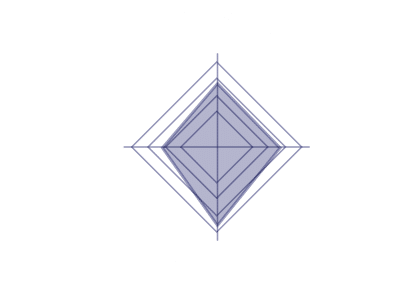
Pillars of Success
You are not alone
100%
of surveyed health systems report some usage of ambient clinical documentation tools powered by generative AI (IntuitionLabs, 2025).
10-20%
potential reduction in hospital labour and supply costs that AI tools could deliver (Morgan Stanley).
38.0%
software's share of the US healthcare big-data analytics market in 2025 (IMARC Group).
60.0%
of healthcare big-data analytics revenue comes from on-demand (cloud) delivery models (IMARC Group, 2025).
Join those who are leveraging data to move from financial stewardship to strategic business leadership.

How is AI raising the stakes

Clinical domain knowledge is the differentiating asset that determines how much value a healthcare data analyst can produce - and it is the dimension most difficult to develop without deliberate investment in clinical learning alongside analytical skill development.
An analyst who can build a technically correct SQL query but does not understand the clinical significance of the ICD-10 coding they are querying, or the clinical workflow that determines when and how data is entered into the EHR, will produce analyses that are technically sound but clinically misleading. Developing genuine understanding of the clinical processes and data provenance that underlie EHR data is the learning investment that most significantly expands an analyst's ability to produce useful rather than just technically correct outputs.
The translation challenge between clinical questions and analytical methodology is the most common source of analyst frustration and clinical stakeholder dissatisfaction in healthcare analytics.
Clinicians frame questions in clinical terms - what is our readmission rate for CHF patients discharged on specific medications - that have multiple technically correct analytical implementations that produce meaningfully different results depending on how terms are defined. Building the skill to have the definitional conversation with clinical stakeholders that produces a well-specified analytical question - before beginning the analysis - is a communication skill as much as a technical one, and it is what distinguishes analysts whose results are trusted from those whose outputs are consistently questioned.
Entry-level Clinical Data Analysts are entering a healthcare analytics environment that is undergoing a significant capability transition.
The analysis tasks that previously defined the analyst role - ad-hoc report generation, data extraction, basic statistical summaries - are being automated by self-service analytics tools and AI assistants, compressing the learning curve that previously provided years of foundational experience before analysts were expected to produce independent analytical insight. This compression is simultaneously creating opportunity - analysts who develop genuine analytical depth and clinical domain knowledge faster are advancing quickly - and risk - analysts who remain at the data extraction and reporting layer are finding their contribution increasingly replicable by automation.
Entry Level | Healthcare
How Bronson can help
Fractional Data and AI Services
For functions that need specialist data and AI capability without the timeline and cost of permanent recruitment, Bronson.AI provides experienced fractional professionals who integrate directly with the internal team, accelerating delivery while building internal capability in parallel.
- Fractional data engineers who build and maintain the data pipelines and integration infrastructure the function depends on.
- Machine learning and AI specialists who design, validate, and deploy analytical models to production standard.
- Analytics translators who bridge the gap between technical outputs and the business decisions they are designed to inform.

AI and Agentic Automation
Bronson.AI implements the AI and automation capability that turns data into action, identifying inefficiencies, flagging anomalies, and triggering workflow responses without manual intervention. We help the function move from monitoring to orchestrating.
- Process automation across high-volume, rule-based workflows to reduce manual effort and error rates.
- Predictive anomaly detection that flags deviations before they escalate into failures or cost overruns.
- AI-powered forecasting and prioritisation that connects data signals to operational resource allocation.

Data Strategy and Governance
Bronson.AI builds the data architecture, ownership model, and governance framework that connects operational data into a single, governed layer, so that decisions are made from one version of the truth rather than competing reports.
- Data standards framework covering metric definitions, KPI structures, and cross-functional data taxonomy.
- Data ownership and stewardship model assigning accountability for each data domain.
- AI governance policy ensuring automated decisions are auditable, explainable, and compliant.
Unlock your potential
Unlock the Power of Data in Clinical Analytics
Data is the backbone of evidence-based healthcare improvement. For the Clinical Data Analyst, having access to well-documented, quality-controlled clinical data - and the analytical and clinical domain skills to interpret it correctly - is what enables the production of insights that clinical stakeholders trust, value, and act on.
Overcome Data Challenges Effortlessly
One of the primary challenges facing Clinical Data Analysts is EHR data that is complex, incompletely documented, and full of provenance nuances that require clinical domain knowledge to handle correctly - leading to analyses that are technically executed but clinically misleading when domain context is missing. Building the analytical skills and clinical knowledge simultaneously is the development investment that makes clinical analytics genuinely valuable.
The Promise of Data, Analytics, and AI Advancements
Imagine a clinical analytics environment with curated, documented data marts that reduce preparation burden, validated analytical libraries for common tasks, and clinical communication skills that make findings trustworthy and actionable rather than technically correct but clinically inaccessible. This is not just a vision but the very real value proposition that our Data, Analytics, and AI Consulting and Solutions offer.
Realize the Value of Advanced Data Solutions
Our services are designed to guide Clinical Data Analysts through:
- Clinical Data Quality: Curated data environments and quality monitoring that reduce preparation overhead.
- Domain Knowledge Development: Healthcare process and data provenance understanding that improves analytical quality.
- Clinical Communication: Visualisation and presentation skills that make findings trustworthy and actionable for clinical stakeholders.
See Results
4x ROI
payback with AI is guaranteed
90 DAYS
to a funded, board-ready AI roadmap
18 MONTHS
from pilots to
AI-centric enterprise
Get started today!
Frequently asked questions
Establish secure, well governed data management that makes the EHR data usable, because reliable analysis depends on data that is structured and documented well enough to use correctly, and the complexity and poor documentation are exactly what make EHR data so hard to analyse reliably. The work is bringing structure and documentation to the EHR data, understanding and recording what the data actually means, how it is coded, where its quirks and pitfalls lie, and governing it so the understanding is preserved and shared rather than relearned by each analyst.
The reason EHR data is so challenging is that it is genuinely complex, coded in intricate ways, full of clinical nuance, and typically poorly documented, so an analyst has to develop substantial understanding of what the data means before they can analyse it correctly, and getting it wrong produces analyses that are technically correct but clinically meaningless. The complexity and poor documentation are not incidental, they are the central difficulty of clinical data analysis, and addressing them systematically is what makes the data usable.
The payoff is EHR data that can be analysed reliably and correctly, rather than data whose complexity defeats analysis or produces misleading results. When the EHR data is properly structured, documented, and governed, analysts can work from a shared understanding of what the data means, produce analyses that are clinically valid, and avoid the errors that come from misunderstanding complex, poorly documented data. The documentation and governance also mean the hard-won understanding is preserved rather than relearned by each analyst, which compounds over time. Establishing a structured, documented, governed foundation from EHR data is what turns it from complex, poorly documented raw material that defeats reliable analysis into data that analysts can use correctly, which is the prerequisite for clinical analytics that clinicians can actually trust, resting as that trust does on analyses built from a genuine understanding of what the complex underlying data means.
Establish secure, well governed data management with validation at the point of extraction, because reliable analysis depends on knowing the data is sound before you build on it, and validating at extraction is what catches quality issues before they derail an analysis already underway. The work is building data quality validation into the extraction process, checking completeness, consistency, and plausibility as the data is pulled, so problems are flagged at the start rather than discovered partway through analysis when work has already been built on flawed data.
The reason mid-analysis discovery is so costly is that finding a data quality problem after you have begun analysing means the work done on the flawed data is wasted, the analysis has to be redone, and confidence in the results, even after correction, is undermined. Discovering quality issues late is one of the most frustrating and wasteful experiences in data analysis, and it happens precisely because the data was not validated before the analysis began.
The payoff is analysis built on data already known to be sound, which avoids the wasted work and undermined confidence of mid-analysis discovery. When data quality is validated at extraction, problems are caught and addressed before any analysis is built on the data, so the analysis proceeds on a sound foundation rather than collapsing partway through when a problem surfaces. The validation also builds confidence in the results, because the data has been checked rather than assumed sound. Building data quality validation into extraction is what turns clinical data analysis from a process repeatedly derailed by quality issues discovered too late into one that proceeds on data already verified, which both saves the wasted work of redoing analyses on flawed data and produces results that can be trusted because the data underneath them was validated before the analysis began rather than questioned after it.
Turn a sound clinical data foundation into reliable risk modelling insight, because patient risk stratification depends on models built from complete, consistent, well-understood clinical data, and the foundation is what determines whether the models are reliable enough to inform care. The work is establishing the clinical data foundation the modelling needs, complete and consistent enough, properly understood, appropriately governed given its sensitivity, then building the risk models on that foundation so they identify the patients at elevated risk reliably rather than producing confident but unreliable predictions.
The reason the foundation matters so much is that clinical risk models inform decisions about patient care, so their reliability is not a technical nicety but a matter of getting care to the patients who need it, and a model built on incomplete or poorly understood clinical data produces unreliable risk predictions that could misdirect care. The clinical data foundation, and the understanding of what the data means, is the prerequisite for risk models that can be trusted to inform care decisions.
The payoff is reliable patient risk stratification that genuinely identifies who needs attention, which is what risk modelling is for. When the models are built on a sound clinical data foundation, they reliably identify the patients at elevated risk, which lets care be directed to those who need it most, rather than producing predictions too unreliable to act on. Reliable risk modelling is the basis for proactive, targeted care, identifying high-risk patients before their risk materialises. Building patient risk modelling on a sound, governed clinical data foundation is what makes the models reliable enough to inform care, which is essential because the models guide decisions about patients, and getting them right depends first on the clinical data foundation being sound rather than on the sophistication of the modelling, which cannot rescue predictions built on data that is incomplete or poorly understood.
Draw on the analytics, engineering, and data science support of a full data capability without building it all internally, because that on-demand access is what lets you add clinical analytics capacity now, scaled to need, rather than waiting through the slow and competitive process of hiring clinically-literate data scientists. This gives you the capability the work requires when you need it, without carrying permanent cost through periods of lower demand, and crucially can provide the combination of data science skill and clinical understanding that is so hard to hire.
The advantage beyond capacity is experience, because a capability that has done clinical analytics elsewhere brings knowledge of the domain's particular challenges, the complexity of EHR data, the validation requirements, the governance that patient data demands, that a function building capacity from scratch tends to learn slowly and at the cost of mistakes that matter more in healthcare than most domains.
The consideration that should shape the arrangement is capability transfer, because the best support builds your team's capability over time, developing the skills that let you do more internally and depend on outside help less. That way you add capacity now while growing the internal capability that reduces the dependency. The decision is rarely a pure build-versus-buy in the abstract; it is how to add clinical analytics capacity now, given how scarce clinically-literate data scientists are, while building internal capability over time, and on-demand access to an experienced capability is usually the most pragmatic answer to a support gap that direct hiring struggles to fill quickly, especially for the rare combination of data science and clinical understanding that clinical analytics genuinely requires.